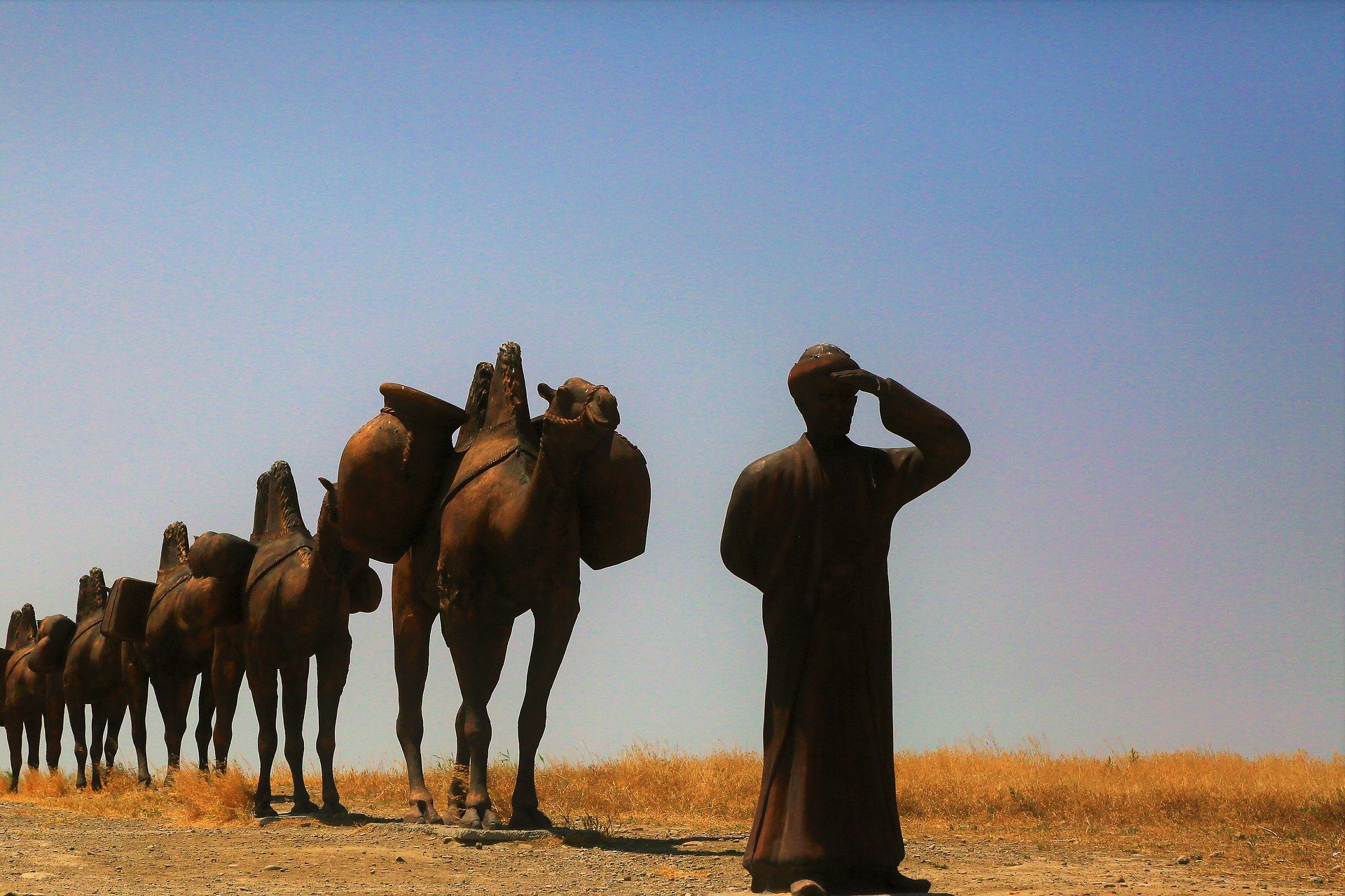
Genesis 24 describes Abraham’s commission to his servant to find a wife for Isaac. The usual reading is this: Abraham sends Eliezer, makes him swear not to take a Canaanite wife but to go to Abraham’s family and father’s house, and promises divine help in finding the right woman. This understanding becomes problematic when we examine Eliezer’s conduct throughout the story.
When the servant reaches Aram-naharaim and the well outside the city, he addresses God:
And he said: ‘O LORD, the God of my master Abraham, send me, I pray Thee, good speed this day, and show kindness unto my master Abraham. Behold, I stand by the fountain of water; and the daughters of the men of the city come out to draw water. So let it come to pass, that the damsel to whom I shall say: Let down thy pitcher, I pray thee, that I may drink; and she shall say: Drink, and I will give thy camels drink also; let the same be she that Thou hast appointed for Thy servant, even for Isaac; and thereby shall I know that Thou hast shown kindness unto my master.’ (Genesis 24:12–14)
...ה' אֱלֹהֵי אֲדֹנִי אַבְרָהָם הַקְרֵה נָא לְפָנַי הַיּוֹם וַעֲשֵׂה חֶסֶד עִם אֲדֹנִי אַבְרָהָם. הִנֵּה אָנֹכִי נִצָּב עַל עֵין הַמָּיִם וּבְנוֹת אַנְשֵׁי הָעִיר יֹצְאֹת לִשְׁאֹב מָיִם. וְהָיָה הַנַּעֲרָ אֲשֶׁר אֹמַר אֵלֶיהָ הַטִּי נָא כַדֵּךְ וְאֶשְׁתֶּה וְאָמְרָה שְׁתֵה וְגַם גְּמַלֶּיךָ אַשְׁקֶה אֹתָהּ הֹכַחְתָּ לְעַבְדְּךָ לְיִצְחָק וּבָהּ אֵדַע כִּי עָשִׂיתָ חֶסֶד עִם אֲדֹנִי. (בראשית כ"ד יב-יד)
This behavior is puzzling. If Abraham sent him to take a woman from his family and father’s house, why test all the young women of Aram-naharaim? Why not approach Abraham’s family from the outset and test only its daughters?
Rebekah appears and acts exactly as Eliezer hoped, offering him a drink and drawing water for all his camels. Despite her surprising and perfect response, he is still unconvinced that God has made his journey successful:
And the man looked stedfastly on her; holding his peace, to know whether the LORD had made his journey prosperous or not. (Genesis 24:21)
וְהָאִישׁ מִשְׁתָּאֵה לָהּ מַחֲרִישׁ לָדַעַת הַהִצְלִיחַ ה' דַּרְכּוֹ אִם לֹא. (בראשית כ"ד כא)
Why does Eliezer wonder? His request has been perfectly fulfilled; God seems to have identified the woman according to his condition. Despite his doubts, he gives Rebekah a gold ring and two gold bracelets. Only afterward does he ask about her family. If he specifically sought a woman from Abraham’s father’s house, why give costly gifts before verifying her ancestry?
At Bethuel’s home he recounts the incident, but changes its sequence:
And I asked her, and said: Whose daughter art thou? And she said: The daughter of Bethuel, Nahor’s son, whom Milcah bore unto him. And I put the ring upon her nose, and the bracelets upon her hands. And I bowed my head, and prostrated myself before the LORD, and blessed the LORD, the God of my master Abraham, who had led me in the right way to take my master’s brother’s daughter for his son. (Genesis 24:47–48)
וָאֶשְׁאַל אֹתָהּ וָאֹמַר בַּת מִי אַתְּ וַתֹּאמֶר בַּת בְּתוּאֵל בֶּן נָחוֹר אֲשֶׁר יָלְדָה לּוֹ מִלְכָּה וָאָשִׂם הַנֶּזֶם עַל אַפָּהּ וְהַצְּמִידִים עַל יָדֶיהָ. וָאֶקֹּד וָאֶשְׁתַּחֲוֶה לַה' וָאֲבָרֵךְ אֶת ה' אֱלֹהֵי אֲדֹנִי אַבְרָהָם אֲשֶׁר הִנְחַנִי בְּדֶרֶךְ אֱמֶת לָקַחַת אֶת בַּת אֲחִי אֲדֹנִי לִבְנוֹ. (בראשית כ"ד מז-מח)
In this account he puts the ring on Rebekah’s nose and bracelets on her hands only after she passes the test and identifies her family. Why does he change this detail when telling her relatives?
Radak and Nahmanides interpret the verses in a way that eliminates the contradiction. In their view, Eliezer gave the jewelry only after learning her identity, as in his account to the family, rather than as suggested by the initial narration. They distinguish two actions: taking the bracelets and ring in preparation to give them if she proved related to Abraham, as in the real-time account; and giving them to Rebekah, as in his later report.
This is unsatisfactory. We cannot ignore that the original narrative mentions the jewelry before Eliezer knows her ancestry, whereas his later account mentions it only afterward. Even on their reading, he took it before asking, but when recounting events he mentioned no intention or preparation to give gifts before learning her identity. Even if we accept that he gave them only afterward, the Torah’s presentation creates the impression that they were given immediately after she passed the test. The conclusion is that once he recognized her suitability, her ancestry was irrelevant.
To summarize, Eliezer’s conduct is unclear. If he wanted a wife from Abraham’s family, he should have gone there, tested its daughters, and chosen the best. Instead he asks God to identify a girl among all those coming to draw water, using the unusual condition that she offer him a drink and water his camels. Though God identifies a woman exactly as requested, he dares wonder whether his way has prospered. He gives gifts without knowing whether she belongs to Abraham’s family. Only after learning that she is Bethuel’s daughter does he thank God, instead of doing so when she passes the test. How can we understand this?
What Exactly Did Abraham Ask?
As noted, the usual reading is that Abraham asked for a woman from his family and promised help finding her. Close reading shows otherwise. The family requirement has some support, since that is how the servant reports Abraham’s request:
But thou shalt go unto my father’s house, and to my kindred, and take a wife for my son. (Genesis 24:38)
אִם לֹא אֶל בֵּית אָבִי תֵּלֵךְ וְאֶל מִשְׁפַּחְתִּי וְלָקַחְתָּ אִשָּׁה לִבְנִי. (בראשית כ"ד לח)
But Abraham’s own instructions are to go to his land and birthplace, not necessarily to his family:
And Abraham said unto his servant, the elder of his house, that ruled over all that he had: ‘Put, I pray thee, thy hand under my thigh. And I will make thee swear by the LORD, the God of heaven and the God of the earth, that thou shalt not take a wife for my son of the daughters of the Canaanites, among whom I dwell. But thou shalt go unto my country, and to my kindred, and take a wife for my son, even for Isaac.’ (Genesis 24:2–4)
וַיֹּאמֶר אַבְרָהָם אֶל עַבְדּוֹ זְקַן בֵּיתוֹ הַמֹּשֵׁל בְּכָל אֲשֶׁר לוֹ שִׂים נָא יָדְךָ תַּחַת יְרֵכִי. וְאַשְׁבִּיעֲךָ בַּה' אֱלֹהֵי הַשָּׁמַיִם וֵאלֹהֵי הָאָרֶץ אֲשֶׁר לֹא תִקַּח אִשָּׁה לִבְנִי מִבְּנוֹת הַכְּנַעֲנִי אֲשֶׁר אָנֹכִי יוֹשֵׁב בְּקִרְבּוֹ. כִּי אֶל אַרְצִי וְאֶל מוֹלַדְתִּי תֵּלֵךְ וְלָקַחְתָּ אִשָּׁה לִבְנִי לְיִצְחָק. (בראשית כ"ד ב-ד)
We will later examine why Eliezer presents the instructions differently to Rebekah’s relatives.
The second presumed element, promised divine help in finding a wife, likewise does not fit the verses. Abraham does promise help, but not with finding the woman. The help concerns difficulties persuading her to come to Canaan. The commission contains two distinct tasks: finding a suitable woman, and persuading her and her family to let her move to the land of Israel. The promised help concerns persuasion, since Abraham speaks of an angel only in response to the servant’s question about a woman who refuses to follow him. There was no earlier mention of this promise:
And the servant said unto him: ‘Peradventure the woman will not be willing to follow me unto this land; must I needs bring thy son back unto the land from whence thou camest?’ And Abraham said unto him: ‘Beware thou that thou bring not my son back thither. The LORD, the God of heaven, who took me from my father’s house, and from the land of my nativity, and who spoke unto me, and who swore unto me, saying: Unto thy seed will I give this land; He will send His angel before thee, and thou shalt take a wife for my son from thence. And if the woman be not willing to follow thee, then thou shalt be clear from this my oath; only thou shalt not bring my son back thither.’ (Genesis 24:5–8)
וַיֹּאמֶר אֵלָיו הָעֶבֶד אוּלַי לֹא תֹאבֶה הָאִשָּׁה לָלֶכֶת אַחֲרַי אֶל הָאָרֶץ הַזֹּאת הֶהָשֵׁב אָשִׁיב אֶת בִּנְךָ אֶל הָאָרֶץ אֲשֶׁר יָצָאתָ מִשָּׁם. וַיֹּאמֶר אֵלָיו אַבְרָהָם הִשָּׁמֶר לְךָ פֶּן תָּשִׁיב אֶת בְּנִי שָׁמָּה. ה' אֱלֹהֵי הַשָּׁמַיִם אֲשֶׁר לְקָחַנִי מִבֵּית אָבִי וּמֵאֶרֶץ מוֹלַדְתִּי וַאֲשֶׁר דִּבֶּר לִי וַאֲשֶׁר נִשְׁבַּע לִי לֵאמֹר לְזַרְעֲךָ אֶתֵּן אֶת הָאָרֶץ הַזֹּאת הוּא יִשְׁלַח מַלְאָכוֹ לְפָנֶיךָ וְלָקַחְתָּ אִשָּׁה לִבְנִי מִשָּׁם. וְאִם לֹא תֹאבֶה הָאִשָּׁה לָלֶכֶת אַחֲרֶיךָ וְנִקִּיתָ מִשְּׁבֻעָתִי זֹאת רַק אֶת בְּנִי לֹא תָשֵׁב שָׁמָּה. (בראשית כ"ד ה-ח)
The mission therefore has two stages. Finding a suitable woman from Abraham’s land and birthplace is relatively simple and does not trouble Eliezer. The second stage is persuading her and her family to agree that she leave her family and homeland, following the servant hundreds of kilometers to Canaan to marry Isaac.
Displaying Abraham’s wealth should assist persuasion. To impress the prospective bride and family, Eliezer takes ten camels and his master’s good things (Genesis 24:10). We later see that this wealth, including the jewelry given to Rebekah, impresses her brother Laban, who hurries to invite the servant home (24:30–31).
“The Thing Proceedeth from the LORD”
Despite Abraham’s wealth, Eliezer fears that the woman or family may refuse. Wisely, he prepares the ground in advance, planning the outcome from the beginning. He seeks to activate Abraham’s promised angelic help early, before choosing the woman and certainly before she and her relatives can object to the match and long journey. He therefore requests a divine sign that can serve as proof to them that the matter comes from God: providence has selected her. This is intended to remove the natural resistance to uprooting her from family and homeland.
The resourceful servant devises a test with two purposes. It demonstrates the candidate’s extraordinary kindness and suitability for Isaac, while also proving providential selection through fulfillment of a prearranged sign. The sign is highly unlikely: drawing enough water for ten camels is arduous and time-consuming. It is hard to imagine a girl doing this for a stranger, and harder still that she offer without being asked. Yet Eliezer finds just such a girl, and she is the first he approaches. Providence intervenes in his favor. As various thinkers explain, an angel need not be a heavenly being descending to earth; it may be a power or factor under God’s control and command, accomplishing His will through natural forces, a historical process, or what people call coincidence. We will never know the angel’s identity or method, but can readily imagine circumstances bringing Rebekah to the well precisely when Eliezer arrived.
The significance of a divinely ordained match emerges in the family meeting. When the servant tells his story over dinner, they answer:
Then Laban and Bethuel answered and said: ‘The thing proceedeth from the LORD; we cannot speak unto thee bad or good. Behold, Rebekah is before thee, take her, and go, and let her be thy master’s son’s wife, as the LORD hath spoken.’ (Genesis 24:50–51)
וַיַּעַן לָבָן וּבְתוּאֵל וַיֹּאמְרוּ מֵה' יָצָא הַדָּבָר לֹא נוּכַל דַּבֵּר אֵלֶיךָ רַע אוֹ טוֹב. הִנֵּה רִבְקָה לְפָנֶיךָ קַח וָלֵךְ וּתְהִי אִשָּׁה לְבֶן אֲדֹנֶיךָ כַּאֲשֶׁר דִּבֶּר ה'. (בראשית כ"ד נ-נא)
Laban and Bethuel say they cannot object because the matter comes from God. Between their words we can hear concealed resistance coupled with recognition that refusal of God’s will is impossible. Without this divine origin, they seemingly would have opposed the match. Indeed, despite their agreement, they try to delay when Eliezer asks to depart with Rebekah the next morning:
And her brother and her mother said: ‘Let the damsel abide with us a few days, at the least ten; after that she shall go.’ (Genesis 24:55)
וַיֹּאמֶר אָחִיהָ וְאִמָּהּ תֵּשֵׁב הַנַּעֲרָ אִתָּנוּ יָמִים אוֹ עָשׂוֹר אַחַר תֵּלֵךְ. (בראשית כ"ד נה)
Their request can be understood against the customary long interval between betrothal and marriage. But the previous evening they had agreed that he should take her immediately. Eliezer’s enlistment of divine authority was chiefly intended to overcome this obstacle and justify his unusual request. He therefore reminds them of the previous day’s point: he acts with God’s backing.
And he said unto them: ‘Delay me not, seeing the LORD hath prospered my way; send me away that I may go to my master.’ (Genesis 24:56)
וַיֹּאמֶר אֲלֵהֶם אַל תְּאַחֲרוּ אֹתִי וַה' הִצְלִיחַ דַּרְכִּי שַׁלְּחוּנִי וְאֵלְכָה לַאדֹנִי. (בראשית כ"ד נו)
Without divine proof that Rebekah was intended for Isaac, it would apparently have been very difficult to persuade her family to send her to Canaan, much less to release her immediately.
As an aside, Abraham’s family may have disapproved when he left them for Canaan. When he later needed their help to marry Isaac, they might seek to bring at least his son back to Haran. Eliezer’s question may hint at this:
And the servant said unto him: ‘Peradventure the woman will not be willing to follow me unto this land; must I needs bring thy son back unto the land from whence thou camest?’ (Genesis 24:5)
הֶהָשֵׁב אָשִׁיב אֶת בִּנְךָ אֶל הָאָרֶץ אֲשֶׁר יָצָאתָ מִשָּׁם. (בראשית כ"ד ה)
Something similar appears when Jacob flees Laban toward Canaan. Laban certainly sought to exploit Jacob economically, and may have regarded him as a slave and his family as property, explaining his pursuit. Beyond this, however, he seems to have opposed a family member leaving Haran with his daughters and grandchildren. A linguistic link is the shared idiom “good or bad.” Here Laban and Bethuel cannot speak bad or good (רַע אוֹ טוֹב). Later Laban astonishingly uses the same idiom, reporting God’s warning not to speak to Jacob good or bad (מִטּוֹב עַד רָע; Genesis 31:29).
Eliezer’s Wisdom
Once we understand the test’s purpose, the servant’s conduct throughout becomes intelligible. Abraham asks him to find Isaac a wife from his land and birthplace, then persuade her and her relatives to allow her to come to Canaan. If she refuses, God will send His angel to help with persuasion.
To simplify the second stage, Eliezer uses the promised heavenly assistance already in the first. Immediately upon arrival, before selecting a woman, he asks God to identify her, enabling him to present the match as the finger of God, an unopposable providential decision. He receives divine help, as his name suggests. Against reasonable odds, the first girl fulfills his condition. Yet even after she offers to water all his camels, he is unsure of success: identifying Isaac’s suitable partner is not enough. Her and her family’s consent to migration is still required. God’s choice should prevent opposition, but there is no guarantee. Despite the promised help, Abraham himself contemplated failure to persuade her, in which case Eliezer would be released from the oath barring a Canaanite wife, though Isaac must not be taken back there (Genesis 24:8). His uncertainty is therefore justified.
After Rebekah passes the test, Eliezer gives the ring and bracelets, demonstrating Abraham’s wealth and paving the way for further contact with her family. Not knowing her ancestry is irrelevant: his task is to find a woman from Abraham’s land and birthplace, not necessarily his relatives.
After giving the jewelry, he asks about her family. Her answer makes him recognize success and thank God. Why? The proof of her suitability is now stronger: she is not merely a chance girl from Aram-naharaim, but Abraham’s relative. His hope becomes certainty that he can persuade her and her family to allow her departure for Canaan.
To persuade them, he slightly changes the account. He reports that Abraham asked him to approach his family and father’s house. Abraham did not explicitly ask this, but surely preferred it. This makes refusal harder, since Abraham specifically sought kinship with them. Having claimed that he sought a girl from that household, he must also say he gave the jewelry only after verifying her relationship. Rashi explains:
He changed the order, for he first gave and afterward asked, so that they would not challenge him and say: How could you give to her without yet knowing who she was? (Rashi, Genesis 24:47)
שינה הסדר, שהרי הוא תחילה נתן ואחר כך שאל, אלא שלא יתפשוהו בדבריו ויאמרו: היאך נתת לה, ועדיין אינך יודע מי היא? (רש"י, בראשית כ"ד מז)
Through wisdom, resourcefulness, and divine assistance, Abraham’s servant accomplished the difficult mission: finding his master’s son a wife and persuading her and her family that she should follow him to distant Canaan.
Who Was the Servant?
Who was the servant Abraham sent to find Isaac’s wife?
Following the Sages, I have called him Eliezer. Surprisingly, however, the Torah never names him in the entire episode. This identification suits the plain text: he is Abraham’s senior household servant, ruling everything he owns (Genesis 24:2). This fits Eliezer’s earlier description when Abraham asks God for offspring and expresses his fear:
And Abram said: ‘O Lord GOD, what wilt Thou give me, seeing I go hence childless, and he that shall be possessor of my house is Eliezer of Damascus?’ And Abram said: ‘Behold, to me Thou hast given no seed, and, lo, one born in my house is to be mine heir.’ (Genesis 15:2–3)
וַיֹּאמֶר אַבְרָם א-דני ה' מַה תִּתֶּן לִי וְאָנֹכִי הוֹלֵךְ עֲרִירִי וּבֶן מֶשֶׁק בֵּיתִי הוּא דַּמֶּשֶׂק אֱלִיעֶזֶר. וַיֹּאמֶר אַבְרָם הֵן לִי לֹא נָתַתָּה זָרַע וְהִנֵּה בֶן בֵּיתִי יוֹרֵשׁ אֹתִי. (בראשית ט"ו ב-ג)
Why does the Torah not name him?
Apparently it wishes to emphasize his role as Abraham’s agent rather than his personality. This recalls angels who decline to disclose their names even when explicitly asked, such as Jacob’s opponent before his meeting with Esau (Genesis 32), or the angel announcing Samson’s birth to Manoah and his wife (Judges 13). Commonly this is explained by the angels’ complete identification with their mission, leaving no room for individuality represented by a name.
With Eliezer this is unsatisfactory, given his conduct in Haran. He does not act as an ordinary slave: he takes initiative and uses great sophistication to bring Rebekah to Isaac. His actions exceed obedience and routine fulfillment. He goes above and beyond and deserves to be named. The omission is especially striking against his independence and calls for explanation.
Eliezer was no ordinary slave but Abraham’s servant. Abraham was an important figure, called a prince of God by Hebron’s people and allied with Aner, Eshcol, and Mamre. He dealt with Pharaoh and covenanted with Abimelech of Gerar. His considerable military ability let him defeat four powerful kings who had just defeated five others. As his senior servant, Eliezer presumably accompanied him for many years. Abraham trusted him enough to manage the entire household. He likely commanded Abraham’s 318 trained retainers in the campaign against the four kings. Abraham himself saw him as a worthy heir and named him in his appeal to God (Genesis 15:2–3). Thus the household ruler was an important personality in his own right, related to Abraham as a military commander to his king, rather than as an ordinary slave.
Nevertheless, the Torah calls him either “the servant” or “the man.” It uses “servant” when he carries out Abraham’s instructions: the servant takes ten camels and departs (Genesis 24:10), the servant runs to Rebekah and asks for water (24:17), and he identifies himself as Abraham’s servant (24:34). When he shows initiative and discovers divine support, he is “the man”: the man silently watches to learn whether God has prospered his way (24:21), and the man takes the gold ring (24:22). Rebekah’s family, impressed by him, consistently uses “the man”: Laban runs to the man at the spring after hearing how the man addressed his sister (24:29–30), and they ask whether she will go with this man (24:58). Although they understand his agency, they recognize and value his personality, calling him a man rather than a servant.
Notice now the key word all (kol). God blessed Abraham in all things (Genesis 24:1); the senior servant ruled all he owned (24:2); he departed with all his master’s good things in his hand (24:10); and he reports that Abraham gave Isaac all he possessed (24:36). This “all” creates tension among Eliezer, Abraham, and Isaac. Without Isaac’s birth, faithful Eliezer was to inherit. In Abraham’s old age, Eliezer, not Isaac, actually controlled everything. Will he avoid his mission to gain Abraham’s entire property, or carry it out fully?
By fulfilling the commission, Eliezer relinquishes the possibility of succeeding Abraham and thus loses “all.” The Sages sensitively recognized this. In his words ulai, “perhaps the woman will not follow me” (Genesis 24:39), they read elai, “to me,” explaining that he had a daughter whom he hoped Isaac would marry (Rashi there, following Genesis Rabbah 59). The alternative to a woman from Aram-naharaim was marriage to Eliezer’s daughter. By omitting his name although his identity is clear, the Torah shows his nobility and complete submission: he annuls his own wishes to fulfill Abraham’s desire that Isaac marry a woman from his land and birthplace. He does so at extraordinary personal cost, losing the prospect of becoming Abraham’s successor.
This submission appears on his return with Rebekah. He submits not only to Abraham but also to Isaac, whom he immediately calls “my master,” not “my master’s son.” The Torah again calls him “the servant,” while “the man,” previously expressing Eliezer’s stature, now describes Isaac:
And Rebekah lifted up her eyes, and when she saw Isaac, she alighted from the camel. And she said unto the servant: ‘What man is this that walketh in the field to meet us?’ And the servant said: ‘It is my master.’ And she took her veil, and covered herself. (Genesis 24:64–65)
וַתִּשָּׂא רִבְקָה אֶת עֵינֶיהָ וַתֵּרֶא אֶת יִצְחָק וַתִּפֹּל מֵעַל הַגָּמָל. וַתֹּאמֶר אֶל הָעֶבֶד מִי הָאִישׁ הַלָּזֶה הַהֹלֵךְ בַּשָּׂדֶה לִקְרָאתֵנוּ וַיֹּאמֶר הָעֶבֶד הוּא אֲדֹנִי... (בראשית כ"ד, סד-סה)
Perhaps Eliezer’s humility is itself another component of his greatness. In Haran, “where there are no men,” he emerges as “the man”; in the presence of great figures, however, he recognizes his place and serves them as “the servant.”
