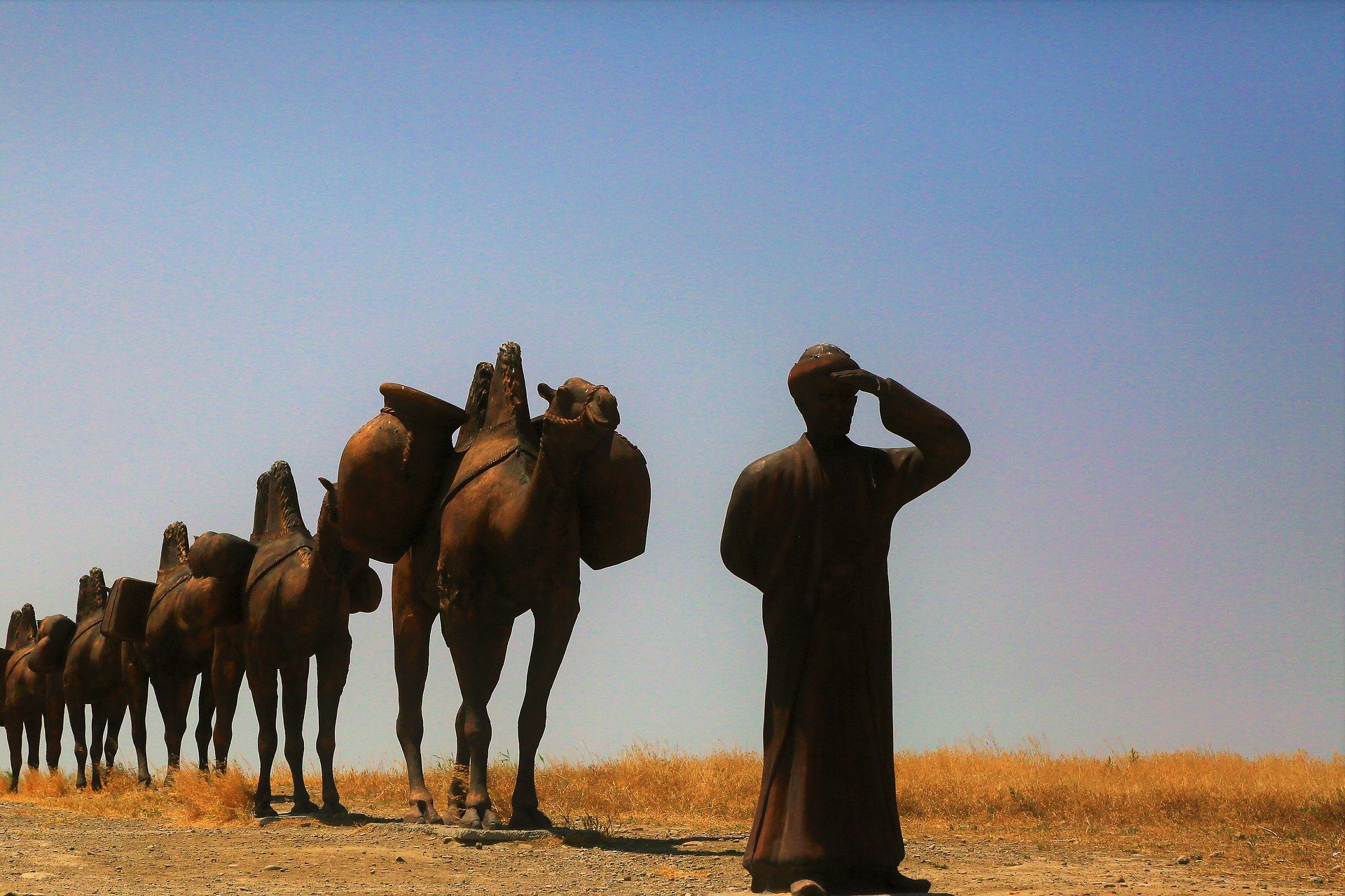
And he said: ‘O LORD, the God of my master Abraham, send me, I pray Thee, good speed this day, and show kindness unto my master Abraham. Behold, I stand by the fountain of water; and the daughters of the men of the city come out to draw water. So let it come to pass, that the damsel to whom I shall say: Let down thy pitcher, I pray thee, that I may drink; and she shall say: Drink, and I will give thy camels drink also; let the same be she that Thou hast appointed for Thy servant, even for Isaac; and thereby shall I know that Thou hast shown kindness unto my master.’ (Genesis 24:12–14)
וַיֹּאמַר: ה' אֱלֹהֵי אֲדֹנִי אַבְרָהָם, הַקְרֵה נָא לְפָנַי הַיּוֹם וַעֲשֵׂה חֶסֶד עִם אֲדֹנִי אַבְרָהָם. הִנֵּה אָנֹכִי נִצָּב עַל עֵין הַמָּיִם וּבְנוֹת אַנְשֵׁי הָעִיר יֹצְאֹת לִשְׁאֹב מָיִם. וְהָיָה הַנַּעֲרָ אֲשֶׁר אֹמַר אֵלֶיהָ, הַטִּי נָא כַדֵּךְ וְאֶשְׁתֶּה, וְאָמְרָה: שְׁתֵה וְגַם גְּמַלֶּיךָ אַשְׁקֶה – אֹתָהּ הֹכַחְתָּ לְעַבְדְּךָ לְיִצְחָק, וּבָהּ אֵדַע כִּי עָשִׂיתָ חֶסֶד עִם אֲדֹנִי. (בראשית כ״ד, יב–יד)
On a common interpretation, Abraham made the servant swear to take no Canaanite wife for his son, but go to his family and father’s household to take a wife from them. He also promised Eliezer that the LORD would help him find the right woman. This understanding becomes problematic when we examine Eliezer’s subsequent behavior.
If he sought a wife from Abraham’s family, he should have approached that family, tested its daughters, and chosen the best. Instead, Eliezer asked the LORD to indicate the suitable girl among all Aram-naharaim’s daughters coming to draw water. Although the LORD indicated the woman exactly as requested, Eliezer still dared wonder whether He had prospered his journey. Then, before knowing whether she belonged to Abraham’s family, he gave her gifts. Only after learning she was Bethuel’s daughter did he thank the LORD, rather than immediately after she passed the test. How can this be understood?
Abraham’s own instructions show that he asked Eliezer to go to his country and birthplace, not necessarily his family (Genesis 24:4). He indeed promised divine assistance, but not in finding the right woman. The promise concerned difficulties persuading her to accompany him to Canaan.
The assignment had two stages. First, find the suitable woman. Second, convince her and her family to accept the match: agree to their daughter’s leaving family and birthplace and following the servant to Canaan to marry Isaac.
To ease persuasion, immediately on reaching Aram-naharaim Eliezer chose to use the heavenly assistance Abraham promised. He prayed for the LORD to indicate the right girl, enabling him to present the match to her and her family as God’s finger, ordained by providence and therefore irresistible. He indeed received the LORD’s assistance, hinted at in his name, Eliezer, “my God is help.”
Even when Rebekah offered him drink and to water all his camels, however, he was uncertain whether the LORD had prospered his journey. Success depended on her and her family’s consent, still ungiven. The divine indication should prevent objection, but supplied no guarantee. Indeed, despite promising divine help, Abraham himself considered the possibility that the servant would fail to persuade the woman to follow him (Genesis 24:8).
After giving Rebekah the ring and bracelets, Eliezer asked about her family. On hearing whose daughter she was, he understood that his mission had succeeded and thanked the LORD. Why? The proof that Rebekah was intended for Isaac was now stronger. She was no random girl from Aram-naharaim met by chance, but Abraham’s relative. Eliezer’s hope also became certainty that he could convince her and her family to let him bring her from Aram-naharaim to Canaan, as indeed happened.
