Peshat in Brief (working title)
New Readings in the Torah
About the book
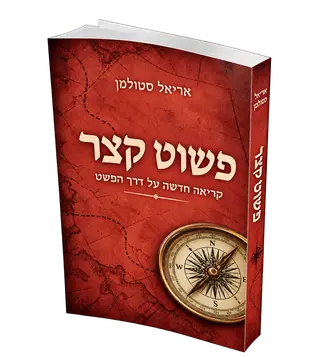
Peshat in Brief (working title) offers a fresh reading of the Torah through peshat, its plain meaning. The book contains about 170 short, self-contained chapters arranged by the weekly Torah portions. Each begins with a question, difficulty, or apparent contradiction and offers an original interpretation through close attention to language, structure, and context, in conversation with traditional commentary and biblical scholarship.
The book allows room for cautious interpretive freedom, sometimes exploring bold possibilities when they can reasonably arise from the plain meaning of Scripture. Its chapters address narratives, characters, commandments, theological ideas, and moral questions, while tracing patterns and ideas that recur throughout the Torah.
At its heart is the experience of discovery: returning to familiar verses and uncovering new and surprising ways to read them.
Book chapters
Genesis
Parashat Bereshit
- On the Need for SeparationSeparation is a central motif in creation – a condition for order, life, and development
- The Sabbath, Israel, and the NationsThe Sabbath is universal at its foundation, but acquires the meaning of holiness among the people of Israel
- The Tree of Knowledge of Good and EvilEating the tree of knowledge’s fruit separated humanity from animals and drew it closer to God; violating the command established human independence before Him
- “Behold, the Man Is Become as One of Us”The Torah narrows the gap between humanity and the sons of God, making eternal life the decisive question
- “Unto Thee Is Its Desire, but Thou Mayest Rule over It”The LORD’s words to Cain concern his standing as the firstborn before Abel, rather than the evil inclination
Parashat Noach
- On Sex and MoralityFish, unlike land animals but like plants, are not moral creatures and were therefore not punished in the flood
- “Of the Fowl Also of the Air, Seven and Seven”The command to bring birds seven and seven was intended to maintain ecological balance between species
- A New World OrderAfter the flood, humanity did not change; the LORD’s approach changed, and moral law became necessary
- NimrodNimrod is a positive figure – history’s first hero
- “Lest We Be Scattered Abroad upon the Face of the Whole Earth”The fear was of remaining earthly, rather than of dispersal throughout the earth
Parashat Lech Lecha
- Land for Peace?Lot, who accompanied Abraham, deserves an inheritance in the land the LORD designated for Abraham
- “In the Fourth Generation They Shall Come Back Hither”The verse means the fourth generation among those leaving Egypt would enter the land, rather than the fourth generation of those descending to EgyptAbout 5 min readShort studyPodcast (Hebrew)
 Podcast (Hebrew)
Parashat Vayera
- “Three Men”The LORD Himself visited Abraham accompanied by two angels
- The Argument from MoralityGod is bound by morality rather than being its sourceAbout 3 min readPodcast (Hebrew)
- Emotional BlackmailAbraham uses manipulative arguments to try to save Sodom’s people despite their wickedness
- “Thou Wilt Not Deal Falsely with Me, nor with My Son, nor with My Son’s Son”Biblical nin and nekhed are general words for descendants, rather than a hierarchy of generations
Parashat Chayei Sarah
- Why Were Sarah’s Years Counted?Sarah afflicted Hagar, so Ishmael lived ten years longer than she did – measure for measureAbout 2 min readPodcast (Hebrew)
- EliezerThe Torah avoids naming Eliezer to emphasize his submission of personal wishes to Abraham’s will
- Abraham’s Servant at the SpringThe servant sought a sign to convince Rebekah’s family, rather than proof for himself
- Sarah’s TestamentSarah recognized that gradual selection and refinement were necessary before the family could fulfill its vocation
- “It Is My Master”Out of respect for Rebekah, the servant called Isaac “my master,” while meaning “your master”
Parashat Toldot
- “Abraham Begot Isaac”Abraham begot Isaac, whereas Hagar the Egyptian, Sarah’s handmaid, bore Ishmael to Abraham
- “The Elder Shall Serve the Younger”The enigmatic prophecy described a struggle, rather than determining its outcome
- “That My Soul May Bless Thee”Isaac’s soul blessed, expressing his true wish; Isaac therefore accepts its decisionAbout 5 min readPodcast (Hebrew)
- Abraham’s and Isaac’s AgreementsGenesis and Deuteronomy present two approaches to foreign peoples in the land of Israel
Parashat Vayetzei
- A Sleepless Night – Lailah LavanLeah thought she would marry Jacob; he failed to detect the deception because he returned to his tent drunk
- Why Did the Matriarchs Give Their Handmaids?Giving a handmaid could awaken the mistress’s own fertility, beyond providing children through the servant
- Why Did Rachel Steal the Teraphim?Rachel stole the teraphim to force Jacob into confrontationAbout 4 min readShort studyPodcast (Hebrew)
Parashat Vayishlach
- Why Does the Torah Ignore Rebekah?The Torah hints that Jacob abandoned the deceptive course learned from his mother
- “Esau Thy First-born”The Torah hints that Jacob’s actions were improper and Esau remained the firstborn
- An Angel’s MissionGod prevents Jacob from fleeing again and compels him to meet his brother
- “And the Rings Which Were in Their Ears”Jacob’s removal of earrings implicitly criticizes Beth-el’s calf worship
Parashat Vayeshev
- “Eleven Stars Bowed Down to Me”Joseph dreamed of the stars in childhood, while the youngest son and while Rachel still lived
- The Sun and Moon in Joseph’s DreamAn alternative interpretation: the sun represents Pharaoh and the moon his viceroy Joseph
- “The Kedeshah”The story becomes clear when Tamar is understood as disguised as a cultic prostitute
Parashat Miketz
- Every Person Has His HourThe chief cupbearer forgot Joseph so he would reach thirty, the age required for high office in Egypt
- How Does One Interpret a Dream?Joseph reverses the Egyptian conception: interpretation reveals the future rather than determining it
- Egypt Arms ItselfVe-ḥimmesh means organizing Egypt in a military hierarchy, rather than taking a fifth of its produce
- Joseph Meets His BrothersJoseph treated his brothers as strangers despite remembering his dreams
- Why the Goblet?Joseph recreated Rachel’s theft of the teraphim to make her son Benjamin the immediate suspect
Parashat Vayigash
Parashat Vayechi
- Life Falls into Three PartsThe patriarchs’ ages at significant milestones divide their lives symmetrically
- When Did Jacob Bless Ephraim and Manasseh?The Torah placed their blessing later to include it among Jacob’s final acts
- Jacob’s Serpent and Israel’s LionJacob-Israel’s sons embody his personality’s two extremes: cunning and direct confrontation
- One FamilyJacob includes those who sin, founding one multifaceted people
- Who Knows Twelve?One completeness, many faces: tribal membership varies while the number remains
- Jacob’s Burial Journey – The Fathers’ Deeds Foreshadow Their Children’sJacob’s funeral journey sets out the pattern of the future exodus
Exodus
Parashat Shemot
Parashat Vaera
Parashat Bo
- Leaving the CityEncountering God requires departure from impure space; the Tabernacle newly permits remaining within it
- “And after That I Will Go Out”Freedom requires complete severance
- When Does the New Year Begin?The Torah’s spring and autumn calendars begin around solar equinoxes, without fixed lunar-month dates
- A Covenant of BloodAll firstborn belong to the LORD; the firstborn of Israel were therefore also in danger, and only an active intervention exempted them
- Israel’s LivestockIsrael’s livestock included asses and camels, but no horses, which belonged only to powerful kingdoms such as the Egyptian empire
Parashat Beshalach
- “The Children of Israel Went Up Armed out of the Land of Egypt”The Israelites left Egypt in an orderly military formation, unlike the stragglers attacked by Amalek outside the camp
- A New Reading of the Parting of the SeaThe Egyptians drowned while fleeing, rather than pursuing – as punishment for their deeds, rather than as Israel’s rescue
- What Language Did the Israelites Speak?The Israelites’ spoken language may have been Hebrew influenced by Aramaic
- Who Brought the Israelites out of Egypt?The miracles of manna and quails prove that the departure into the wilderness followed the LORD’s command, rather than Moses and Aaron’s initiative
- The Manna Left for the SabbathOn the plain meaning of the text, cooking raw manna on the Sabbath was permitted
Parashat Yitro
- The Feedback MechanismThe people need laws, and the divine law that answers that need remains responsive to their demands for justice
- “And God Command Thee So”A result of adopting Jethro’s advice, rather than a requirement for divine approval
- “And If Thou Make Me an Altar of Stone”Encountering God as a departure from the human sphere
Parashat Mishpatim
- “If a Thief Be Found Breaking In”The Torah rejects the death penalty for theft and disputes the laws of Hammurabi
- Ox InsuranceDivision rather than payment: where fault is unclear, the loss is shared
- Between a Person and the HeartThe Torah addresses the inner reluctance to help an enemy, requiring a person to overcome it and help
Parashat Terumah
- “To Whom Then Will Ye Liken God? Or What Likeness Will Ye Compare unto Him?”The human dimensions of the Tabernacle and its furnishings express the LORD’s closeness to humanity
- “The Staves Shall Be in the Rings of the Ark; They Shall Not Be Taken from It”The ark’s staves are integral to it, like wheels to a chariot
- What Was the Ark For, and What Was the Role of the Cherubim?The ark is the LORD’s chariot and seat; the cherubim shelter it as an honor guard
- The Connection between Facebook and ShowbreadShowbread: bread of a face-to-face encounter with the LORD
- “And the Overhanging Part That Remaineth”The arrangement of the tent curtains and the symmetry of the Tabernacle
Parashat Tetzaveh
- A Perpetual Lamp or Lamps for Light?The menorah serves two purposes: illumination, and symbolizing the divine presence continually dwelling in the Tabernacle
- “And the Sound Thereof Shall Be Heard … That He Die Not”The bells announce the high priest’s entry and exit, protecting him from the cherubim guarding the entrance
- What Was the Role of the Incense Altar?The incense altar created a screening cloud that allowed the LORD’s glory to dwell in the Tent of Meeting and protected humanity from the intensity of revelation
Parashat Ki Tisa
- Why Does a Census Lead to a Plague?Lifting the head exposes a person to the LORD’s examination and, in large numbers, to a plague; the contribution atones and protects against judgment
- How Does the Golden Calf Replace Moses?Aaron saw the calf as a representation of the LORD’s throne, like the ark and its sheltering cherubim; the people saw it as the LORD Himself
- The LORD’s Book“Thy book which Thou hast written” is the divine plan for the future, and Moses refuses to participate without Israel
- The Encounter outside the CampThe outer Tent of Meeting presents a mutual encounter between the LORD and His seeker, independent of a fixed place, institution, or permanence
- Moses’ TentThe need to leave the camp to encounter the LORD directly, rather than through Moses
Parashat Vayakhel
- Bezalel and OholiabFrom the head of the camp to its rear guard
- Gender SeparationWomen’s participation in the Tabernacle’s work was limited to sever every link between its worship and sexual pagan cults
- “For the South Side Southward”“Negev southward” reflects an established conception of south independent of local geography
- “Oil for the Light”Oil and spices, though not used in construction, appear among the contributions because of their value
- The Connection between Anointing Oil and IncenseAnointing oil appears with incense because both enable the divine presence to dwell in the Tabernacle
Parashat Pekudei
- Separating the Tabernacle’s Furnishings from Priestly GarmentsThe deliberate textual separation prevents wearable instruments from being perceived as intrinsically holy and misused outside the sanctuary
- Why Were the Burnt-Offering Altar and Laver Not Brought into the Courtyard?The courtyard hangings are erected around the outer furnishings rather than defining their location
- The Relationship between the Tabernacle’s Curtains and BoardsThe curtains form an independent Tent of Meeting; the boards add stability and splendor to the space beneath
Leviticus
Parashat Vayikra
- “When a Ruler Sinneth”Only the anointed priest represents the people – neither the prince, the king, nor even Moses himself
- “It Be Hid from Him, and He Knoweth of It, and Be Guilty”Even without actively violating a command, deliberately ignoring what one knows, delaying a response, or postponing a duty entails guilt
- The Value of the Guilt-Offering RamThe ram is purchased from sacred flocks at an inflated price corresponding to the sinner’s monetary valuation
- The Additional Fifth in a Guilt-OfferingThe fifth is redemption rather than a fine, for property linked to holiness through a false oath
Parashat Tzav
- “This Is the Law of the Burnt-Offering”The burnt-offering’s essence is maintaining the perpetual fire
- The Secret of the NorthSlaughtering flock animals in the north symbolizes separation from Egyptian solar idolatry and devotion to the LORD who rules nature
- The Law of PiggulEating a peace-offering after its permitted time retroactively invalidates it, because Tzav treats eating as integral to sacrifice
- A Rite of PassageBlood on the body’s right extremities symbolizes the priests’ gradual entry into their new role through the right side
Parashat Shemini
- The Eighth Day’s MistakesThe eighth day followed human initiative rather than an explicit command, resulting in three fundamental mistakes
- Nadab and Abihu’s SacrificeConsumed by the LORD’s fire, Nadab and Abihu themselves became a sacrifice in place of the sin- and burnt-offerings and the people’s sin-offering goat
- Nadab and Abihu’s RebellionLike Korah’s challenge, Nadab and Abihu’s act attempts to undermine the sacred service transmitted through Moses
- What Does the LORD Require of You?Understanding the LORD’s will requires flexibility and attention to different opinions and interpretations
Parashat Tazria
Parashat Metzora
Parashat Acharei Mot
- Preparing for RevelationThe service described in Aharei Mot corrects the eighth day’s three failures
- The Difference between Slaughter and HuntingHunting is a permitted secular act; slaughter is perceived as ritual sacrifice and permitted only at the Tabernacle
- Forbidden Sexual RelationsDid the nation’s ancestors violate the prohibitions on sexual relations?
Parashat Kedoshim
- Revering Parents and Keeping the SabbathKedoshim begins with Sabbath and parents because they represent worship’s two centers: relations with God and with other people
- “Ye Shall Do No Unrighteousness”The Torah counts judgment as measurement alongside length, weight, and volume
- “I Am the LORD”Is morality binding in itself, or because the LORD commanded it?
Parashat Emor
- Priests and IsraelitesThe Torah extends some priestly holiness laws to all Israel
- The LORD’s Appointed Times or Israel’s?New moons are Israel’s appointed times and therefore absent from the LORD’s appointed times
- The Connection between the LORD's Appointed Seasons and TzaraatAs with tzaraat, in determining the festivals it is human beings who give the phenomenon its meaning
Parashat Behar
- Does the Jubilee Year Begin on the Tenth of the Seventh Month?The tenth of the month is only an announcement – the Jubilee begins after the Feast of Ingathering
- The Miracle of the Sabbatical YearThe sabbatical commandment presupposes a miraculous reality before it begins – without that reality it has no application
- “The Land Shall Not Be Sold in Perpetuity; for the Land Is Mine”The land and fields belong to the LORD and therefore return at the Jubilee – the city is human property, so its houses are not redeemed
Parashat Bechukotai
- What Is So Good about Very Old Produce?In the Land of Israel, blessing comes through natural means that require human responsibility and planning
- AbhorrenceEven when Israel breaks its covenant with the LORD, the covenant with the patriarchs remains valid
- Human ValuationsA man's valuation, unlike a woman's, reflects his role as a soldier as well as his capacity for work
Numbers
Parashat Bamidbar
- Matryoshka in the WildernessThe camp, Tabernacle, and service ages form a concentric structure – like matryoshka dolls
- The Impossible Number of Israel's FirstbornOnly firstborn aged one month to five years were included – their number fits the demographics of a rapidly growing society
- Covering the VesselsThe lampstand and its utensils were not separated when covered – supporting the view that they were made from a single talent of gold
Parashat Naso
Parashat Behaalotecha
- “In Front of the Candlestick”Aaron was commanded to light the lamps before the lampstand – and only then raise them onto it
- How Did the Seventy Elders Help Moses?The seventy elders' role was neither organizational nor judicial – they symbolically expressed the people's spirit supporting Moses
- Treatment by FloodingThe LORD answered the people's unrestrained craving for meat with addiction treatment through flooding: “until it come out at your nostrils, and it be loathsome unto you”
- Who Waited for Miriam?Although the Israelites traveled according to the cloud, they could delay their departure – and chose to wait for Miriam
Parashat Shelach
Parashat Korach
Parashat Chukat
- A Clean PlaceThe heifer’s ashes are kept outside the camp because human space cannot guarantee absolute purity
- The Rock and the Staff in Exodus and NumbersAt the journey's beginning, a miracle showing the LORD among the people sufficed; at its end, the central question was whether Moses and Aaron acted in His name
Parashat Balak
- The PolytheistBalaam believed in other divine powers and saw no fault in harnessing their influence to persuade the LORD to permit a curse on Israel
- Balaam the ProphetTrue prophecy and theological failure
- “And Israel Joined Himself unto the Baal of Peor”Relations with Moab’s daughters led to worship; the act with the Midianite woman was itself worship
Parashat Pinchas
Parashat Matot
- Annulment of VowsVows cannot be canceled – the question is who bears responsibility for them
- It Depends How You CountLifting a person’s head requires atonement; filling quotas gives no significance to the individual and requires none
- The Inheritance East of the JordanNumbers describes settlement across the Jordan as the tribes seizing an opportunity; Deuteronomy presents it as the purpose of the divine command to conquer the territory
Parashat Masei
Deuteronomy
Parashat Devarim
- “I Am Not Able to Bear You Myself Alone”A chronicle of shared failure
- On Leadership and ResponsibilityMoses' Deuteronomy speech emphasizes a leader's responsibility even when he believes he acted correctly
- “The Men of War”Moses calls the spies’ generation “the men of war,” hinting that their gravest sin was going to war against the LORD’s command
- “Begin to Possess It, and Contend with Him in Battle”Ostensibly words of peace – in practice, provocation
Parashat Vaetchanan
- “Other Gods”The declarations of divine unity proclaim the LORD's superiority over other gods rather than denying their existence
- “Thy Man-servant and Thy Maid-servant … as Well as Thou”The Sabbath, like the sabbatical and Jubilee years, expresses a social vision of equality between classes
- “That Thy Days May Be Long”To thrive and endure as a people on the land, Israel must build a moral society founded on the Ten Commandments
Parashat Ekev
Parashat Reeh
- The Place“The place which the LORD shall choose,” rather than “has chosen,” expresses a long historical process requiring spiritual and national maturity
- “And This Is the Manner of the Release”In the plain meaning, releasing debts means postponing collection during the sabbatical year rather than canceling the debt
- “Thou Shalt Not Seethe a Kid in Its Mother’s Milk”Shavuot’s exceptional permission to bring leaven and honey does not permit violating the mother–offspring bond by cooking a kid in its mother’s milk
Parashat Shoftim
Parashat Ki Tetzei
- Thou Shalt Make Thee Twisted CordsDeuteronomy’s cords and Numbers’ fringes – between identity and holiness
- A Stubborn and Rebellious DaughterStoning in the slanderous-husband passage results from parents seeking to remove family disgrace, like the rebellious-son case, rather than an obligatory prosecution
- All You Can EatAbundant vines in the Land of Israel allowed a custom of free eating, which the Torah limited proportionately
Parashat Ki Tavo
- “Thy King Whom Thou Shalt Set over Thee”The Torah’s criticism of requesting a king also appears in the first-fruits and curses passages
- A Privileged PeopleThe commandments are a special privilege as well as a duty, expressing Israel’s holy standing
- Great Stones – Unhewn StonesThe great stones inscribed with Torah law represent human cultural achievement; the altar’s natural stones express closeness and intimacy with God
- “And the LORD Shall Bring Thee Back into Egypt in Ships”A parallel in Isaiah suggests that the verse means the LORD will return Israel to Egypt in sorrow
Parashat Nitzavim
- “Him That Is Not Here”Moses emphasized that the Transjordanian tribes were included in the covenant although physically absent from the ceremony on Moab’s plains
- The Watered and the ThirstyThe sinner’s formerly fertile land will join the thirsty land and become like it – he alone will suffer
- “The Word Is Very Nigh unto Thee”The Torah is very close to the people because, despite everything, Moses’ educational undertaking succeeded