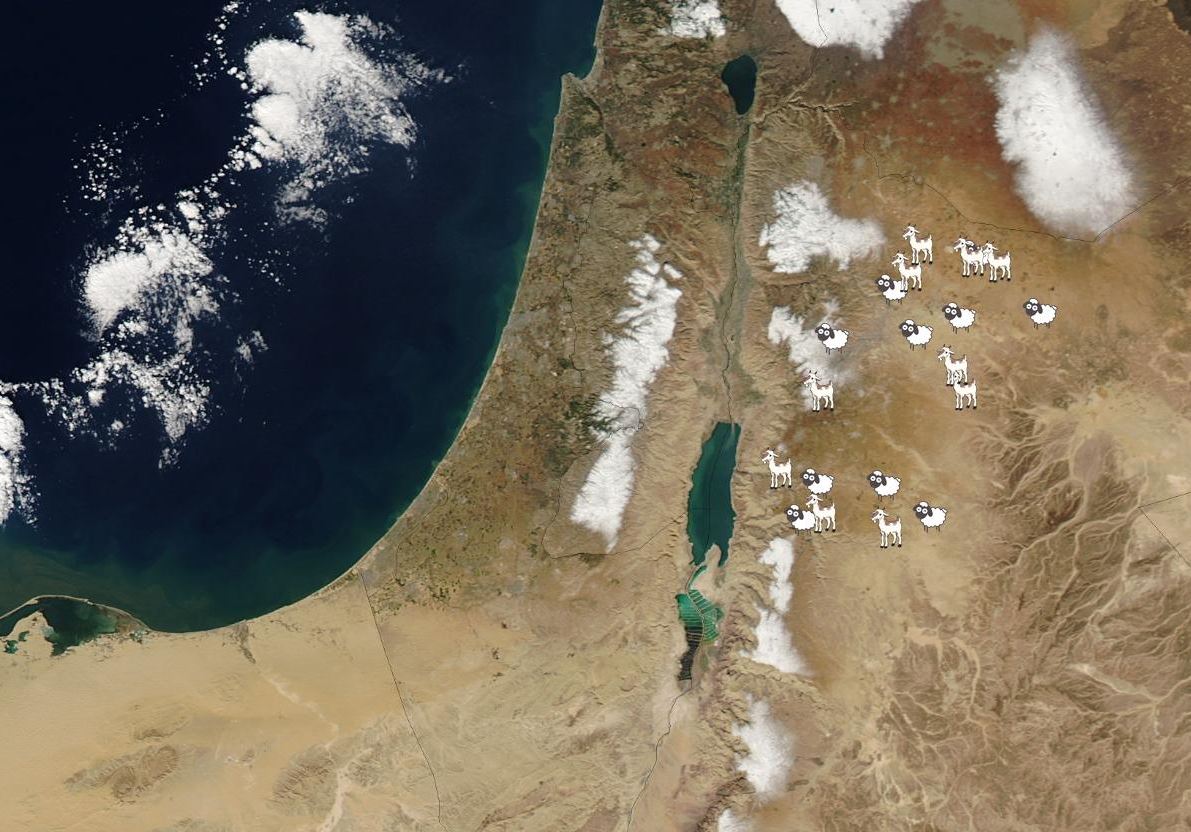
The inheritance east of the Jordan is described very differently in Numbers and Deuteronomy, in both the circumstances of conquest and the motives for settlement.
According to Numbers, Israel sought passage through Sihon’s territory to reach the land. Sihon refused, war developed, and he lost his territory (Numbers 21:21–35). Israel was already on its way to Canaan when Gad and Reuben pointed out their large herds and the recently conquered land’s suitability for grazing, asking to inherit it. After lengthy negotiations, they agreed to send armed forces with the rest of Israel to conquer Canaan. On this condition Moses agreed to their request for an inheritance east of the Jordan (Numbers 32).
In Deuteronomy, by contrast, Sihon’s kingdom was conquered from the outset at the LORD’s command, to possess and settle it: “behold, I have given into thy hand Sihon the Amorite, king of Heshbon, and his land; begin to possess it, and contend with him in battle” (Deuteronomy 2:24). Requesting passage was deliberate provocation intended to lead to war (see “Begin to Possess It, and Contend with Him in Battle”). After conquest, Moses on his own initiative gave the territory to the two and a half tribes without conditions, though requiring them to help their brethren conquer the land (Deuteronomy 3:18–20).
Perhaps the differences derive from viewpoint. Numbers describes events as the people saw them: a process developing from circumstances on the ground, with an initiative by tribes owning many livestock and requiring negotiations and conditions.
Deuteronomy presents Moses’ own viewpoint as a leader privy to the LORD’s intentions. He does more than recount events: he gives them context. The conquest was part of the divine plan, and the Transjordanian inheritance did not arise by chance but was a deliberate step within the overall settlement process.
