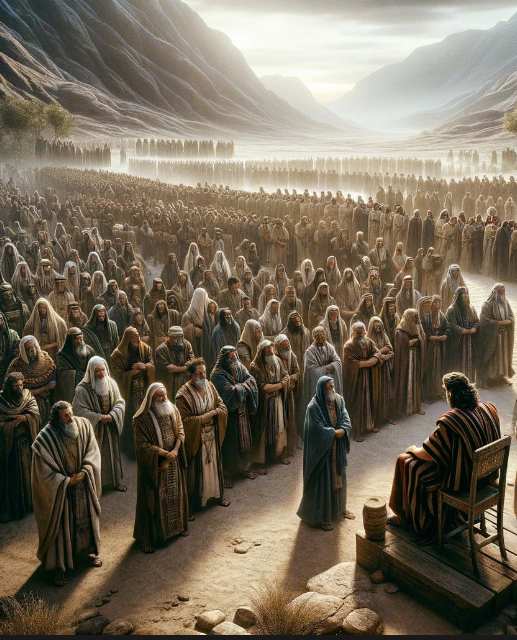
And it came to pass on the morrow, that Moses sat to judge the people; and the people stood about Moses from the morning unto the evening. And when Moses’father-in-law saw all that he did to the people, he said: ‘What is this thing that thou doest to the people? why sittest thou thyself alone, and all the people stand about thee from morning unto even?’ And Moses said unto his father-in-law: ‘Because the people come unto me to inquire of God; when they have a matter, it cometh unto me; and I judge between a man and his neighbour, and I make them know the statutes of God, and His laws.’ And Moses’father-in-law said unto him: ‘The thing that thou doest is not good. Thou wilt surely wear away, both thou, and this people that is with thee; for the thing is too heavy for thee; thou art not able to perform it thyself alone. Hearken now unto my voice, I will give thee counsel, and God be with thee: be thou for the people before God, and bring thou the causes unto God. And thou shalt teach them the statutes and the laws, and shalt show them the way wherein they must walk, and the work that they must do. Moreover thou shalt provide out of all the people able men, such as fear God, men of truth, hating unjust gain; and place such over them, to be rulers of thousands, rulers of hundreds, rulers of fifties, and rulers of tens. And let them judge the people at all seasons; and it shall be, that every great matter they shall bring unto thee, but every small matter they shall judge themselves; so shall they make it easier for thee and bear the burden with thee. (Exodus 18:13–22)
וַיְהִי מִמָּחֳרָת, וַיֵּשֶׁב מֹשֶׁה לִשְׁפֹּט אֶת הָעָם, וַיַּעֲמֹד הָעָם עַל מֹשֶׁה מִן הַבֹּקֶר עַד הָעָרֶב. וַיַּרְא חֹתֵן מֹשֶׁה אֵת כָּל אֲשֶׁר הוּא עֹשֶׂה לָעָם, וַיֹּאמֶר: מָה הַדָּבָר הַזֶּה אֲשֶׁר אַתָּה עֹשֶׂה לָעָם? מַדּוּעַ אַתָּה יוֹשֵׁב לְבַדֶּךָ וְכָל הָעָם נִצָּב עָלֶיךָ מִן בֹּקֶר עַד עָרֶב?
וַיֹּאמֶר מֹשֶׁה לְחֹתְנוֹ: כִּי יָבֹא אֵלַי הָעָם לִדְרֹשׁ אֱלֹהִים. כִּי יִהְיֶה לָהֶם דָּבָר – בָּא אֵלַי, וְשָׁפַטְתִּי בֵּין אִישׁ וּבֵין רֵעֵהוּ, וְהוֹדַעְתִּי אֶת חֻקֵּי הָאֱלֹהִים וְאֶת תּוֹרֹתָיו.
וַיֹּאמֶר חֹתֵן מֹשֶׁה אֵלָיו: לֹא טוֹב הַדָּבָר אֲשֶׁר אַתָּה עֹשֶׂה. נָבֹל תִּבֹּל, גַּם אַתָּה, גַּם הָעָם הַזֶּה אֲשֶׁר עִמָּךְ. כִּי כָבֵד מִמְּךָ הַדָּבָר, לֹא תוּכַל עֲשֹׂהוּ לְבַדֶּךָ.
עַתָּה שְׁמַע בְּקֹלִי אִיעָצְךָ וִיהִי אֱלֹהִים עִמָּךְ.
הֱיֵה אַתָּה לָעָם מוּל הָאֱלֹהִים וְהֵבֵאתָ אַתָּה אֶת הַדְּבָרִים אֶל הָאֱלֹהִים. וְהִזְהַרְתָּה אֶתְהֶם אֶת הַחֻקִּים וְאֶת הַתּוֹרֹת וְהוֹדַעְתָּ לָהֶם אֶת הַדֶּרֶךְ יֵלְכוּ בָהּ וְאֶת הַמַּעֲשֶׂה אֲשֶׁר יַעֲשׂוּן.
וְאַתָּה תֶחֱזֶה מִכָּל הָעָם אַנְשֵׁי חַיִל יִרְאֵי אֱלֹהִים אַנְשֵׁי אֱמֶת שֹׂנְאֵי בָצַע וְשַׂמְתָּ עֲלֵהֶם שָׂרֵי אֲלָפִים שָׂרֵי מֵאוֹת שָׂרֵי חֲמִשִּׁים וְשָׂרֵי עֲשָׂרֹת. וְשָׁפְטוּ אֶת הָעָם בְּכָל עֵת וְהָיָה כָּל הַדָּבָר הַגָּדֹל יָבִיאוּ אֵלֶיךָ וְכָל הַדָּבָר הַקָּטֹן יִשְׁפְּטוּ הֵם וְהָקֵל מֵעָלֶיךָ וְנָשְׂאוּ אִתָּךְ (שמות י"ח, יג-כב)
At the beginning of Yitro, Moses sits alone judging the people from morning until evening. Watching this, Jethro explains that he cannot continue in this way for long. He proposes a hierarchy of judges: Moses will concentrate on teaching statutes and laws, while the judges deal with routine matters, bringing him only the great and difficult cases.
Before Jethro describes Moses’ duty to teach Israel the statutes and laws, and before proposing the hierarchy of judges, he mentions another role: “Be thou for the people before God, and bring thou the causes unto God.”
This is surprising. Why is bringing the people’s matters to the LORD mentioned first? We might expect a model in which the LORD establishes laws, and Moses is commanded to teach Israel and judge them accordingly. This is suggested, for example, at the beginning of Mishpatim: “Now these are the ordinances which thou shalt set before them” (Exodus 21:1). In that model, only rare legal gaps require bringing the people’s matters to the LORD to determine the law; this is not the starting point.
The answer is that Yitro presents a distinctive judicial model in which the people’s voice plays a central, twofold role. It is more than a body of laws handed down from above: the people themselves participate in shaping the law.
Their first role emerges from Moses’ own explanation to Jethro:
And Moses said unto his father-in-law: ‘Because the people come unto me to inquire of God; when they have a matter, it cometh unto me; and I judge between a man and his neighbour, and I make them know the statutes of God, and His laws.’ (Exodus 18:15–16)
וַיֹּאמֶר מֹשֶׁה לְחֹתְנוֹ: כִּי יָבֹא אֵלַי הָעָם לִדְרֹשׁ אֱלֹהִים. כִּי יִהְיֶה לָהֶם דָּבָר – בָּא אֵלַי, וְשָׁפַטְתִּי בֵּין אִישׁ וּבֵין רֵעֵהוּ, וְהוֹדַעְתִּי אֶת חֻקֵּי הָאֱלֹהִים וְאֶת תּוֹרֹתָיו. (שמות י"ח, טו-טז)
According to Moses, the judicial process begins with the people approaching him to inquire of God. They seek the LORD’s guidance about the right path and the proper deed. Their inquiry takes the form of requests for divine judgment in various disputes between people – “for the judgment is God’s” (Deuteronomy 1:17). The need for statutes and laws thus originates with the people, rather than the LORD. Law is a divine answer to human problems arising from below, rather than legislation imposed from above.
The people’s second role follows from the laws’ purpose of meeting their needs. This requires a feedback mechanism allowing them to make their voices heard, raise cases unresolved under existing law, and even request amendment or supplementation. Two central stories illustrate this second role, the opportunity to respond to the law: the Second Passover and the daughters of Zelophehad.
The Second Passover account describes “certain men, who were unclean by the dead body of a man, so that they could not keep the passover.” They protested: “wherefore are we to be kept back, so as not to bring the offering of the LORD in its appointed season?” Moses conveyed their request to the LORD (Numbers 9:6–8). Apparently the law is clear and contains no gap: only a ritually pure person may offer the Passover sacrifice; these men were not pure and therefore were ineligible. But the story teaches that the Torah is not a closed system. It permits a renewed appeal to the LORD when a special need arises, thereby opening the possibility of a Second Passover.
Similarly, even in similar language, Zelophehad’s daughters came before Moses, Eleazar, and the princes and argued: “Our father died in the wilderness … and he had no sons. Why should the name of our father be done away from among his family? … Give unto us a possession among the brethren of our father” (Numbers 27:3–5). Here too the law is straightforward: only sons inherit. Zelophehad had no sons, and so the law required his name to disappear from his family. Yet Moses’ submission of their request to the LORD’s judgment shows that the Torah listens to those harmed by existing law and adapts the law to answer a real and just need.
In the Bible this feedback mechanism appears only in exceptional cases, such as the Second Passover and Zelophehad’s daughters. But its very existence shows that the Torah is a responsive system rather than a closed one. This principle, which became a central instrument for the Sages in shaping halakhah, is already rooted in the Written Torah.
