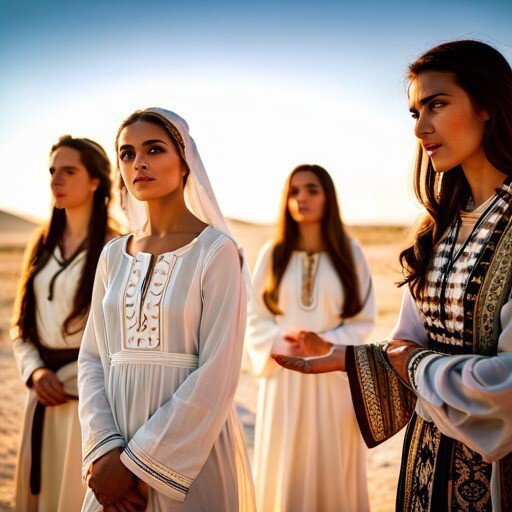
The original plan was to divide the land among the men counted in the census before entering it. Zelophehad’s daughters stood before Moses, Eleazar, the princes, and the whole congregation with an argument:
Why should the name of our father be done away from among his family, because he had no son? Give unto us a possession among the brethren of our father.’ (Numbers 27:4)
לָמָּה יִגָּרַע שֵׁם אָבִינוּ מִתּוֹךְ מִשְׁפַּחְתּוֹ כִּי אֵין לוֹ בֵּן? תְּנָה לָּנוּ אֲחֻזָּה בְּתוֹךְ אֲחֵי אָבִינוּ. (במדבר כ"ז, ד)
Moses brought their case before the LORD, who answered that the daughters’ claim was right and that they should receive an inheritance among their father’s brothers.
But what would have happened had they not made their claim? The question is not merely practical: apparently only the brothers would have inherited. The question is what position Torah law would have taken.
One possibility is that law cannot address every theoretical case. It had not expressly addressed a father with daughters only. The law stated after their claim was nevertheless already the law, merely unstated until now revealed. The wood-gatherer’s case is an example: initially, “And they put him in ward, because it had not been declared what should be done to him.” (Numbers 15:34), and the LORD’s subsequent answer to Moses clarified his legal position retroactively.
The second possibility is that the daughters’ just claim, exposing a moral problem and injustice in existing law, changed the law itself. Without their claim, the original law would have remained, both in practice and in principle.
The story appears to favor the second. First, when detailing inheritance cases, the Torah says “then ye shall cause his inheritance to pass unto his daughter” rather than “give,” as it does for brothers, paternal uncles, or the nearest family relative. This hints that under the original law the inheritance belonged to Zelophehad’s brothers and, following the precedent, is now transferred to his daughters.
Second, later the tribesmen complain that transferring the inheritance to the daughters might cause it to pass to another tribe (Numbers 36:1–12). If the first possibility were correct, we would expect the law, once raised, already to address the predictable concern of Joseph’s descendants. It did not.
This story, like the second Passover story, where impure people ask “wherefore are we to be kept back, so as not to bring the offering of the LORD in its appointed season” (Numbers 9:7), uses the same Hebrew expression as the daughters’ opening “Why should … be done away?” Both teach that human intervention has a place in shaping law, and that its development arises not only from new cases but especially from previously unasked questions.
