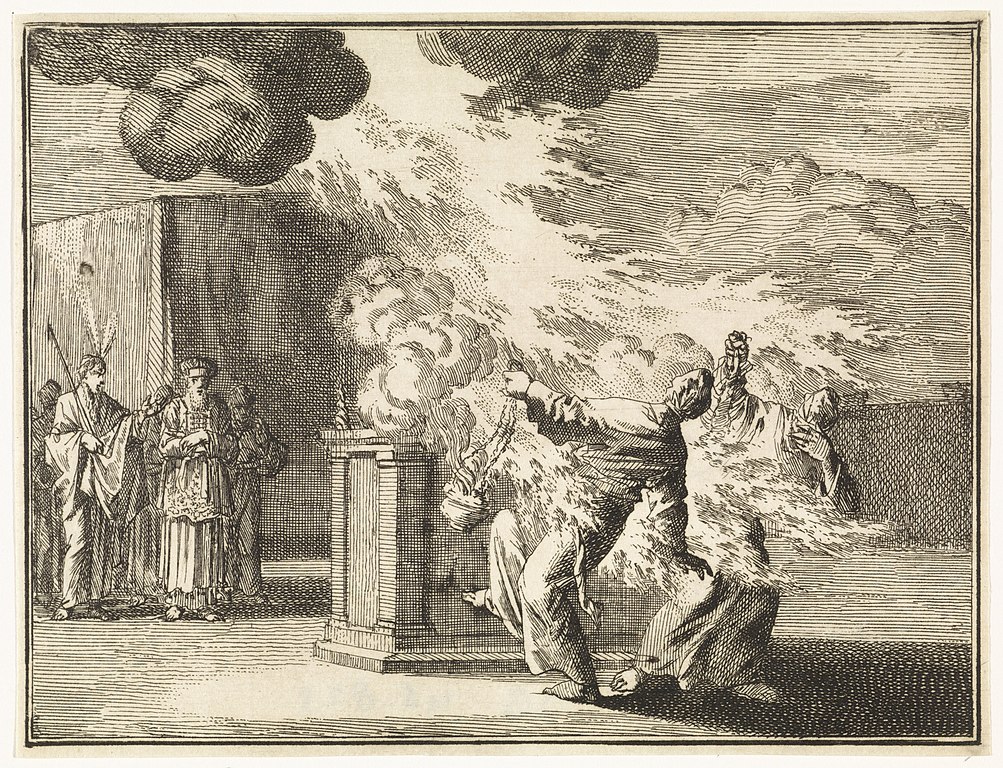
And Aaron spoke unto Moses: ‘Behold, this day have they offered their sin-offering and their burnt-offering before the LORD, and there have befallen me such things as these; and if I had eaten the sin-offering to-day, would it have been well-pleasing in the sight of the LORD? (Leviticus 10:19)
וַיְדַבֵּר אַהֲרֹן אֶל מֹשֶׁה: הֵן הַיּוֹם הִקְרִיבוּ אֶת חַטָּאתָם וְאֶת עֹלָתָם לִפְנֵי ה' וַתִּקְרֶאנָה אֹתִי כָּאֵלֶּה – וְאָכַלְתִּי חַטָּאת הַיּוֹם, הַיִּיטַב בְּעֵינֵי ה'?! (ויקרא י', יט)
What sin- and burnt-offerings did Nadab and Abihu offer? The Torah emphasizes that Aaron offered every sacrifice, his own and the people’s, while his sons assisted (Leviticus 9:1–22). Nadab and Abihu are not even named until they take their fire-pans and burn incense.
Nor is it clear how “they have offered their sin-offering and their burnt-offering before the LORD” relates to not eating the sin-offering. What would Aaron’s answer lack if he simply said: “To-day such things have befallen me, and if I had eaten the sin-offering to-day, would it have been well-pleasing in the sight of the LORD?”
To answer, notice the different descriptions of their deaths in Shemini and Aharei Mot.
Shemini emphasizes their improper act: “and offered strange fire before the LORD, which He had not commanded them” (Leviticus 10:1). Aharei Mot begins “And the LORD spoke unto Moses, after the death of the two sons of Aaron, when they drew near before the LORD, and died,” without mentioning strange fire or disobedience, only their drawing near.
“Be-korvatam” is ambiguous: straightforwardly approaching, but apparently also hinting at offering sacrifice.
Perhaps Aaron’s “they have offered their sin-offering and their burnt-offering” refers to Nadab and Abihu offering themselves by drawing near before the LORD (Leviticus 16:1), thereby replacing Aaron’s sin- and burnt-offerings and the people’s sin-offering goat.
Several hints depict their deaths as sacrifice. First is the parallel between the burnt-offering and fats consumed on the altar and the two brothers:
And there came forth fire from before the LORD, and consumed upon the altar the burnt-offering and the fat. (Leviticus 9:24)
And there came forth fire from before the LORD, and devoured them. (Leviticus 10:2)וַתֵּצֵא אֵשׁ מִלִּפְנֵי ה' וַתֹּאכַל עַל הַמִּזְבֵּחַ אֶת הָעֹלָה וְאֶת הַחֲלָבִים. (ויקרא ט', כד)
וַתֵּצֵא אֵשׁ מִלִּפְנֵי ה' וַתֹּאכַל אוֹתָם. (ויקרא י', ב)
Second, the double emphasis on their being carried outside the camp (Leviticus 10:4–5) parallels Aaron’s sin-offering, also burned outside (Leviticus 9:11). This is especially striking compared with the two hundred and fifty incense offerers, likewise burned but nowhere described as carried outside the camp (Numbers 17:1–5).
Third, Eleazar and Ithamar are twice “the sons of Aaron that were left” (Leviticus 10:12, 16), paralleling “the meal-offering that remaineth of the offerings of the LORD made by fire” (Leviticus 10:12).
Throughout the eighth day, the people waited for the delayed glory. All sacrifices followed Moses’ instructions, yet it had not appeared. Aaron blessed the people and descended the altar; still no glory. Moses and Aaron entered the tent and blessed the people again upon leaving; still no revelation. Finally it appeared as fire issuing from the LORD and consuming the offerings.
But the fire also consumed Nadab and Abihu, who offered strange fire. Their incense apparently caused the revelation through fire, burning them first and then the sacrifices (Rashbam, Leviticus 10:2).
Human sacrifice belonged to the ancient Near East’s religious world; regrettably the Bible attests to its existence in Israel too.
The Torah fiercely opposes its practice while retaining the idea of total devotion and its ritual language. It adopts the terminology but forbids actual enactment.
At the declarative level: “Sanctify unto Me all the first-born, whatsoever openeth the womb among the children of Israel, both of man and of beast, it is Mine” (Exodus 13:2). It unreservedly parallels human and animal firstborn: “The first-born of thy sons shalt thou give unto Me. Likewise shalt thou do with thine oxen, and with thy sheep; seven days it shall be with its dam; on the eighth day thou shalt give it Me” (Exodus 22:28–29). Some Israelites indeed understood this literally, as Micah voices a worshipper’s question: “Shall I give my first-born for my transgression, the fruit of my body for the sin of my soul?” (Micah 6:7). Ezekiel too hints that literal readings led to sacrifice: “Wherefore I gave them also statutes that were not good, and ordinances whereby they should not live; and I polluted them in their own gifts, in that they set apart all that openeth the womb” (Ezekiel 20:25–26). In practice, however, the Torah repeatedly requires human firstborn to be redeemed.
One form was a “foundation sacrifice”: when building a temple, palace, or city, a person was sacrificed and buried in its foundations.
Isaac’s binding on Moriah, the future Temple site, can also be understood against this practice. The LORD commands Abraham to offer his son, and some wording could suggest he did: “By Myself have I sworn, saith the LORD, because thou hast done this thing, and hast not withheld thy son, thine only son, that in blessing I will bless thee…” (Genesis 22:16–17), or Abraham’s returning alone, without Isaac, to his servants (Genesis 22:19). Ultimately, however, no human was sacrificed: a ram replaced Isaac.
Likewise, the vocabulary of Nadab and Abihu’s deaths on the Tabernacle’s founding day – consuming fire, removal outside the camp, “those remaining” – belongs entirely to sacrificial language. But opposing actual human sacrifice, the Torah attributes their deaths to strange fire rather than self-offering. Removing their bodies outside the camp apparently also expresses opposition to foundation sacrifice.
