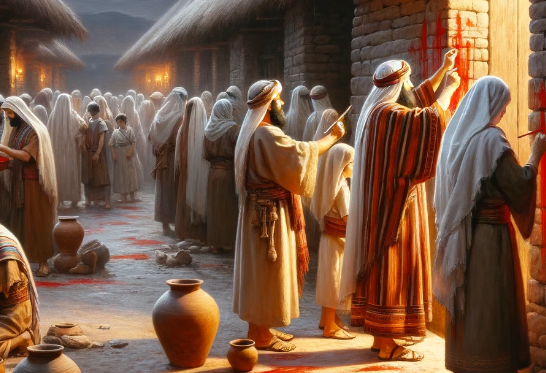
For I will go through the land of Egypt in that night, and will smite all the first-born in the land of Egypt, both man and beast; and against all the gods of Egypt I will execute judgments: I am the LORD. And the blood shall be to you for a token upon the houses where ye are; and when I see the blood, I will pass over you, and there shall no plague be upon you to destroy you, when I smite the land of Egypt. (Exodus 12:12–13)
וְעָבַרְתִּי בְאֶרֶץ מִצְרַיִם בַּלַּיְלָה הַזֶּה, וְהִכֵּיתִי כָל בְּכוֹר בְּאֶרֶץ מִצְרַיִם, מֵאָדָם וְעַד בְּהֵמָה, וּבְכָל אֱלֹהֵי מִצְרַיִם – אֶעֱשֶׂה שְׁפָטִים, אֲנִי ה'. וְהָיָה הַדָּם לָכֶם לְאֹת עַל הַבָּתִּים אֲשֶׁר אַתֶּם שָׁם, וְרָאִיתִי אֶת הַדָּם, וּפָסַחְתִּי עֲלֵכֶם. וְלֹא יִהְיֶה בָכֶם נֶגֶף לְמַשְׁחִית, בְּהַכֹּתִי בְּאֶרֶץ מִצְרָיִם. (שמות י"ב, יב-יג)
A recurring motif in the plagues of Egypt is the distinction the LORD made between Israel and Egypt: the plague struck only the Egyptians, while the Israelites escaped unharmed. Usually – as in the plagues of swarms, pestilence, hail, and darkness – the LORD alone made this distinction. In the plague of the firstborn, however, the Israelites were required to act: they had to put the blood of the Passover offering on the doorposts and lintel, marking a house that would not be struck (Exodus 12:7).
Why was an act on Israel’s part required here to distinguish them from the Egyptians? Why, without blood on the entrances to the houses, might the firstborn of Israel also have been harmed?
My son Roi suggested that, on the eve of the departure from Egypt, every Israelite had to decide whether he and his household considered themselves part of the people of Israel leaving Egypt, or still regarded themselves as Egyptians. Whoever offered a Passover sacrifice and put its blood on the doorposts and lintel marked his house as an Israelite house, and thus merited protection from the plague and redemption from Egypt. On this interpretation, there was nothing peculiar to the plague of the firstborn that required a special act by Israel; this simply happened to be the moment when Israel was tested before leaving Egypt.
I would like to suggest an alternative explanation: something distinctive about the plague of the firstborn itself required Israel to take action in order to escape harm.
Already at the beginning of the Torah, the account of Abel bringing an offering from the firstlings of his flock, which was accepted, hints that the firstborn belong to the LORD. Later, at the beginning of the Exodus story, in a passage anticipating the plague of the firstborn, the LORD commands Moses to tell Pharaoh:
Thus saith the LORD: Israel is My son, My first-born. And I have said unto thee: Let My son go, that he may serve Me; and thou hast refused to let him go. ‘Behold, I will slay thy first-born.’ (Exodus 4:22–23)
כֹּה אָמַר ה': בְּנִי בְכֹרִי יִשְׂרָאֵל! וָאֹמַר אֵלֶיךָ: שַׁלַּח אֶת בְּנִי וְיַעַבְדֵנִי, וַתְּמָאֵן לְשַׁלְּחוֹ – הִנֵּה אָנֹכִי הֹרֵג אֶת בִּנְךָ בְּכֹרֶךָ! (שמות ד', כב-כג)
The next verse recounts a puzzling encounter at a lodging place between the LORD and Moses’ family, in which the LORD nearly killed Moses’ firstborn son (Exodus 4:24–26). This is how Rabban Simeon ben Gamliel understood it in the Babylonian Talmud (Nedarim 32a), as did Rabbenu Hananel in his Torah commentary and the Gaon Samuel ben Hofni, cited in Ibn Ezra’s commentary.
Moses threatened Pharaoh, but the context suggests that this was more than a particular threat: it presented a broad principle, that all firstborn belong to the LORD. Thus, immediately after this declaration, we learn that Moses’ own firstborn was also endangered. Only through Zipporah’s resourcefulness in circumcising her son did the blood of the covenant of circumcision serve as atonement and protection, saving Moses’ son.
Something similar occurred in the plague of the firstborn. The plague intended to strike every firstborn in Egypt also threatened the firstborn of Israel. Perhaps the reason is that here too, killing the Egyptian firstborn expressed a general principle: all firstborn belong to the LORD. As the Torah says later:
The first-born of thy sons shalt thou give unto Me. Likewise shalt thou do with thine oxen, and with thy sheep; seven days it shall be with its dam; on the eighth day thou shalt give it Me. (Exodus 22:28–29)
בְּכוֹר בָּנֶיךָ תִּתֶּן לִּי. כֵּן תַּעֲשֶׂה לְשֹׁרְךָ לְצֹאנֶךָ: שִׁבְעַת יָמִים יִהְיֶה עִם אִמּוֹ – בַּיּוֹם הַשְּׁמִינִי תִּתְּנוֹ לִי. (שמות כ"ב, כח-כט).
Consequently, the firstborn of Israel whose status before the LORD had not been settled – who had neither been redeemed nor consecrated – were also in danger.
As I demonstrated in the chapter “The Impossible Number of Israel’s Firstborn,” the firstborn who were redeemed were counted only from one month to five years of age, while they were still directly associated with “that which opens the womb.” After that age this association lapses, and the firstborn ceases to fall within the sanctity of the firstborn that requires redemption. Hence it was the household, rather than the firstborn themselves, that was commanded to apply the blood: the firstborn were small children unable to act for themselves, and responsibility for settling their status rested with the heads of their families.
Putting the blood of the Passover sacrifice on the doorposts and lintel, like putting blood on the altar and like the blood of Moses’ firstborn son’s circumcision, had an atoning effect. The blood of the Passover sacrifice protected Israel’s firstborn from the destroyer.
In addition, the blood on the doorposts and lintel marked the house as under the LORD’s protection and bound by the covenant with Him. It was a sign that the house had settled its debt to the LORD – rather like the stickers formerly placed on doorposts to show that a household had contributed to the Israel Cancer Association – thereby protecting the firstborn inside from the destroyer.
