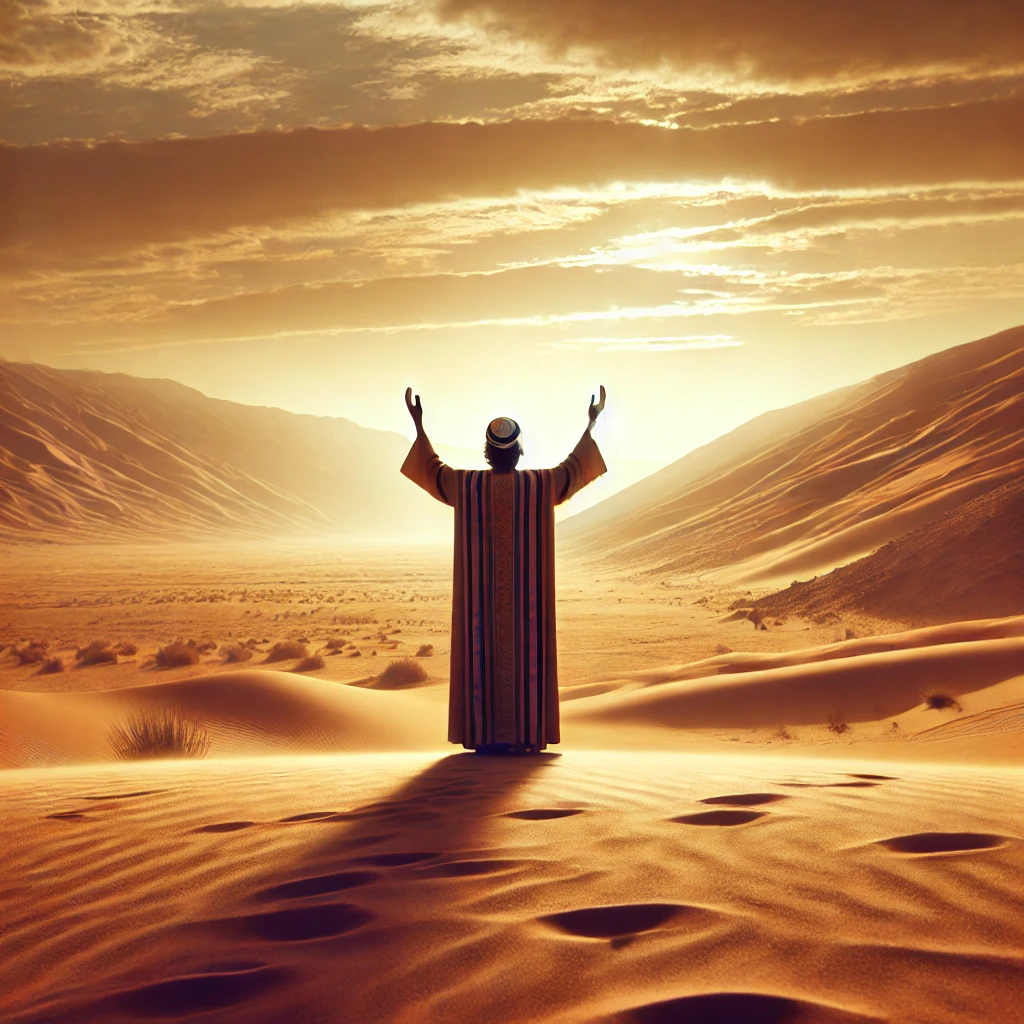
Pharaoh asks four times during the plagues for Moses to pray for removal. Each time the Torah emphasizes Moses first departing.
With frogs departure accompanies execution: Moses and Aaron “went out from Pharaoh,” and Moses cried to the LORD (Exodus 8:8). With swarms Moses first announces, “Behold, I go out from thee, and I will entreat the LORD” (Exodus 8:25), then “Moses went out from Pharaoh, and entreated the LORD” (Exodus 8:26). With hail he specifies beyond the city: “As soon as I am gone out of the city, I will spread forth my hands unto the LORD” (Exodus 9:29), then “Moses went out of the city from Pharaoh, and spread forth his hands unto the LORD” (Exodus 9:33). With locusts he likewise “went out from Pharaoh, and entreated the LORD” (Exodus 10:18).
This repeated pattern is deliberate. Leaving the city apparently bears profound spiritual significance. Why could he not pray inside?
Exodus Rabbah explains: “Moses did not wish to pray within Egypt, because it was filthy with idols and abominations” (12:6).
This fits the plain sense: Egypt is morally and spiritually impure (Leviticus 18:3). Departure severs connection with its corruption, sin, and Pharaoh’s opposition to the LORD. Moses needed a suitable place beyond this flawed Egyptian existence.
Yet the problem seems common to all human spaces, where human weakness and sin limit divine revelation, beyond Egypt’s idols.
The requirement to leave human existence appears after the golden calf:
Now Moses used to take the tent and to pitch it without the camp, afar off from the camp; and he called it The tent of meeting. And it came to pass, that every one that sought the LORD went out unto the tent of meeting, which was without the camp. (Exodus 33:7)
וּמֹשֶׁה יִקַּח אֶת הָאֹהֶל, וְנָטָה לוֹ מִחוּץ לַמַּחֲנֶה הַרְחֵק מִן הַמַּחֲנֶה, וְקָרָא לוֹ אֹהֶל מוֹעֵד. וְהָיָה כָּל מְבַקֵּשׁ ה' – יֵצֵא אֶל אֹהֶל מוֹעֵד אֲשֶׁר מִחוּץ לַמַּחֲנֶה. (שמות ל"ג, ז)
Moses’ taking and pitching the tent outside and naming it “tent of meeting” innovated no mere departure: before the Tabernacle, divine encounter always occurred outside the camp, in the wilderness.
Examples include transferring Moses’ spirit to seventy elders (Numbers 11:24–25), and Moses, Aaron, and Miriam going out after criticizing Moses (Numbers 12:5–10).
The innovation was a designated encounter site showing that despite sin, the LORD still wished to meet.
The later central Tabernacle marked a new relationship: combining divine presence and human space for the first time. His glory could dwell continuously amid inevitable impurity: “that dwelleth with them in the midst of their uncleanness” (Leviticus 16:16).
Thereafter presence required purification of those approaching holiness, and continuous cleansing rites for the Tabernacle itself, rather than departure. A new balance combined His constant presence with daily human cycles of purity and impurity. Exodus thus answers how He can dwell among humanity without distancing Himself.
