We would naturally expect the red heifer’s ashes to be kept in the holiest place, perhaps even in the Ark of the Covenant in the Holy of Holies, alongside Aaron’s staff and the jar of manna. There, at the heart of holiness, they would receive full protection and the greatest care.
Surprisingly, however, the Torah commands placing them “without the camp in a clean place” (Numbers 19:9), outside the camp in a seemingly exposed, less protected location. Why there rather than at the camp’s center, somewhere protected and apparently holier?
The answer is that the ashes, intended to purify corpse impurity, must be kept as far as possible from sources of impurity. The camp, where human beings live, is never entirely pure. In cities and camps alike, human life naturally involves unavoidable cycles of impurity and purity, such as menstruation, childbirth, and death.
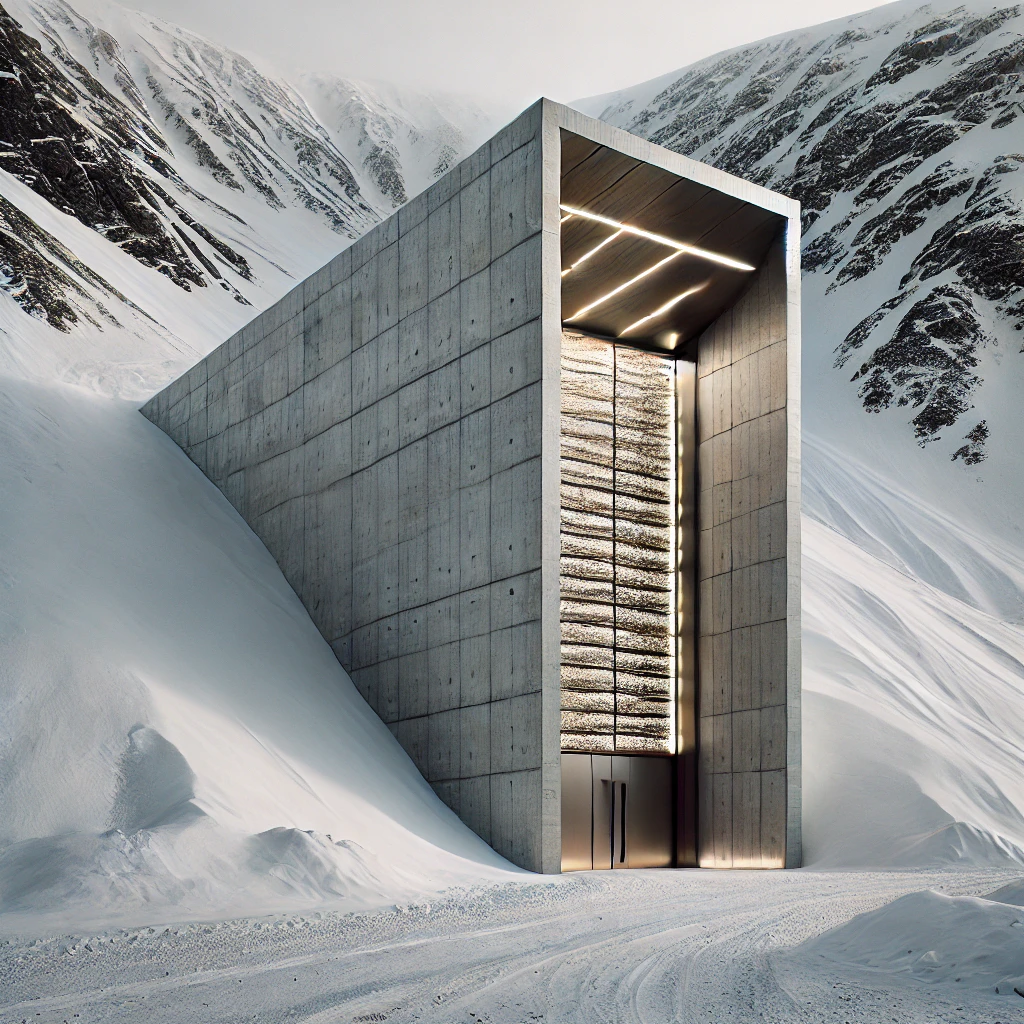
In this sense, keeping the ashes outside the camp recalls the location of the Global Seed Vault in Svalbard, Norway, far from settlements and any danger of contamination.
This is why Moses told Pharaoh he would pray to the LORD only after leaving the city (Exodus 9:29): the city is by definition an impure place (see “Leaving the City”). It also explains why the LORD’s mountain, Sinai, is in the wilderness far from settlement, why Moses took the Tent of Meeting outside the camp (see “Moses’ Tent”), and why the ceremony sharing Moses’ spirit with the seventy elders occurred in the Tent of Meeting outside the camp, an event of revelation and the resting of the LORD’s spirit (Numbers 11:24–30). On the relationship between the Tent of Meeting at the camp’s center and the one outside, see “The Tent of Meeting, the Veils, and the Incense Altar” in In Search of the Lost Peshat.
All these examples emphasize the difficulty of maintaining holiness within human living space. Against this background we can understand the special challenge of establishing the Tabernacle at the camp’s center.
The command to establish a Tabernacle in the midst of Israel’s camp – “And let them make Me a sanctuary, that I may dwell among them.” (Exodus 25:8) – poses a significant challenge. For the Tent of Meeting to dwell “in the midst of their uncleannesses” (Leviticus 16:16), continual purification of the Tabernacle from Israel’s impurities is required.
Purification begins with sprinkling sacrificial blood on the altar, atoning for injury to the sacred. More serious sins require bringing the blood inside the sanctuary to atone for deeper parts of the Tabernacle. The process culminates on the Day of Atonement, the tenth of the seventh month, when the high priest enters the innermost Holy of Holies and purifies the Tabernacle’s holiest and most interior parts (Leviticus 16).
Corpse impurity is the most severe form in the biblical impurity system. Creating the purifying ashes requires distance from every impurity, even the slightest. The Torah therefore demands taking the heifer outside the camp and burning it there. The process proceeds in stages until the final stage, when the ashes are taken to a clean place outside and kept there, far from the camp’s sources of impurity.
Preserving the ashes’ purity at a distance from the camp is a necessary condition for the Tabernacle’s existence at the heart of the people’s life. Precisely because it dwells within the camp, a permanent reserve of absolute purity is required outside. The Torah thus creates a delicate balance between divine presence and human life with all its impurities, allowing the LORD’s glory to dwell amid ordinary life: “that dwelleth with them in the midst of their uncleannesses” (Leviticus 16:16).
