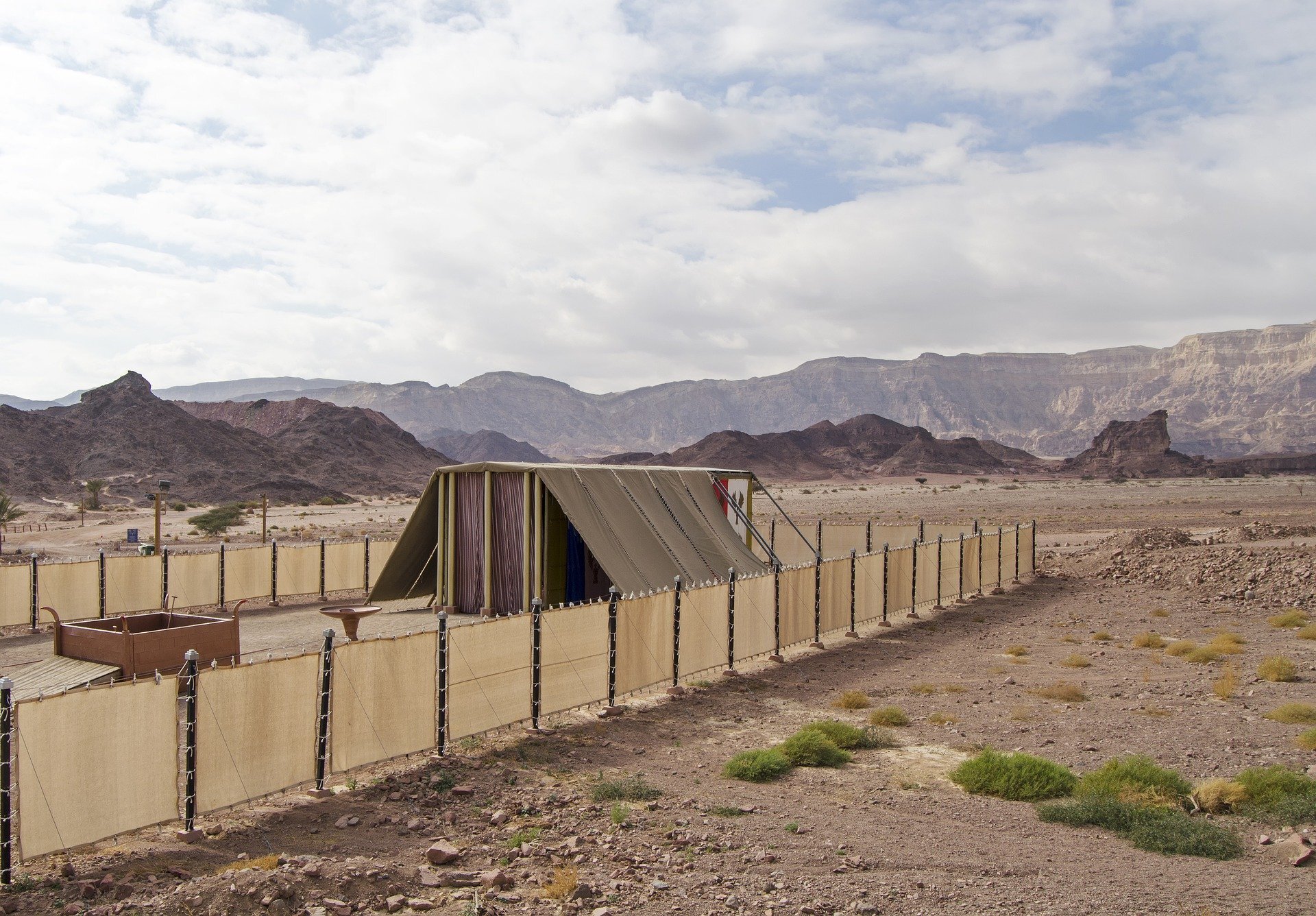
Immediately after Moses’ ascent at the end of Exodus 24, chapter 25 opens a long, detailed series of practical commands whose general heading is “And let them make Me a sanctuary, that I may dwell among them” (וְעָשׂוּ לִי מִקְדָּשׁ וְשָׁכַנְתִּי בְּתוֹכָם; Exodus 25:8). In the ensuing portions, this “sanctuary” appears under several names: Mishkan, “Tabernacle”; Ohel Moed, “tent of meeting”; and their combination, “Tabernacle of the tent of meeting.”
Mishkan and ohel, “tent,” also name the two inner coverings. The expensive innermost covering, called Mishkan, consisted of blue, purple, scarlet, and fine linen, with woven cherubim (Exodus 26:1). The covering outside it, called the “tent,” consisted of eleven goat-hair curtains (26:7).
These names express more than the coverings: they express the sanctuary’s purposes. Mishkan, from the root “to dwell,” expresses God’s dwelling among Israel: “that I may dwell among them” (וְשָׁכַנְתִּי). Ohel, normally in Ohel Moed, identifies the place of meeting with God.
“Tent of meeting” does not apply only to the Tabernacle in the camp’s center. The Torah also describes a tent outside the camp. It appears to be a simple tent supported by a central pole, not the massive boarded structure. We first encounter it in Exodus 33, after the golden calf and amid the Tabernacle passages. Moses took the tent and pitched it outside the camp:
Now Moses used to take the tent and to pitch it without the camp, afar off from the camp; and he called it The tent of meeting. And it came to pass, that every one that sought the LORD went out unto the tent of meeting, which was without the camp. And it came to pass, when Moses went out unto the Tent, that all the people rose up, and stood, every man at his tent door, and looked after Moses, until he was gone into the Tent. And it came to pass, when Moses entered into the Tent, the pillar of cloud descended, and stood at the door of the Tent; and [the LORD] spoke with Moses. And when all the people saw the pillar of cloud stand at the door of the Tent, all the people rose up and worshipped, every man at his tent door. And the LORD spoke unto Moses face to face, as a man speaketh unto his friend. And he would return into the camp; but his minister Joshua, the son of Nun, a young man, departed not out of the Tent. (Exodus 33:7–11)
וּמֹשֶׁה יִקַּח אֶת הָאֹהֶל וְנָטָה לוֹ מִחוּץ לַמַּחֲנֶה הַרְחֵק מִן הַמַּחֲנֶה וְקָרָא לוֹ אֹהֶל מוֹעֵד וְהָיָה כָּל מְבַקֵּשׁ ה' יֵצֵא אֶל אֹהֶל מוֹעֵד אֲשֶׁר מִחוּץ לַמַּחֲנֶה. וְהָיָה כְּצֵאת מֹשֶׁה אֶל הָאֹהֶל יָקוּמוּ כָּל הָעָם וְנִצְּבוּ אִישׁ פֶּתַח אָהֳלוֹ וְהִבִּיטוּ אַחֲרֵי מֹשֶׁה עַד בֹּאוֹ הָאֹהֱלָה. וְהָיָה כְּבֹא מֹשֶׁה הָאֹהֱלָה יֵרֵד עַמּוּד הֶעָנָן וְעָמַד פֶּתַח הָאֹהֶל וְדִבֶּר עִם מֹשֶׁה. וְרָאָה כָל הָעָם אֶת עַמּוּד הֶעָנָן עֹמֵד פֶּתַח הָאֹהֶל וְקָם כָּל הָעָם וְהִשְׁתַּחֲווּ אִישׁ פֶּתַח אָהֳלוֹ. וְדִבֶּר ה' אֶל מֹשֶׁה פָּנִים אֶל פָּנִים כַּאֲשֶׁר יְדַבֵּר אִישׁ אֶל רֵעֵהוּ וְשָׁב אֶל הַמַּחֲנֶה וּמְשָׁרְתוֹ יְהוֹשֻׁעַ בִּן נוּן נַעַר לֹא יָמִישׁ מִתּוֹךְ הָאֹהֶל. (שמות ל"ג ז-יא)
Its purpose matched its name: a meeting place between God and His seekers, not God’s dwelling. The pillar of cloud descended to its entrance to speak with Moses, implying that God did not reside there permanently. Joshua’s constant presence inside also shows that this was not God’s residence; otherwise it would be inappropriate for him to stay as though at home. Similarly, Samuel sleeps in the sanctuary at Shiloh (1 Samuel 3:3). This is inconsistent with a permanent divine residence but suits a place of meeting.
Another meeting at the external tent occurs after Miriam and Aaron speak about Moses’ Cushite wife, ending with Miriam’s skin affliction:
And the LORD spoke suddenly unto Moses, and unto Aaron, and unto Miriam: ‘Come out ye three unto the tent of meeting.’ And they three came out. And the LORD came down in a pillar of cloud, and stood at the door of the Tent, and called Aaron and Miriam; and they both came forth. (Numbers 12:4–5)
וַיֹּאמֶר ה' פִּתְאֹם אֶל מֹשֶׁה וְאֶל אַהֲרֹן וְאֶל מִרְיָם צְאוּ שְׁלָשְׁתְּכֶם אֶל אֹהֶל מוֹעֵד וַיֵּצְאוּ שְׁלָשְׁתָּם. וַיֵּרֶד ה' בְּעַמּוּד עָנָן וַיַּעֲמֹד פֶּתַח הָאֹהֶל וַיִּקְרָא אַהֲרֹן וּמִרְיָם וַיֵּצְאוּ שְׁנֵיהֶם. (במדבר י"ב ד-ה)
“Come out ye three unto the tent of meeting” implies that this tent too was outside the camp and required leaving it.
Calling the Tabernacle a “tent of meeting” therefore expresses its additional purpose, previously fulfilled outside the camp: meeting with God. In this respect the central sanctuary replaced the external tent.
Did the external tent continue after the Tabernacle was built? This seems unlikely. If God dwelt in the camp’s center, why meet people outside it? The Tabernacle also functioned as a meeting tent, making alternating between two locations less plausible. Yet early Numbers contains accounts of an external tent after the Tabernacle’s erection in the narrative sequence: the spirit bestowed on seventy elders (11:24–26) and Miriam’s affliction (chapter 12).
Several solutions are possible; I will suggest two. First, these events may have occurred before construction despite their later textual position. Numbers begins on the first day of the second month of the second year (1:1), a month after the Tabernacle’s erection on the first day of the first month (Exodus 40:17). We might assume everything following occurred later. Yet explicit dates and hints show that some early Numbers accounts occurred before the second month. Chapter 7 describes the leaders’ offerings on the day Moses finished erecting the Tabernacle, at the first month’s beginning. Chapter 9 dates the command associated with the second Passover to the first month of the second year.
Moreover, the seventy elders account (Numbers 11:16–35) parallels earlier events. “Seventy elders” first appears at the covenant of the basins (Exodus 24:1), suggesting an earlier setting for their selection. The quail following the bestowal of spirit parallels Exodus 16:12–13. Since neither this event nor Miriam’s affliction is explicitly dated, they may have occurred before construction, while the meeting tent remained outside.
The second approach accepts a real contradiction reflecting the two perspectives explored in “A Study of the Revelation at Mount Sinai”: “Moses’ Prophecy” and “Love.” Besides location, the two tents differ in their intended audience. The central tent was for meeting Israel as a whole (Exodus 29:43), even through representatives, priests or Moses. The external tent was for Moses and individual seekers rather than the whole nation (Exodus 33:7).
God’s meeting with Moses outside continues the “Moses’ Prophecy” perspective: revelation enhances Moses’ authority, as God announces before Sinai that the people will hear Him speak with Moses and believe in him forever (Exodus 19:9). When Moses walks to the external tent, everyone stands watching in admiration and awe and sees God speaking with him face to face, just as at Sinai in that perspective. The other external-tent accounts in Numbers likewise concern Moses’ prophetic uniqueness: God explains his superiority to other prophets in Miriam’s episode, and his spirit is bestowed on seventy elders. In this perspective, a meeting tent for all Israel never stood centrally. In the “Love” perspective, the Tabernacle served as Israel’s meeting tent through its priestly representatives, while Moses’ external tent did not exist.
To combine the perspectives into one historical account, we can posit both locations at different times. Before construction the meeting tent was outside; afterward the Tabernacle fulfilled that function. Since God’s dwelling centrally while meeting Moses outside is implausible, Moses’ tent was presumably put away. On this synthesis the early Numbers accounts of the external tent refer to the earlier period, as in the first explanation.
The Place of Meeting
The name expresses the tent’s function, but where exactly did meeting occur, and what does the location signify? The Tabernacle passages offer three answers.
In God’s first command, the ark description places His meeting with Moses above the ark-cover, between the two cherubim on the ark of testimony (מֵעַל הַכַּפֹּרֶת מִבֵּין שְׁנֵי הַכְּרֻבִים אֲשֶׁר עַל אֲרוֹן הָעֵדֻת; Exodus 25:22). This implies the ark’s location, inside the veil (26:33).
A second possibility emerges from the concluding verses after the daily morning and evening offerings:
It shall be a continual burnt-offering throughout your generations at the door of the tent of meeting before the LORD, where I will meet with you, to speak there unto thee. And there I will meet with the children of Israel; and [the Tent] shall be sanctified by My glory. (Exodus 29:42–43)
עֹלַת תָּמִיד לְדֹרֹתֵיכֶם פֶּתַח אֹהֶל מוֹעֵד לִפְנֵי ה' אֲשֶׁר אִוָּעֵד לָכֶם שָׁמָּה לְדַבֵּר אֵלֶיךָ שָׁם. וְנֹעַדְתִּי שָׁמָּה לִבְנֵי יִשְׂרָאֵל וְנִקְדַּשׁ בִּכְבֹדִי. (שמות כ"ט מב-מג)
What does “there” refer to? It may mean the whole tent: the continual offering is at the entrance of the tent in which God meets Israel. Or it may refer specifically to the entrance itself.
Notice that this meeting is directed toward the Israelites. Since they do not enter the tent, revelation for them naturally occurs at its entrance. Several accounts, especially of the external tent, describe God speaking with Moses at the entrance before Israel. These include the cloud’s descent after the golden calf and the episode of Miriam and Aaron. God also appears at the central tent’s entrance during Korah’s uprising:
And they took every man his fire-pan, and put fire in them, and laid incense thereon, and stood at the door of the tent of meeting with Moses and Aaron. And Korah assembled all the congregation against them unto the door of the tent of meeting; and the glory of the LORD appeared unto all the congregation. (Numbers 16:18–19)
וַיִּקְחוּ אִישׁ מַחְתָּתוֹ וַיִּתְּנוּ עֲלֵיהֶם אֵשׁ וַיָּשִׂימוּ עֲלֵיהֶם קְטֹרֶת וַיַּעַמְדוּ פֶּתַח אֹהֶל מוֹעֵד וּמֹשֶׁה וְאַהֲרֹן. וַיַּקְהֵל עֲלֵיהֶם קֹרַח אֶת כָּל הָעֵדָה אֶל פֶּתַח אֹהֶל מוֹעֵד וַיֵּרָא כְבוֹד ה' אֶל כָּל הָעֵדָה. (במדבר ט"ז יח-יט)
The third possibility, already hinted at, places revelation not in one specific part, entrance or Holy of Holies, but throughout the tent’s interior. The incense altar’s placement is described as follows:
And thou shalt put it before the veil that is by the ark of the testimony, before the ark-cover that is over the testimony, where I will meet with thee. (Exodus 30:6)
וְנָתַתָּה אֹתוֹ לִפְנֵי הַפָּרֹכֶת אֲשֶׁר עַל אֲרֹן הָעֵדֻת לִפְנֵי הַכַּפֹּרֶת אֲשֶׁר עַל הָעֵדֻת אֲשֶׁר אִוָּעֵד לְךָ שָׁמָּה (שמות ל' ו)
The altar stands before the veil, on its outer side. Again, “where I will meet with thee” is ambiguous. Does “there” refer to “before the veil,” the altar’s location, or to the ark and ark-cover, implying meeting at the ark?
The same phrase appears in preparing incense:
And thou shalt beat some of it very small, and put of it before the testimony in the tent of meeting, where I will meet with thee; it shall be unto you most holy. (Exodus 30:36)
וְנָתַתָּה מִמֶּנָּה לִפְנֵי הָעֵדֻת בְּאֹהֶל מוֹעֵד אֲשֶׁר אִוָּעֵד לְךָ שָׁמָּה... (שמות ל' לו)
Here the place seems more broadly defined: the tent’s interior, where incense is placed daily on the altar. If the intention were the ark inside the veil, “where I will meet with thee” would more naturally follow “before the testimony”: “put some of it in the tent of meeting before the testimony, where I will meet with thee.” This is a hypothetical rearrangement. It would also be more appropriate to name the cherubim or at least the ark-cover.
Thus different verses place meeting between the cherubim, throughout the tent, or at its entrance. To retain all three accounts, we may say God met in different places on different occasions for different purposes: public revelation, daily revelation, or rare, special revelation.
Three Kinds of Revelation
At the entrance, revelation is public, intended for Israel to see. An essential element is the whole people’s ability to witness it, so it occurs where all can see. Indeed, every cited entrance revelation emphasizes the people’s presence.
The other two locations are inside rather than at the entrance. These meetings are intimate, not witnessed by everyone. One is precisely located in the Holy of Holies above the ark between the cherubim; the other concerns the whole interior. Meeting inside the veil is rare and special, as stated immediately after the death of Aaron’s sons:
and the LORD said unto Moses: ‘Speak unto Aaron thy brother, that he come not at all times into the holy place within the veil, before the ark-cover which is upon the ark; that he die not; for I appear in the cloud upon the ark-cover. (Leviticus 16:2)
וַיֹּאמֶר ה' אֶל מֹשֶׁה דַּבֵּר אֶל אַהֲרֹן אָחִיךָ וְאַל יָבֹא בְכָל עֵת אֶל הַקֹּדֶשׁ מִבֵּית לַפָּרֹכֶת אֶל פְּנֵי הַכַּפֹּרֶת אֲשֶׁר עַל הָאָרֹן וְלֹא יָמוּת כִּי בֶּעָנָן אֵרָאֶה עַל הַכַּפֹּרֶת. (ויקרא ט"ז ב)
Meeting in the tent, by contrast, is more frequent, perhaps daily, whenever Moses enters to speak with God. Even then, the voice proceeds from between the ark’s cherubim to Moses in the tent:
And when Moses went into the tent of meeting that He might speak with him, then he heard the Voice speaking unto him from above the ark-cover that was upon the ark of the testimony, from between the two cherubim; and He spoke unto him. (Numbers 7:89)
וּבְבֹא מֹשֶׁה אֶל אֹהֶל מוֹעֵד לְדַבֵּר אִתּוֹ וַיִּשְׁמַע אֶת הַקּוֹל מִדַּבֵּר אֵלָיו מֵעַל הַכַּפֹּרֶת אֲשֶׁר עַל אֲרֹן הָעֵדֻת מִבֵּין שְׁנֵי הַכְּרֻבִים וַיְדַבֵּר אֵלָיו. (במדבר ז' פט)
We have therefore distinguished three kinds of meeting: at the entrance, in the interior, and in the Holy of Holies. As I will now show, these correspond to different descriptions and functions of some furnishings.
The Veil
Comparing the several descriptions of the furnishings reveals interesting differences. God’s initial command says:
And thou shalt make a veil … And thou shalt hang up the veil under the clasps, and shalt bring in thither within the veil the ark of the testimony; and the veil shall divide unto you between the holy place and the most holy. And thou shalt put the ark-cover upon the ark of the testimony in the most holy place. And thou shalt set the table without the veil, and the candlestick over against the table … (Exodus 26:31, 33–35)
וְעָשִׂיתָ פָרֹכֶת... וְנָתַתָּה אֶת הַפָּרֹכֶת תַּחַת הַקְּרָסִים וְהֵבֵאתָ שָׁמָּה מִבֵּית לַפָּרֹכֶת אֵת אֲרוֹן הָעֵדוּת וְהִבְדִּילָה הַפָּרֹכֶת לָכֶם בֵּין הַקֹּדֶשׁ וּבֵין קֹדֶשׁ הַקֳּדָשִׁים. וְנָתַתָּ אֶת הַכַּפֹּרֶת עַל אֲרוֹן הָעֵדֻת בְּקֹדֶשׁ הַקֳּדָשִׁים. וְשַׂמְתָּ אֶת הַשֻּׁלְחָן מִחוּץ לַפָּרֹכֶת וְאֶת הַמְּנֹרָה נֹכַח הַשֻּׁלְחָן... (שמות כ"ו לא-לה)
The veil is hung first, then the ark brought into the inner area, now called the Holy of Holies. Hanging it creates a new, defined sacred space into which the ark can be brought.
The same emerges from bringing the Tabernacle to Moses:
And they brought the tabernacle unto Moses, the Tent, and all its furniture, its clasps, its boards, its bars, and its pillars, and its sockets; and the covering of rams’skins dyed red, and the covering of sealskins, and the veil of the screen; the ark of the testimony, and the staves thereof, and the ark-cover; the table, all the vessels thereof, and the showbread; the pure candlestick, the lamps thereof, even the lamps to be set in order, and all the vessels thereof, and the oil for the light; and the golden altar, and the anointing oil, and the sweet incense, and the screen for the door of the Tent; (Exodus 39:33–38)
וַיָּבִיאוּ אֶת הַמִּשְׁכָּן אֶל מֹשֶׁה אֶת הָאֹהֶל וְאֶת כָּל כֵּלָיו קְרָסָיו קְרָשָׁיו בְּרִיחָו וְעַמֻּדָיו וַאֲדָנָיו. וְאֶת מִכְסֵה עוֹרֹת הָאֵילִם הַמְאָדָּמִים וְאֶת מִכְסֵה עֹרֹת הַתְּחָשִׁים וְאֵת פָּרֹכֶת הַמָּסָךְ. אֶת אֲרוֹן הָעֵדֻת וְאֶת בַּדָּיו וְאֵת הַכַּפֹּרֶת. אֶת הַשֻּׁלְחָן אֶת כָּל כֵּלָיו וְאֵת לֶחֶם הַפָּנִים. אֶת הַמְּנֹרָה הַטְּהֹרָה אֶת נֵרֹתֶיהָ נֵרֹת הַמַּעֲרָכָה וְאֶת כָּל כֵּלֶיהָ וְאֵת שֶׁמֶן הַמָּאוֹר. וְאֵת מִזְבַּח הַזָּהָב וְאֵת שֶׁמֶן הַמִּשְׁחָה וְאֵת קְטֹרֶת הַסַּמִּים וְאֵת מָסַךְ פֶּתַח הָאֹהֶל. (שמות ל"ט לג-לח)
The veil appears as a structural component, like boards and curtains, before the furnishings. The entrance screen, functioning like a door, comes at the list’s end. The veil divides the interior into holy and most holy areas, matching the initial command’s sequence. By contrast, in the final two descriptions – the erection command and its execution – the ark enters first and the veil follows:
And he took and put the testimony into the ark, and set the staves on the ark, and put the ark-cover above upon the ark. And he brought the ark into the tabernacle, and set up the veil of the screen, and screened the ark of the testimony; as the LORD commanded Moses. (Exodus 40:20–21)
וַיִּקַּח וַיִּתֵּן אֶת הָעֵדֻת אֶל הָאָרֹן וַיָּשֶׂם אֶת הַבַּדִּים עַל הָאָרֹן וַיִּתֵּן אֶת הַכַּפֹּרֶת עַל הָאָרֹן מִלְמָעְלָה. וַיָּבֵא אֶת הָאָרֹן אֶל הַמִּשְׁכָּן וַיָּשֶׂם אֵת פָּרֹכֶת הַמָּסָךְ וַיָּסֶךְ עַל אֲרוֹן הָעֵדוּת כַּאֲשֶׁר צִוָּה ה' אֶת מֹשֶׁה. (שמות מ' כ-כא)
Here the veil does not divide the tent into two precincts but covers or conceals the ark. The tent is one space of uniform holiness.
We thus find two perspectives: a partition creating holy and most holy spaces, and a screen merely concealing the ark. In the second, the interior remains equally holy throughout.
These correspond to the different locations and kinds of revelation, since revelation’s place depends on how the structure is conceived. A dividing veil creates a Holy of Holies for special revelation, occurring rarely, as Leviticus 16:2 warns against entering at all times. A concealing veil leaves one interior in which revelation occurs throughout, more frequently, whenever Moses enters to speak.
The Incense Altar
The location and nature of revelation correspond to the veil’s character and function. Apparently the incense altar likewise had different aspects corresponding to those revelations.
One description differs markedly from the others. Usually the altar is listed with the inner furnishings, following table and lampstand, as in Exodus 30:27 and 31:8. But the first command omits it, implying that it did not exist. Even the courtyard altar is called simply “the altar” (27:1), rather than “altar of burnt offering” as elsewhere, suggesting it was the only altar. An incense altar appears later as an appendix after furnishings and priestly consecration (30:1–10), but the initial description retains its meaning. There are thus two accounts: without an incense altar and with one.
Its location also receives two descriptions. Usually the exact position is unstated, although it consistently follows table and lampstand. More detailed accounts locate it before the veil: the appendix (30:6) and Moses’ erection (40:26). But the erection command says to place the gold incense altar before the ark of testimony (לִפְנֵי אֲרוֹן הָעֵדֻת; 40:5), ignoring the veil as though it did not exist. This cannot mean inside the veil in the Holy of Holies: that would call for listing the altar before the veil, whereas every account lists veil, table, lampstand, then incense altar. It stood outside, but this verse emphasizes facing the ark and disregards the veil.
These locations fit the different revelations and veil functions. Standing before the veil corresponds to an important structural partition creating the Holy of Holies for distinctive revelation. Its outer-side placement deserves explicit mention. Standing before the ark while ignoring the veil fits a mere covering, with revelation throughout the interior. Ark and altar then occupy one space, and a covering veil can be ignored, like a mantle covering a Torah scroll.
We must still explain the first command’s omission of the incense altar. The answer concerns its function.
The Incense Altar’s Function
The verses describe its use, not its purpose. We might simply assume it perfumed the interior. But many passages describe God appearing in a cloud. After Aaron’s sons died, God forbade entering within the veil at any time except through a special rite raising an incense cloud. This enabled manifestation and encounter, covering the ark-cover so the priest would not die (Leviticus 16:13). Accordingly, the incense altar could generate the cloud enabling revelation. Paradoxically, this explains why it might be unnecessary. If meeting in the Holy of Holies was rare (16:2, 34), an incense cloud was needed but not a dedicated altar; coals from another source, such as the burnt-offering altar, sufficed. A daily incense altar was superfluous and absent from that perspective’s command. Leviticus explicitly raises the cloud inside the veil using a firepan of coals from the outer altar, ignoring any incense altar (16:12).
The Perspectives on Meeting, the Veil, and the Incense Altar
I have presented three meeting locations and corresponding functions of veil and altar. The following table compares purpose, frequency, location, veil function, altar location, and altar purpose. I will then explain its contents.
| Purpose of Meeting | Frequency | Place of Revelation | Veil's Function | Incense Altar's Location | Incense Altar's Purpose |
|---|---|---|---|---|---|
| Moses' meeting with God | Daily | The whole tent interior | Concealing or covering the ark | Before the ark | Enabling the daily encounter through the incense cloud |
| Atonement for the sanctuary | Rare | The Holy of Holies | Dividing the Tabernacle into holy and most holy areas | No altar exists | No dedicated altar is needed to create the cloud because encounters in the Holy of Holies are rare |
| Before the veil | Perfuming the Tabernacle interior |
In one perspective, meetings occur frequently throughout the interior whenever Moses enters. This fits a veil merely covering the ark, without dividing the space, and revelation extending throughout. The altar faces the ark despite actually standing before the veil, because the veil is only a covering. Its purpose is to generate the incense cloud enabling the frequent encounter between God and man.
In the second perspective, meeting occurs specifically between the cherubim inside the veil, not throughout the tent. It is rare and serves to atone for the sanctuary from Israel’s impurities. Entry is enabled by Leviticus 16’s special procedure. The veil divides holy from most holy, and meeting occurs in the innermost precinct.
For the altar, this second perspective divides into two sub-perspectives. The first, visible in the initial construction command, has no incense altar. Its omission emphasizes that it is unnecessary for revelation: rare meetings inside the veil require no daily altar to generate their cloud, since coals from the burnt-offering altar suffice. Leviticus 16 indeed directs the priest to take a firepan of coals from “the altar from before the LORD” (מֵעַל הַמִּזְבֵּחַ מִלִּפְנֵי ה’; 16:12), meaning the outer altar. The text does not specify which altar, further implying there was only one.
This cannot be the only sub-perspective, since the altar appears in the account of bringing the Tabernacle to Moses, where the veil divides the holy from the most holy. An altar thus exists even with that division and its rare inner revelation. We must add a second sub-perspective in which an incense altar exists alongside the Holy of Holies. Its function is not to enable the yearly meeting through a cloud – coals for that come from the burnt-offering altar – but to perfume the meeting tent throughout the year.
