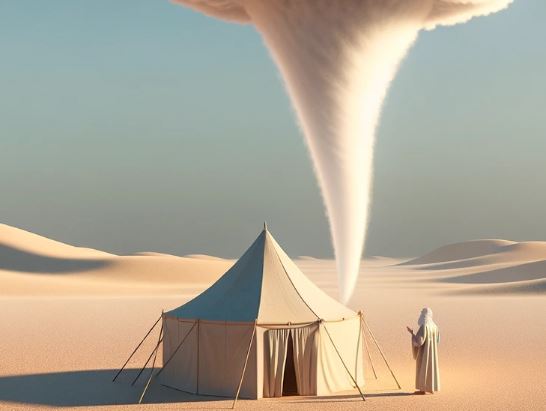
Alongside the Tabernacle of the Tent of Meeting built in the camp’s center, the Torah describes a Tent of Meeting outside the camp. It was a simple tent, unlike the imposing, splendid Tabernacle, and in some respects its antithesis. We first encounter it in Exodus 33, immediately after the golden calf, amid the accounts of the Tabernacle and its furnishings:
Now Moses used to take the tent and to pitch it without the camp, afar off from the camp; and he called it The tent of meeting. And it came to pass, that every one that sought the LORD went out unto the tent of meeting, which was without the camp. … And it came to pass, when Moses entered into the Tent, the pillar of cloud descended, and stood at the door of the Tent; and [the LORD] spoke with Moses. … but his minister Joshua, the son of Nun, a young man, departed not out of the Tent. (Exodus 33:7–11)
וּמֹשֶׁה יִקַּח אֶת הָאֹהֶל, וְנָטָה לוֹ מִחוּץ לַמַּחֲנֶה הַרְחֵק מִן הַמַּחֲנֶה, וְקָרָא לוֹ אֹהֶל מוֹעֵד. וְהָיָה כָּל מְבַקֵּשׁ ה', יֵצֵא אֶל אֹהֶל מוֹעֵד אֲשֶׁר מִחוּץ לַמַּחֲנֶה ... וְהָיָה כְּבֹא מֹשֶׁה הָאֹהֱלָה, יֵרֵד עַמּוּד הֶעָנָן וְעָמַד פֶּתַח הָאֹהֶל וְדִבֶּר עִם מֹשֶׁה ... וּמְשָׁרְתוֹ יְהוֹשֻׁעַ בִּן נוּן נַעַר – לֹא יָמִישׁ מִתּוֹךְ הָאֹהֶל. (שמות ל"ג, ז-יא)
Those seeking closeness to the LORD went to the Tent of Meeting outside the camp, beyond the human sphere. They prepared for the encounter inside, but the encounter itself took place at the entrance, the boundary between the human tent and the natural world outside.
The tent entrance first appears as a place of divine encounter in the LORD’s visit with His two angels to Abraham: “And the LORD appeared unto him by the terebinths of Mamre, as he sat in the tent door in the heat of the day” (Genesis 18:1). The entire encounter takes place there, while Sarah remains inside, outside the encounter (verses 9–10).
Unlike the Tabernacle, the LORD did not enter the tent outside the camp. The encounter’s character also differed: it combined both parties’ free desire. The seeker left the camp, and the LORD, desiring the meeting, descended in a pillar of cloud. In the sanctuary at the camp’s center, by contrast, the LORD dwelled permanently and people were commanded to appear before Him.
The outer Tent of Meeting fits the divine-human encounter described at the end of Yitro:
Ye yourselves have seen that I have talked with you from heaven. And the LORD said unto Moses: Thus thou shalt say unto the children of Israel: Ye yourselves have seen that I have talked with you from heaven. An altar of earth thou shalt make unto Me … in every place where I cause My name to be mentioned I will come unto thee and bless thee. An altar of earth thou shalt make unto Me, and shalt sacrifice thereon thy burnt-offerings, and thy peace-offerings, thy sheep, and thine oxen; in every place where I cause My name to be mentioned I will come unto thee and bless thee. (Exodus 20:18–21)
אַתֶּם רְאִיתֶם כִּי מִן הַשָּׁמַיִם דִּבַּרְתִּי עִמָּכֶם. לֹא תַעֲשׂוּן אִתִּי אֱלֹהֵי כֶסֶף וֵאלֹהֵי זָהָב – לֹא תַעֲשׂוּ לָכֶם. מִזְבַּח אֲדָמָה תַּעֲשֶׂה לִּי … בְּכָל הַמָּקוֹם אֲשֶׁר אַזְכִּיר אֶת שְׁמִי – אָבוֹא אֵלֶיךָ וּבֵרַכְתִּיךָ. וְאִם מִזְבַּח אֲבָנִים תַּעֲשֶׂה לִּי, לֹא תִבְנֶה אֶתְהֶן גָּזִית – כִּי חַרְבְּךָ הֵנַפְתָּ עָלֶיהָ וַתְּחַלְלֶהָ. (שמות כ', יח-כא)
The LORD does not dwell at a particular earthly location; His dwelling is in heaven. Worship likewise has no fixed site: it can occur wherever He chooses. The altar is simple earth, in complete contrast to the splendid single Tabernacle at the camp’s center. If made of stone, it uses simple natural stones. Human processing, in the form of dressed stones, profanes the meeting place.
Apparently, once the central Tabernacle was built, the outer tent became irrelevant. Yet perhaps its model is more suited to our existence since the Temple’s destruction. It reminds us that encounter with God remains possible without a central sanctuary, but depends on going out – beyond routine, outside the camp.
