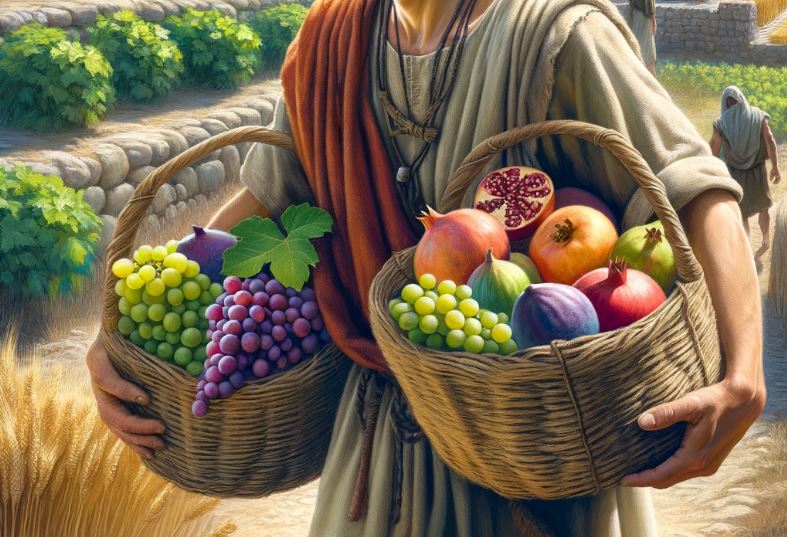
The Torah generally presents its commandments as absolute injunctions that are not open to negotiation. Concerning the sabbatical year, however, the Torah itself raises an argument the Israelites might make against the commandment, and even accepts it as legitimate:
And if ye shall say: ‘What shall we eat the seventh year? behold, we may not sow, nor gather in our increase’; (Leviticus 25:20)
וְכִי תֹאמְרוּ: מַה נֹּאכַל בַּשָּׁנָה הַשְּׁבִיעִת? הֵן לֹא נִזְרָע וְלֹא נֶאֱסֹף אֶת תְּבוּאָתֵנוּ (ויקרא כ"ה, כ)
In other words, it is unreasonable to prohibit sowing and gathering the seventh year’s produce, since there would then be nothing to eat.
The Torah’s answer is nothing short of astonishing. It does not ask the Israelites to observe the sabbatical year in faith that the LORD will supply food in some other way. Instead, it declares that reality will be different: already in the sixth year, before the sabbatical year begins, a special blessing will bring extraordinary abundance for the sabbatical year as well. The LORD will bless the sixth year’s harvest, and it will be doubled:
then I will command My blessing upon you in the sixth year, and it shall bring forth produce for the three years. And ye shall sow the eighth year, and eat of the produce, the old store; until the ninth year, until her produce come in, ye shall eat the old store. (Leviticus 25:21–22)
וְצִוִּיתִי אֶת בִּרְכָתִי לָכֶם בַּשָּׁנָה הַשִּׁשִּׁית, וְעָשָׂת אֶת הַתְּבוּאָה לִשְׁלֹשׁ הַשָּׁנִים. וּזְרַעְתֶּם אֵת הַשָּׁנָה הַשְּׁמִינִת, וַאֲכַלְתֶּם מִן הַתְּבוּאָה יָשָׁן עַד הַשָּׁנָה הַתְּשִׁיעִת, עַד בּוֹא תְּבוּאָתָהּ – תֹּאכְלוּ יָשָׁן. (ויקרא כ"ה, כא-כב)
This blessing recalls the account of the manna in Exodus (Exodus 16:11–36). Manna fell each day, providing food for that day alone. To their surprise, on the sixth day the Israelites gathered twice as much. Moses explained that they had received a double portion to last both the sixth and seventh days, since no manna would fall on the seventh day, a sabbath to the LORD.
In both cases – manna and the sabbatical year – the motif of “six and seven” recurs: the sixth day or sixth year yields a double quantity of food, allowing cessation on the seventh day or seventh year.
The Torah’s acceptance in principle of the objection, “What shall we eat the seventh year?”, and the miraculous solution it offers, indicate that the sabbatical commandment is not a leap of faith into uncertainty. It is a commandment that can be implemented only in an ideal, miraculous reality, where economic uncertainty itself is ruled out in advance by a demonstrated blessing in the sixth year. This implies that in an ordinary reality, without a special blessing in the sixth year’s harvest, there is no place for the sabbatical commandment.
Perhaps this also underlies the rule that sabbatical and Jubilee years apply only when most of Israel dwell on their land (Babylonian Talmud, Arakhin 32b). This stipulation indicates that the sabbatical year is a vision realizable only within a defined national reality: one in which most of Israel dwell on their land. Only then do the spiritual and national conditions exist that allow the economic blessing itself to form part of the divine order, appearing as an exceptional yield of the land’s produce before the sabbatical year begins.
