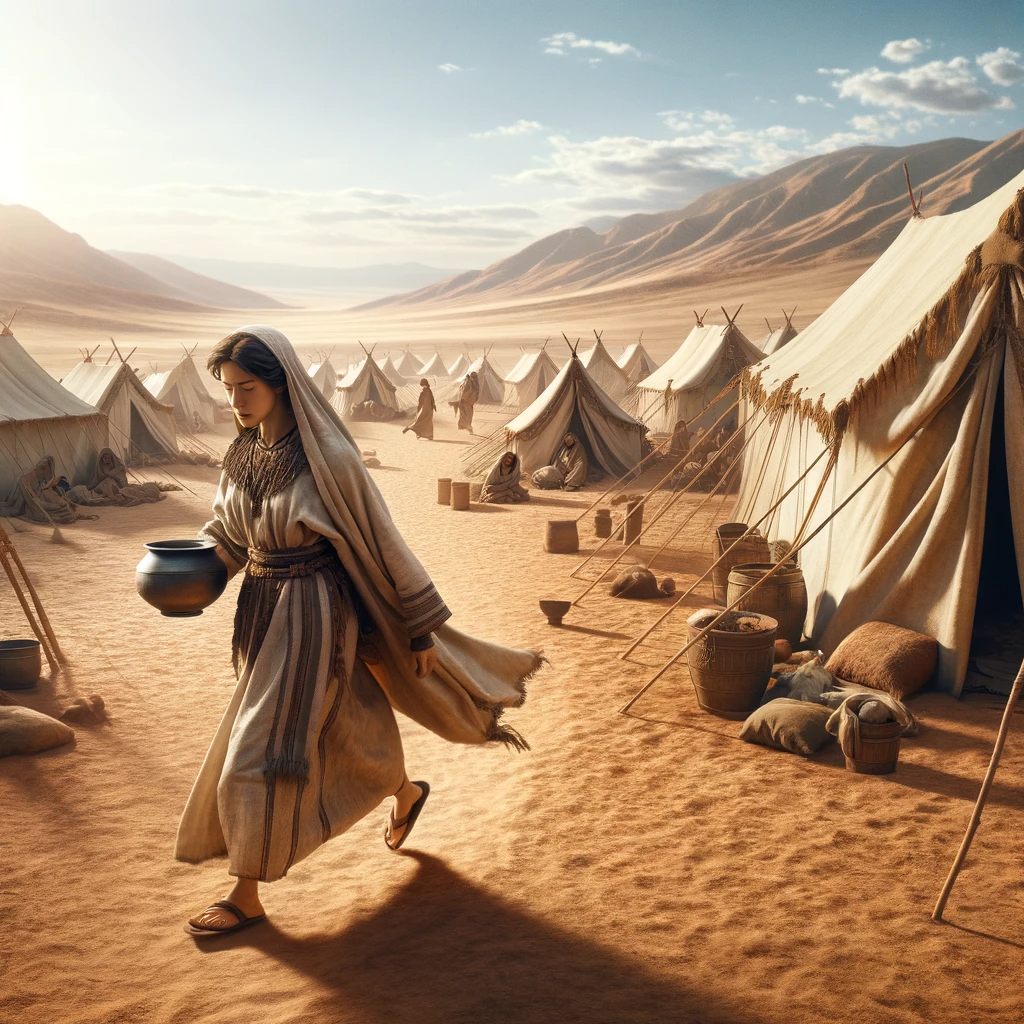
The manna account describes the first time Israel was commanded to observe the Sabbath. It mentions baking, cooking, and leaving one’s place. According to halakhah, all these activities are forbidden on the Sabbath by Torah law. I would argue, however, that on the plain meaning of the text, although Israel was forbidden to leave their place on the Sabbath, they were allowed to bake and cook the manna on the Sabbath itself.
According to the Jerusalem Talmud, the prohibition against leaving the Sabbath boundary is derived from a verse in this account: “abide ye every man in his place, let no man go out of his place on the seventh day” (Exodus 16:29). Examining the verses suggests that the original prohibition was even stricter than current halakhah: not merely leaving the town’s boundary, but leaving one’s dwelling itself, each person’s tent, was forbidden. Baking and cooking, however, are a different matter.
Traditional interpretation commonly understands the manna story as commanding Israel to prepare Sabbath food on Friday, baking and cooking the manna for the Sabbath. Yet a straightforward reading of the central verse suggests another understanding:
bake that which ye will bake, and seethe that which ye will seethe; and all that remaineth over lay up for you to be kept until the morning. (Exodus 16:23)
אֵת אֲשֶׁר תֹּאפוּ אֵפוּ, וְאֵת אֲשֶׁר תְּבַשְּׁלוּ בַּשֵּׁלוּ. וְאֵת כָּל הָעֹדֵף – הַנִּיחוּ לָכֶם לְמִשְׁמֶרֶת עַד הַבֹּקֶר. (שמות ט"ז, כג)
On its plain meaning, we should read: bake what you will bake; cook what you will cook; and keep what you have not baked or cooked until morning. The verse describes only part of the manna being baked or cooked for Friday, while the remainder is kept for the Sabbath still raw. Its wording thus contains no command to bake or cook Friday’s manna for the Sabbath.
Some support for this understanding appears in the next verse, which recounts that manna kept for the Sabbath did not spoil, unlike what happened when people tried to keep manna from one weekday to the next (verse 24). If it had already been baked or cooked on Friday, this would hardly have been remarkable, since cooked or baked food can naturally last another day. The fact that the manna was kept raw particularly emphasizes the special providence granted to the Sabbath.
What did Israel do with the raw manna on the Sabbath? Presumably they baked and cooked it as on any other day (see Shadal’s commentary here). Had that been forbidden, they would not have left it raw, but would have baked and cooked Friday’s manna for the Sabbath too, as we do today. But how can this be? Are baking and cooking not among the activities prohibited on the Sabbath?
The answer is that, on the plain meaning, even on days designated a “holy convocation,” when work is forbidden, the Torah permitted work to prepare food, known as “work for the needs of sustenance.” This principle is learned from the first appearance of a work prohibition in connection with a holy convocation:
And in the first day there shall be to you a holy convocation, and in the seventh day a holy convocation; no manner of work shall be done in them, save that which every man must eat, that only may be done by you. (Exodus 12:16)
וּבַיּוֹם הָרִאשׁוֹן מִקְרָא קֹדֶשׁ, וּבַיּוֹם הַשְּׁבִיעִי מִקְרָא קֹדֶשׁ יִהְיֶה לָכֶם, כָּל מְלָאכָה לֹא יֵעָשֶׂה בָהֶם – אַךְ אֲשֶׁר יֵאָכֵל לְכָל נֶפֶשׁ הוּא לְבַדּוֹ יֵעָשֶׂה לָכֶם. (שמות י"ב, טז)
Although this verse concerns the holy convocation of the Feast of Unleavened Bread, it first establishes the rule that the prohibition of work on a holy convocation is not absolute and explicitly exempts food preparation. The Sages ruled that this permission applies only to festivals, though not only to the Feast of Unleavened Bread, and does not apply to the Sabbath. On the plain meaning, however, there is no necessity to distinguish a festival’s holy convocation from the Sabbath’s (Leviticus 23:3). We can therefore understand the principle established at the first occurrence of “holy convocation” as applying to every day bearing that designation, including the Sabbath. On this reading, nothing prevented baking or cooking the leftover manna on the Sabbath itself.
As noted, the provision permitting work for food preparation appears already in Exodus 12, in the command concerning the Feast of Unleavened Bread. The sweeping prohibition of Sabbath work – “thou shalt not do any manner of work” (Exodus 20:9) – first appears several chapters later in the Ten Commandments. That solemn, foundational declaration was no place for detailed qualifications and exceptions permitting food preparation, just as “Thou shalt not murder” does not specify that one may, and indeed must, kill an intentional murderer: “Whoso killeth any person, the murderer shall be slain at the mouth of witnesses” (Numbers 35:30).
The prohibition “Ye shall kindle no fire throughout your habitations upon the sabbath day” (Exodus 35:3) should be understood as forbidding fire for fabrication or the transformation of material, rather than referring to food preparation, as emerges from all biblical occurrences of the expression “kindling fire.” Even when fire is a means of cooking, biblical language defines the action by its outcome – cooking or baking – rather than by the means employed. Thus, forbidding the kindling of fire is not identical to forbidding cooking.
