Thus saith the LORD, the God of the Hebrews: Let My people go, that they may serve Me. For if thou refuse to let them go, and wilt hold them still, behold, the hand of the LORD is upon thy cattle which are in the field, upon the horses, upon the asses, upon the camels, upon the herds, and upon the flocks; there shall be a very grievous murrain. And the LORD shall make a division between the cattle of Israel and the cattle of Egypt; and there shall nothing die of all that belongeth to the children of Israel.’ (Exodus 9:1–4)
כֹּה אָמַר ה' אֱלֹהֵי הָעִבְרִים: שַׁלַּח אֶת עַמִּי וְיַעַבְדֻנִי. כִּי אִם מָאֵן אַתָּה לְשַׁלֵּחַ, וְעוֹדְךָ מַחֲזִיק בָּם. הִנֵּה יַד ה' הוֹיָה בְּמִקְנְךָ אֲשֶׁר בַּשָּׂדֶה: בַּסּוּסִים, בַּחֲמֹרִים, בַּגְּמַלִּים, בַּבָּקָר וּבַצֹּאן, דֶּבֶר כָּבֵד מְאֹד. וְהִפְלָה ה' בֵּין מִקְנֵה יִשְׂרָאֵל וּבֵין מִקְנֵה מִצְרָיִם, וְלֹא יָמוּת מִכָּל לִבְנֵי יִשְׂרָאֵל דָּבָר. (שמות ט', א-ד)
In the plague of pestilence, Moses warned Pharaoh that the LORD would strike Egypt’s livestock. Yet he added that Israel’s livestock would remain unharmed – and so it did.
The parallel wording in the verses might suggest that Israel’s livestock, like Egypt’s, included horses, asses, and camels, rather than just flocks and herds. Later, however, it seems that the Israelites possessed only flocks and herds. After the plague of darkness, Pharaoh proposes: “Go ye, serve the LORD; only let your flocks and your herds be stayed; let your little ones also go with you” (Exodus 10:24). At the Exodus we likewise read: “And a mixed multitude went up also with them; and flocks, and herds, even very much cattle” (Exodus 12:38). Neither passage mentions horses, asses, or camels.
Did the Israelites, then, have horses, asses, and camels, or did they not?
When the Israelites went down to Egypt, they presented themselves to Pharaoh as shepherds continuing their ancestors’ tradition. At their request they settled in Goshen, a region suited to raising livestock (Genesis 47:3–4).
Nevertheless, many descriptions of Abraham, Isaac, and Jacob, and even of Jacob’s sons, tell us that they owned asses and also camels. Abraham saddled his ass on the way to Mount Moriah (Genesis 22:3); his servant took ten of his master’s camels when seeking a wife for Isaac (Genesis 24:10); Jacob had camels and asses (Genesis 30:43), and sent milch camels with their colts as a gift to his brother Esau (Genesis 32:16); and Jacob’s sons loaded their asses with grain from Egypt (Genesis 42:26).
References from Israel’s wanderings in the wilderness also attest to their possession of asses and camels. Moses declares before the LORD: “Respect not thou their offering; I have not taken one ass from them, neither have I hurt one of them” (Numbers 16:15). The Torah also commands the redemption of an ass’s firstling (Exodus 13:13), forbids coveting one’s neighbor’s ass in the Ten Commandments (Exodus 20:13), and prohibits eating camel (Leviticus 11:4). These references reflect the Israelites’ circumstances at the time, so it is reasonable to suppose that their livestock included asses and camels.
Perhaps Pharaoh did not mention asses and camels when demanding security to remain in Egypt because they served primarily as beasts of burden. He understood that the Israelites needed them to travel to the place where they were to worship the LORD. Perhaps they were also absent from the description of the departure because only the flocks and herds existed in quantities significant enough to mention, whereas the asses and camels met basic, self-evident needs such as carrying loads.
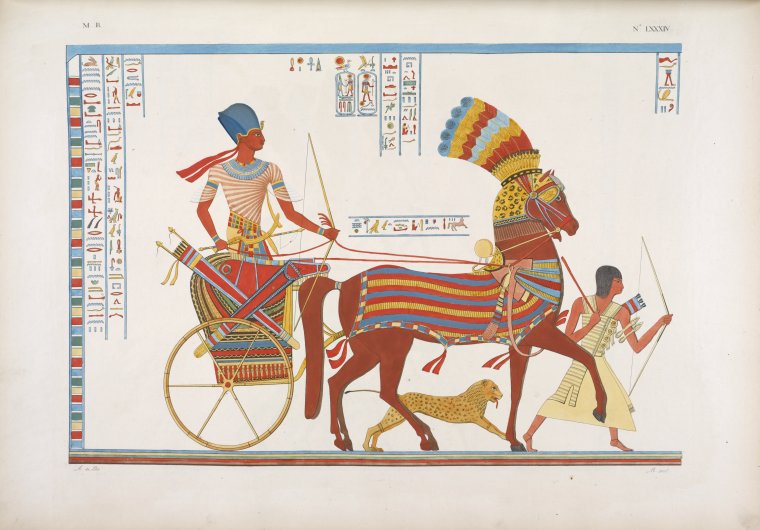
As for horses, unlike asses and camels, the Torah never once mentions Israelites possessing them. Moreover, apart from a single instance in the blessing of Dan, horses always appear in an explicitly Egyptian context, emphasizing Egypt’s military power against Israel’s military weakness. For example: “And the Egyptians pursued after them … all the horses and chariots of Pharaoh, and his horsemen, and his army” (Exodus 14:9).
Horses remained absent from Israel’s livestock during the settlement and the period of the Judges. The Bible describes Israel’s military inferiority to the Canaanites, who relied on chariots and horses, especially effective instruments of war in the valleys. The descendants of Joseph complain to Joshua about the power of the Canaanites with their iron chariots (Joshua 17:16); in the war between Barak and Sisera, Sisera’s military superiority through iron chariots and horses is emphasized (Judges 4:3). Unlike the surrounding peoples, Israel had no horses, and its king was even forbidden to multiply them (Deuteronomy 17:16).
Raising horses demanded far more resources than raising flocks and herds: good pasture, large quantities of water, extensive living space, and continuing professional care, including treatment of hooves and characteristic diseases. Horses also needed shelter from severe weather because of their sensitive skin. Unlike flocks and herds, they contributed nothing directly to food or the basic economy; they were therefore raised mainly for kingdoms’ military needs.
These conditions made horse breeding unsuitable for the Israelites’ needs as slaves in Egypt, and also for their tribal way of life until the monarchy. It is therefore reasonable to assume that Israel’s livestock in Egypt included no horses at all, and certainly none in economically or militarily significant numbers.
