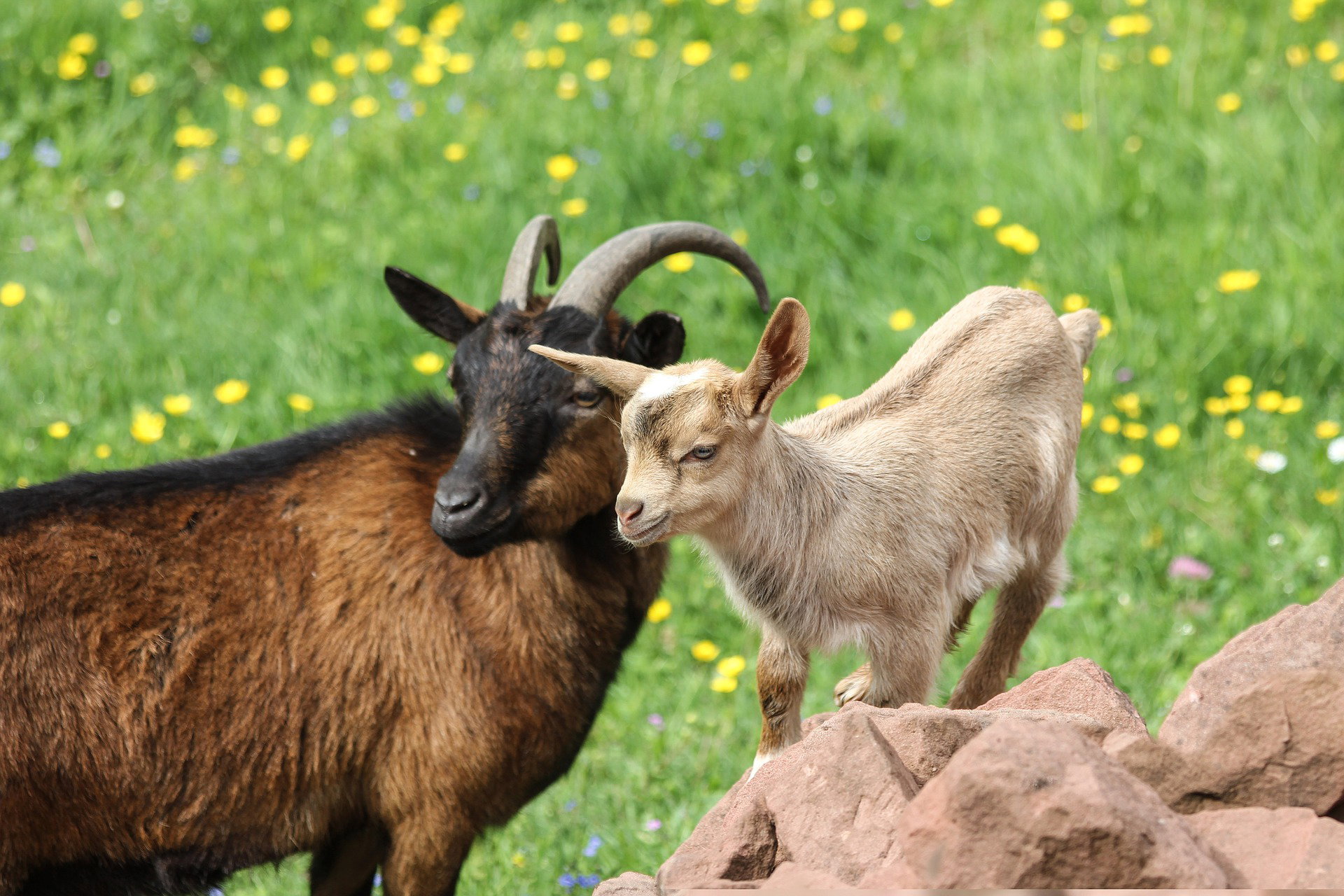
“Thou shalt not seethe a kid in its mother’s milk” appears three times in the Torah (Exodus 23:19; 34:26; Deuteronomy 14:21). The first two occur in the context of the pilgrimage festivals; the third accompanies prohibitions deriving from Israel’s holiness: “For thou art a holy people unto the LORD thy God. Thou shalt not seethe a kid in its mother’s milk” (Deuteronomy 14:21).
It is reasonable to understand the prohibition closing Deuteronomy’s unit within the special requirements arising from Israel’s holiness. It joins other prohibitions respecting animals’ maternal feelings, such as sending away the mother bird (Deuteronomy 22:6–7) and not slaughtering an animal with its offspring (Leviticus 22:28).
Why, then, does the Torah place the other two occurrences specifically in the festival context? Does the prohibition concern all three festivals or one in particular?
Rashbam explains that at all the festivals “they ate many animals,” so the Torah warns against cooking or eating a kid in its mother’s milk (Exodus 23:19). It thus concerns no particular festival. The verses’ structure, however, suggests one specific festival.
Since the two Exodus passages are almost identical, I will use Mishpatim:
Thou shalt not offer the blood of My sacrifice with leavened bread; neither shall the fat of My feast remain all night until the morning.
The choicest first-fruits of thy land thou shalt bring into the house of the LORD thy God.
Thou shalt not seethe a kid in its mother’s milk. (Exodus 23:18–19)לֹא תִזְבַּח עַל חָמֵץ דַּם זִבְחִי וְלֹא יָלִין חֵלֶב חַגִּי עַד בֹּקֶר.
רֵאשִׁית בִּכּוּרֵי אַדְמָתְךָ תָּבִיא בֵּית ה' אֱלֹהֶיךָ
לֹא תְבַשֵּׁל גְּדִי בַּחֲלֵב אִמּוֹ. (שמות כ"ג יח-יט)
The first pair, “Thou shalt not offer the blood of My sacrifice with leavened bread” and “neither shall the fat of My feast remain all night until the morning,” concerns the Passover offering. “The choicest first-fruits of thy land thou shalt bring into the house of the LORD thy God” concerns the Feast of First Fruits. Following this pattern, the final prohibition concerns Sukkot, last of the three festivals. This is one possible reading.
Alternatively, the final verse forms one unit entirely about first fruits: “The choicest first-fruits of thy land thou shalt bring into the house of the LORD thy God. Thou shalt not seethe a kid in its mother’s milk.” Instead of three commands for three festivals, there are two pairs for Passover and Shavuot. The first pair, 1) not offering sacrificial blood with leaven and 2) not leaving the festival’s fat overnight, concerns Passover. The second, 1) bringing the choicest first fruits and 2) not cooking a kid in its mother’s milk, concerns the Feast of First Fruits. Sukkot has no special command on this reading.
In this reading the commands in each pair complement one another. The Passover pair fixes the festival’s time between sacrifice at twilight, when leaven becomes forbidden (“Thou shalt not offer the blood of My sacrifice with leavened bread”), and the end of eating the sacrifice the next morning (“neither shall the fat of My feast remain all night until the morning”). Likewise the first-fruits pair begins by commanding their presentation, then qualifies it by prohibiting cooking a kid in its mother’s milk.
If accepted, this requires explaining the connection: why mention this prohibition specifically with first fruits, and how does it relate to the moral command arising from Israel’s holiness?
Generally the Torah prohibits sacrificing leavened bread, honey, and leaven (Leviticus 2:11). These are the rich, ripe, perfected forms of bread and fruit. For sacrifices the Torah seeks the simple and primary, so accompanying breads are unleavened.
The first-fruits offering is exceptional. Leaven, honey, and leavened bread are permitted because the harvest festival expresses the Israelite’s recognition that all good comes from the LORD, and thanks Him for it. In gratitude it is appropriate to bring rich, ripe, perfected produce. For the same reason, the two loaves at first fruits, considered part of its presentation, are leavened (Leviticus 23:17).
We can now understand why the prohibition appears specifically here. One might suppose that, just as bringing leaven and honey is permitted and desirable, enriching the festival’s sacrifices by cooking them in milk instead of water is permitted or desirable. Milk too expresses the richness and abundance the LORD gave in a land flowing with milk and honey.
The Torah therefore warns that even at first fruits, despite exceptional permission to bring rich offerings containing leaven and honey, the moral prohibition on cooking suckling animals in milk remains. “Thou shalt not seethe a kid in its mother’s milk” concerns not only the biological mother’s milk, but cooking any suckling animal in milk. Its wording illustrates most sharply the immorality of using milk intended to nourish and raise the young animal to cook it.
