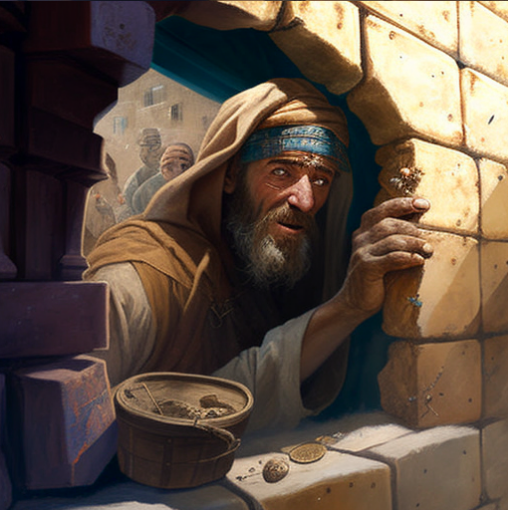
If a man steal an ox, or a sheep, and kill it, or sell it, he shall pay five oxen for an ox, and four sheep for a sheep. If a thief be found breaking in, and be smitten so that he dieth, there shall be no bloodguiltiness for him. If the sun be risen upon him, there shall be bloodguiltiness for him–he shall make restitution; if he have nothing, then he shall be sold for his theft. If the theft be found in his hand alive, whether it be ox, or ass, or sheep, he shall pay double. (Exodus 21:37–22:3)
כִּי יִגְנֹב אִישׁ שׁוֹר אוֹ שֶׂה וּטְבָחוֹ אוֹ מְכָרוֹ – חֲמִשָּׁה בָקָר יְשַׁלֵּם תַּחַת הַשּׁוֹר וְאַרְבַּע צֹאן תַּחַת הַשֶּׂה. אִם בַּמַּחְתֶּרֶת יִמָּצֵא הַגַּנָּב וְהֻכָּה וָמֵת – אֵין לוֹ דָּמִים. אִם זָרְחָה הַשֶּׁמֶשׁ עָלָיו – דָּמִים לוֹ. שַׁלֵּם יְשַׁלֵּם, אִם אֵין לוֹ – וְנִמְכַּר בִּגְנֵבָתוֹ. אִם הִמָּצֵא תִמָּצֵא בְיָדוֹ הַגְּנֵבָה מִשּׁוֹר עַד חֲמוֹר עַד שֶׂה, חַיִּים – שְׁנַיִם יְשַׁלֵּם. (שמות כ"א, לז – כ"ב, ג)
Why is someone who strikes and kills a thief caught breaking in exempt – “there shall be no bloodguiltiness for him” – whereas “If the sun be risen upon him, there shall be bloodguiltiness for him,” and the killer is considered a murderer? What connects “If the sun be risen upon him, there shall be bloodguiltiness for him” to the verse’s immediate continuation, “he shall make restitution; if he have nothing, then he shall be sold for his theft”? Why must the Torah emphasize restitution in precisely this context? Might we have supposed that the thief would not pay?
The Torah’s connection between the law of a thief breaking in and the requirement of restitution is so difficult that the Septuagint deletes “he shall make restitution.” The New English Bible (NEB), unusually for that translation, changes the verse order, moving the case of the thief breaking in to the end and separating it from restitution, as follows (the wording below uses JPS 1917 in the rearranged order illustrated by the Hebrew):
If a man steal an ox, or a sheep, and kill it, or sell it, he shall pay five oxen for an ox, and four sheep for a sheep. he shall make restitution; if he have nothing, then he shall be sold for his theft. If the theft be found in his hand alive, whether it be ox, or ass, or sheep, he shall pay double. If a thief be found breaking in, and be smitten so that he dieth, there shall be no bloodguiltiness for him. If the sun be risen upon him, there shall be bloodguiltiness for him. (Exodus 21:37–22:3, rearranged as discussed)
כִּי יִגְנֹב אִישׁ שׁוֹר אוֹ שֶׂה וּטְבָחוֹ אוֹ מְכָרוֹ – חֲמִשָּׁה בָקָר יְשַׁלֵּם תַּחַת הַשּׁוֹר וְאַרְבַּע צֹאן תַּחַת הַשֶּׂה. שַׁלֵּם יְשַׁלֵּם, אִם אֵין לוֹ וְנִמְכַּר בִּגְנֵבָתוֹ. אִם הִמָּצֵא תִמָּצֵא בְיָדוֹ הַגְּנֵבָה, מִשּׁוֹר, עַד חֲמוֹר, עַד שֶׂה, חַיִּים – שְׁנַיִם יְשַׁלֵּם. אִם בַּמַּחְתֶּרֶת יִמָּצֵא הַגַּנָּב וְהֻכָּה וָמֵת – אֵין לוֹ דָּמִים. אִם זָרְחָה הַשֶּׁמֶשׁ עָלָיו – דָּמִים לוֹ.
Cassuto explains that the theft laws in Mishpatim are better understood against the legal practice of their time. Here the Torah seems to dispute the older law and offer a moral alternative.
The law “he shall make restitution; if he have nothing, then he shall be sold for his theft” can be understood against a similar case in law 8 of Hammurabi’s code:
If a man steals an ox, a sheep, an ass, a pig, or a boat from a temple or palace, he shall pay a fine thirty times the value of the theft; if he steals from a free man, he shall pay tenfold. If the thief cannot pay, he shall be put to death.
אם איש גנב שור, או כבשה, או חמור, או חזיר או סירה ממקדש או היכל – ישלם קנס פי שלושים מערך הגניבה, אם הגניבה מאיש חופשי – ישלם קנס פי עשר, אם הגנב לא יכול לשלם – יומת.
Hammurabi’s laws impose death on a thief who cannot pay. The Torah firmly rejects death for theft of property and establishes payment as the solution in every case. If the thief cannot pay, he must be sold into slavery to fund compensation for the theft.
The distinction between “breaking in” and “the sun be risen upon him” is also intelligible against Hammurabi’s laws, which distinguish ordinary theft from attempted entry into a house or theft from a house. Hammurabi grants the house extra protection: attempting to break into it or stealing from it incurs death. For example, law 21:
If a man makes a hole to break into another’s house, they shall kill him in front of the breach and thrust his body into the breach.
אם איש עשה חור כדי לפרוץ לביתו של אחר – יהרגהו לפני הפריצה וידחפו את גופתו לפריצה.
The Torah does not accept this rule. Yet it is prepared to exempt anyone who harms a thief found breaking in, that is, a thief in the midst of entering another’s house. In that case, it agrees that “there shall be no bloodguiltiness for him.” The intruder is entitled neither to protection nor to the avenging of his blood.
Incidentally, something similar occurs in the laws of blood vengeance. There too, in certain circumstances, the Torah agrees to maintain the original practice despite its reservations. See the chapter “And He Shall Dwell Therein until the Death of the High Priest.”
Finally, “If the sun be risen upon him” is a metaphor for the passage of time and a changed situation, rather than a technical description of the time of day. It means that the thief is no longer in the midst of breaking into the house. While he is breaking in, the Torah does not permit killing him, but exempts his killer from punishment: “there shall be no bloodguiltiness for him.” Once the break-in is over and circumstances have changed, this exemption no longer applies, and killing the thief constitutes bloodshed.
This also explains the deliberate, direct connection between the verse’s opening, “If the sun be risen upon him, there shall be bloodguiltiness for him,” and its continuation, “he shall make restitution.” Unlike the thief caught breaking in, the thief upon whom the sun has risen may not be killed with impunity. Accordingly, and contrary to Hammurabi, compensation for theft will never be the thief’s life; it will be his property – “he shall make restitution” – or his freedom: “if he have nothing, then he shall be sold for his theft.”
