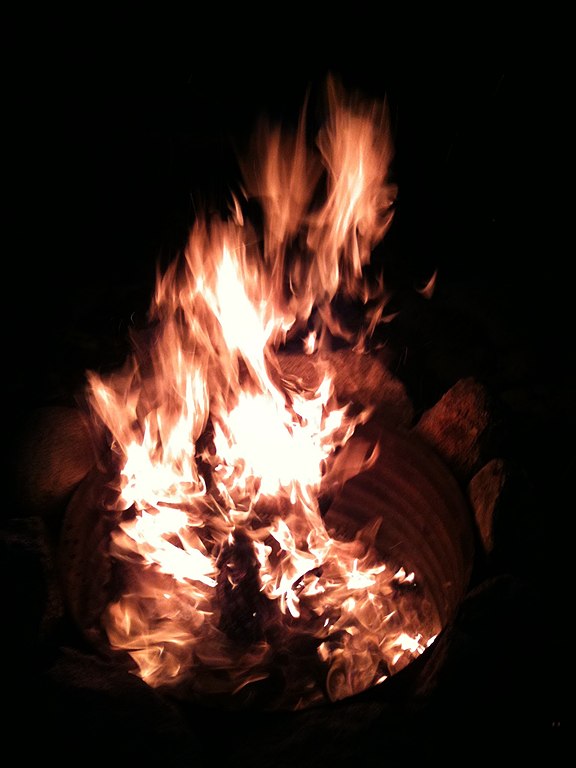
This is the law of the burnt-offering: it is that which goeth up on its firewood upon the altar all night unto the morning; and the fire of the altar shall be kept burning thereby. And the priest shall put on his linen garment, and his linen breeches shall he put upon his flesh; and he shall take up the ashes whereto the fire hath consumed the burnt-offering on the altar, and he shall put them beside the altar. … And the fire upon the altar shall be kept burning thereby, it shall not go out; and the priest shall kindle wood on it every morning; and he shall lay the burnt-offering in order upon it, and shall make smoke thereon the fat of the peace-offerings. Fire shall be kept burning upon the altar continually; it shall not go out. (Leviticus 6:2–6)
זֹאת תּוֹרַת הָעֹלָה: הִוא הָעֹלָה עַל מוֹקְדָה עַל הַמִּזְבֵּחַ כָּל הַלַּיְלָה עַד הַבֹּקֶר, וְאֵשׁ הַמִּזְבֵּחַ תּוּקַד בּוֹ. וְלָבַשׁ הַכֹּהֵן מִדּוֹ בַד, וּמִכְנְסֵי בַד יִלְבַּשׁ עַל בְּשָׂרוֹ, וְהֵרִים אֶת הַדֶּשֶׁן אֲשֶׁר תֹּאכַל הָאֵשׁ אֶת הָעֹלָה, עַל הַמִּזְבֵּחַ, וְשָׂמוֹ אֵצֶל הַמִּזְבֵּחַ ... וְהָאֵשׁ עַל הַמִּזְבֵּחַ תּוּקַד בּוֹ לֹא תִכְבֶּה, וּבִעֵר עָלֶיהָ הַכֹּהֵן עֵצִים בַּבֹּקֶר בַּבֹּקֶר, וְעָרַךְ עָלֶיהָ הָעֹלָה, וְהִקְטִיר עָלֶיהָ חֶלְבֵי הַשְּׁלָמִים. אֵשׁ תָּמִיד תּוּקַד עַל הַמִּזְבֵּחַ – לֹא תִכְבֶּה. (ויקרא ו', ב-ו)
Tzav begins with five laws: burnt-offering, meal-offering, sin-offering, guilt-offering, and peace-offering. Unlike the other four, the burnt-offering law barely addresses its apparent main subject, mentioning it incidentally while discussing perpetual fire and removing ashes, and even mentioning the fats of peace-offerings. Why?
Because the burnt-offering’s whole essence, especially the continual offering, is to feed the perpetual fire continually. “This is the law of the burnt-offering” is therefore effectively “the law of the perpetual fire.”
Nighttime is particularly significant for two reasons. First, the fire is most visible then, like the pillar of fire during Israel’s journeys. Second, maintaining it is easier by day when sacrifices are offered. At night, when sacrificial activity ceases, the priests must give special attention to sustaining it. The Torah therefore begins by commanding Aaron and his sons to feed it portions of the evening burnt-offering all night until morning.
Since sustaining the fire is the law’s purpose, it next describes removing ashes to make room for continued burning. It explicitly refers to burnt-offering ashes rather than those of other offerings, whose purpose is different.
Once the fire has consumed the evening offering all night and its continuity is again uncertain, the Torah repeats the main point: “And the fire upon the altar shall be kept burning thereby, it shall not go out.” It commands fresh wood each morning and the morning burnt-offering upon it, sustaining the fire throughout the day until the evening offering, and so on.
Mentioning peace-offering fats reminds us that this fire burns all sacrifices. Peace-offerings are chosen as the example because they are the quintessential offering, expressing the human desire to draw close to God by sharing joy, rather than atoning for sin or marking a holy convocation.
