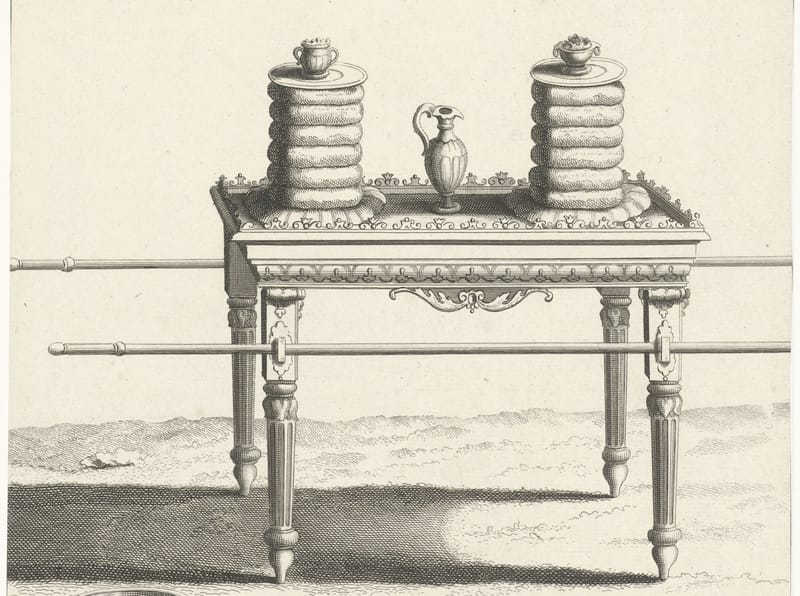
And thou shalt set upon the table showbread before Me always. (Exodus 25:30)
וְנָתַתָּ עַל הַשֻּׁלְחָן לֶחֶם פָּנִים, לְפָנַי תָּמִיד. (שמות כ"ה, ל)
According to Rashi’s familiar explanation, the showbread, “lehem ha-panim,” takes its name from its special shape: sides on either side called “faces.” The drawback is that the Torah nowhere describes this bread as having an unusual or special shape. Other explanations seem closer to the plain meaning:
- Targum Jonathan renders “lehem panim” as “lahma gavva’a,” inner bread, because it was offered within the sanctuary.
- Rashbam explains it as distinguished, attractive bread, just as Hannah’s portion is described: “but unto Hannah he gave a double portion” (I Samuel 1:5), where “appayim” is related to “panim.”
- Ibn Ezra explains “bread of faces/presence” through its continuation, “before Me always”: bread perpetually before the LORD.
Perhaps a further explanation is possible. “Seeing the LORD’s face” in the Bible denotes meeting Him, as in pilgrimage: “Three times in a year shall all thy males appear before the LORD thy God” (Deuteronomy 16:16); Sinai: “The LORD spoke with you face to face in the mount out of the midst of the fire” (Deuteronomy 5:4); and Moses: “And the LORD spoke unto Moses face to face” (Exodus 33:11). “Lehem panim” would then mean bread of a face-to-face encounter with the LORD, since it is offered in the Tent of Meeting, the tent for meeting Him.
Eating bread also appears in the context of an encounter with the LORD: “and Aaron came, and all the elders of Israel, to eat bread with Moses’ father-in-law before God” (Exodus 18:12). Likewise, the priests, representing the people, eat the showbread before the LORD (Leviticus 24:5–9).
