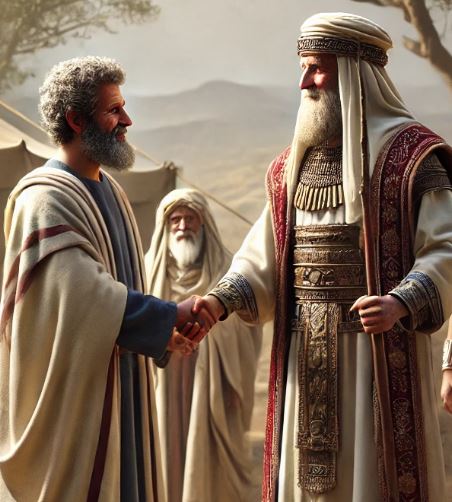
And there was a famine in the land … And Isaac went unto Abimelech king of the Philistines unto Gerar. And the LORD appeared unto him, and said … dwell in the land which I shall tell thee of. Sojourn in this land, and I will be with thee, and will bless thee; for unto thee, and unto thy seed, I will give all these lands … and by thy seed shall all the nations of the earth bless themselves … And Isaac dwelt in Gerar … And the man waxed great, and grew more and more … And he had possessions of flocks, and possessions of herds, and a great household; and the Philistines envied him. Now all the wells which his father’s servants had digged in the days of Abraham his father, the Philistines had stopped them, and filled them with earth. And Abimelech said unto Isaac: ‘Go from us; for thou art much mightier than we.’ And Isaac departed thence, and encamped in the valley of Gerar, and dwelt there … Then Abimelech went to him from Gerar, and Ahuzzath his friend, and Phicol the captain of his host. And Isaac said unto them: ‘Wherefore are ye come unto me, seeing ye hate me, and have sent me away from you?’ And they said … let there be now an oath betwixt us, even betwixt us and thee, and let us make a covenant with thee … And he made them a feast … And they rose up betimes in the morning, and swore one to another; and Isaac sent them away, and they departed from him in peace. (Genesis 26:1–4, 6, 13–17, 26–28, 30–31)
וַיְהִי רָעָב בָּאָרֶץ ... וַיֵּלֶךְ יִצְחָק אֶל אֲבִימֶּלֶךְ מֶלֶךְ פְּלִשְׁתִּים, גְּרָרָה. וַיֵּרָא אֵלָיו ה' וַיֹּאמֶר: ... שְׁכֹן בָּאָרֶץ אֲשֶׁר אֹמַר אֵלֶיךָ. גּוּר בָּאָרֶץ הַזֹּאת וְאֶהְיֶה עִמְּךָ וַאֲבָרְכֶךָּ כִּי לְךָ וּלְזַרְעֲךָ אֶתֵּן אֶת כָּל הָאֲרָצֹת הָאֵל ... וְהִתְבָּרֲכוּ בְזַרְעֲךָ כֹּל גּוֹיֵי הָאָרֶץ ... וַיֵּשֶׁב יִצְחָק בִּגְרָר ... וַיִּגְדַּל הָאִישׁ, וַיֵּלֶךְ הָלוֹךְ וְגָדֵל ... וַיְהִי לוֹ, מִקְנֵה צֹאן וּמִקְנֵה בָקָר וַעֲבֻדָּה רַבָּה, וַיְקַנְאוּ אֹתוֹ פְּלִשְׁתִּים. וְכָל הַבְּאֵרֹת אֲשֶׁר חָפְרוּ עַבְדֵי אָבִיו בִּימֵי אַבְרָהָם אָבִיו – סִתְּמוּם פְּלִשְׁתִּים וַיְמַלְאוּם עָפָר. וַיֹּאמֶר אֲבִימֶלֶךְ אֶל יִצְחָק: לֵךְ מֵעִמָּנוּ – כִּי עָצַמְתָּ מִמֶּנּוּ מְאֹד. וַיֵּלֶךְ מִשָּׁם יִצְחָק וַיִּחַן בְּנַחַל גְּרָר וַיֵּשֶׁב שָׁם ... וַאֲבִימֶלֶךְ הָלַךְ אֵלָיו מִגְּרָר וַאֲחֻזַּת מֵרֵעֵהוּ וּפִיכֹל שַׂר צְבָאוֹ. וַיֹּאמֶר אֲלֵהֶם יִצְחָק מַדּוּעַ בָּאתֶם אֵלָי וְאַתֶּם שְׂנֵאתֶם אֹתִי וַתְּשַׁלְּחוּנִי מֵאִתְּכֶם. וַיֹּאמְרוּ ... תְּהִי נָא אָלָה בֵּינוֹתֵינוּ בֵּינֵינוּ וּבֵינֶךָ וְנִכְרְתָה בְרִית עִמָּךְ ... וַיַּעַשׂ לָהֶם מִשְׁתֶּה ... וַיַּשְׁכִּימוּ בַבֹּקֶר וַיִּשָּׁבְעוּ אִישׁ לְאָחִיו וַיְשַׁלְּחֵם יִצְחָק וַיֵּלְכוּ מֵאִתּוֹ בְּשָׁלוֹם. (בראשית כ"ו, א-לא)
During famine, Isaac went to Abimelech king of the Philistines in Gerar. The LORD appeared and told him not to descend to Egypt. This land, Philistine territory, was intended for him; he must live there. Isaac therefore settled in Gerar.
He prospered so greatly that he threatened the Philistines, who asked him to leave. He left the city but remained very close, in Gerar’s valley. This naturally produced repeated friction between his herdsmen and Gerar’s.
The verses use language usually describing war between peoples. Abimelech’s “Go from us; for thou art much mightier than we” recalls Egypt’s king’s fear: “Behold, the people of the children of Israel are too many and too mighty for us” (Exodus 1:9). “Mighty” frequently appears in military contexts. Later the Torah tells of Isaac digging wells that Philistines had stopped in his father Abraham’s days. Stopping water sources is a distinctly military action; compare Hezekiah’s stopping the Gihon before Sennacherib king of Assyria’s invasion (II Chronicles 32:3–4). Abimelech, Ahuzzath – a personal name! – the king’s friend, and Phicol his commander coming to covenant with Isaac clearly indicates war and peace.
Exodus and Deuteronomy command the destruction of Canaan’s peoples and forbid covenants with the land’s inhabitants, lest Israel learn their abominations (Exodus 23:32–33; Deuteronomy 7:1–5). Whether these commands also applied to Philistines living in Israel is unclear.
The Philistines who invaded Canaan settled its southern coastal plain around Gaza, Ashdod, Ashkelon, Gath, and Ekron. Their territory formed part of the land of Israel; Joshua mentions the Philistine regions as remaining unconquered land (Joshua 13:2).
Despite fierce historical struggles with Israel, perhaps the Philistines did not threaten its religious outlook. The Torah’s chief concern may have been Israel learning from local inhabitants how to worship “the god of the land.” As foreign immigrants, the Philistines would not provide that model (see II Kings 17:24–28).
Furthermore, unlike the Philistines, Canaanites are portrayed as steeped in sexual immorality and abominable sexual practices, especially idolatry involving sexual rituals (Leviticus 18 and 20). The Torah says these acts make the land “vomit you out,” an intense expression not used of other peoples (Leviticus 18:28). Philistines are idolaters and Israel’s enemies, but biblical descriptions do not attribute the same sexual or moral corruption to them.
Perhaps, then, Exodus’s and Deuteronomy’s prohibitions against covenants with the land’s peoples and worshiping their gods concern specifically the seven Canaanite nations, excluding Philistines.
Yet Abraham’s and Isaac’s conciliatory attitude toward Abimelech and other contemporary groups can also represent a different model for addressing non-Israelite peoples in Israel. It differs from uncompromising struggle and refusal of recognition, presented most sharply in Exodus and Deuteronomy. It matches actual historical dealings with Philistines and may depend on circumstances.
Their model recognizes these entities’ autonomy in practice and responds pragmatically. It accepts the need for covenants with local inhabitants, even oaths in the LORD’s name not to violate agreements. Isaac consequently refrained from entering Gerar itself, yet established his presence in the Philistine land promised to him and his descendants, living in the valley near the city’s boundary, grazing his flocks, and cultivating the soil to the final furrow.
Despite recurring conflict, Abraham and Isaac ultimately achieved understanding and arrangements with the Philistines, expressed through a shared feast and covenant.
Through this story the Torah teaches that complex realities allow and warrant compromise based on mutual recognition. This pragmatic model founded by Abraham and Isaac can inspire responses to complex realities, as it did throughout history.
