And when the children of Israel saw it, they said one to another: ‘What is it?’ – for they knew not what it was. (Exodus 16:15)
וַיִּרְאוּ בְנֵי יִשְׂרָאֵל, וַיֹּאמְרוּ אִישׁ אֶל אָחִיו: "מָן הוּא?", כִּי לֹא יָדְעוּ מַה הוּא. (שמות ט"ז, טו)
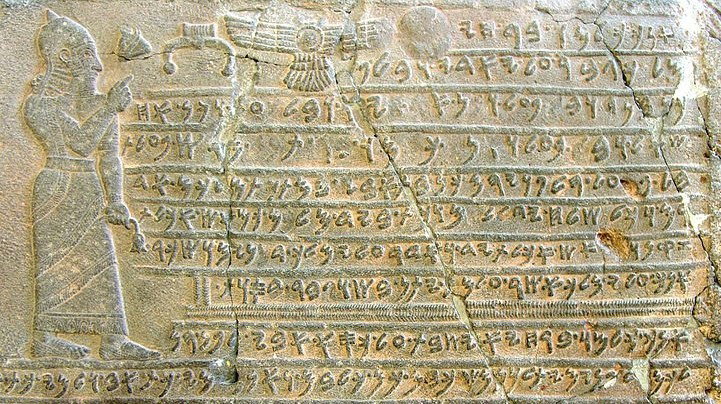
The word “man” is not an ordinary Hebrew word; it resembles, if it is not identical to, an Aramaic word meaning “what.” Instead of asking “mah hu?” the Israelites said “man hu?” This may hint that they spoke Hebrew influenced by Aramaic, perhaps continuing their ancestors’ tradition, as the firstfruits declaration describes Jacob: “A wandering Aramean was my father” (Deuteronomy 26:5). Yet “man” may be an ancient Semitic form shared by languages close to Hebrew, such as Ugaritic and Phoenician, rather than necessarily reflecting direct Aramaic influence.
This is not the only instance of a foreign language or dialect appearing in the Torah. Sometimes the Torah quotes words as they were actually spoken, in the speakers’ own language. Laban the Aramean called the heap of witness “Jegar-sahadutha” in Aramaic, whereas Jacob called it “Galeed” in Hebrew (Genesis 31:47). In Egypt, people cried before Joseph “Abrech” (Genesis 41:43), probably an Egyptian ceremonial cry, and Pharaoh gave Joseph the Egyptian name “Zaphenath-paneah” (Genesis 41:45). In some such cases the Torah preserves the original-language words even without explicitly explaining them, allowing us to hear echoes of the languages and dialects spoken at the time.
Perhaps “man hu” likewise preserves the speech heard in the wilderness, even if it differs from the language in which the Torah is written. This gap between spoken and written language may recall the distance in Arabic between the spoken dialect and literary Arabic: Arabic speakers learn the written language almost as a separate language.
