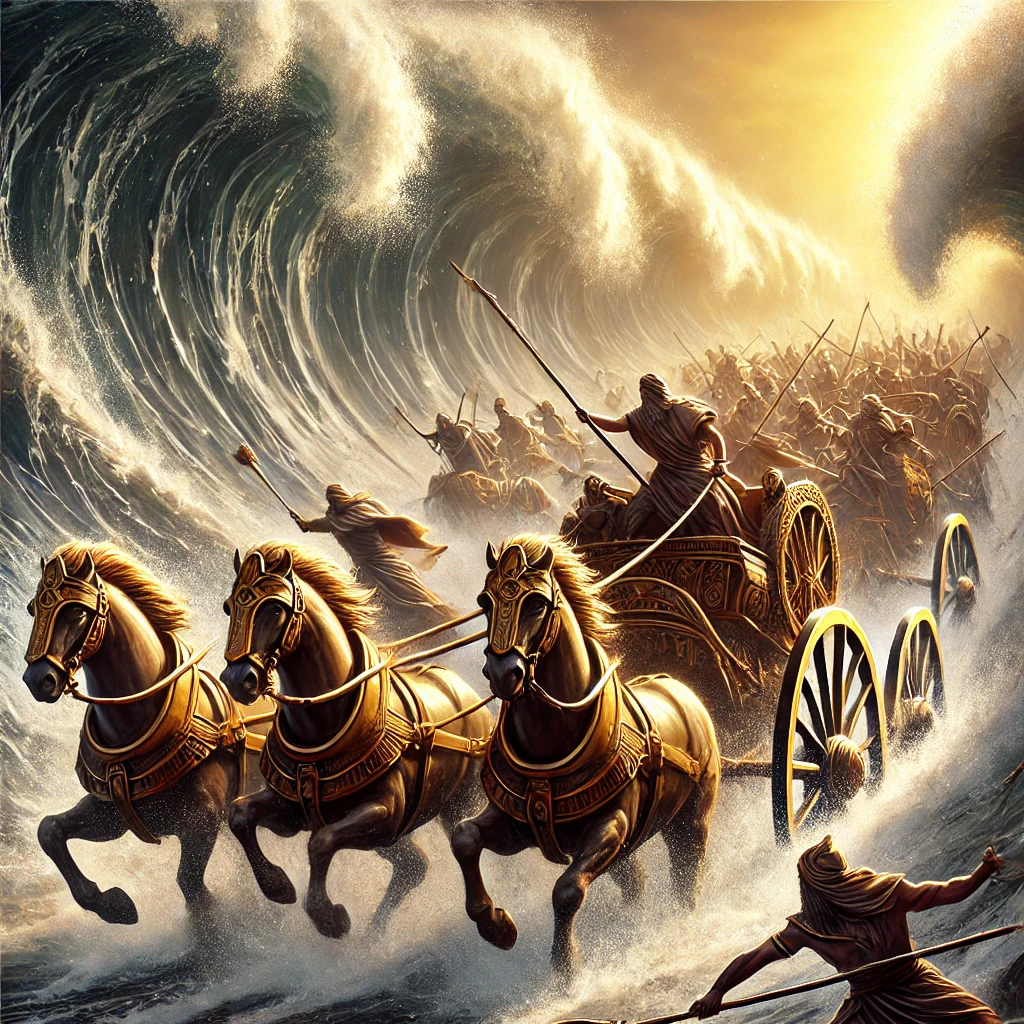
The parting of the Sea of Reeds is usually understood as a classic story of miraculous rescue: the Israelites fled Egypt, the sea split in two, Israel crossed, and their Egyptian pursuers drowned in the collapsing waves. A fresh look at the text, however, permits a different reading: a planned operation intended to bring about Egypt’s downfall, rather than a rescue forced by circumstances. On this reading, the Egyptians drowned while fleeing, rather than pursuing Israel.
During the night, the Israelites crossed the sea and continued toward the opposite shore. The pursuing Egyptians also entered the dry passage through the sea. Then, in the morning watch, the LORD threw the Egyptian camp into confusion and made them flee – not out of the sea, but back into it, into the dry passage they had previously crossed. Moses then stretched out his hand, and the sea returned to its strength and covered them forever.
The verse “And Moses stretched forth his hand over the sea, and the sea returned to its strength when the morning appeared; and the Egyptians fled against it” (Exodus 14:27) teaches that the Egyptians fled into the sea, rather than out of it. Had they been inside the sea pursuing Israel and fled toward the water walls beginning to collapse, the more suitable wording would have been “the Egyptians fled toward them,” or “the Egyptians fled toward the water.”
Thus the Egyptians drowned during their flight, rather than their pursuit. Moreover, the preceding verse, “and the Egyptians said: ‘Let us flee from the face of Israel’” (Exodus 14:25), shows that they fled from Israel rather than from the sea itself.
This interpretation emphasizes the story’s punitive aspect: the parting of the sea was a planned act of punishment against Egypt, rather than a means of rescuing Israel.
Indeed, from an “objective” perspective, Israel needed no rescue at all: the entire scenario had been devised in advance as a deception to entice Pharaoh to follow Israel into the wilderness and into a trap that would bring about his final defeat:
And the LORD spoke unto Moses, saying: ’Speak unto the children of Israel, that they turn back and encamp before Pi-hahiroth, between Migdol and the sea, before Baal-zephon, over against it shall ye encamp by the sea. And Pharaoh will say of the children of Israel: They are entangled in the land, the wilderness hath shut them in. And I will harden Pharaoh’s heart, and he shall follow after them; and I will get Me honour upon Pharaoh, and upon all his host; and the Egyptians shall know that I am the LORD.’ And they did so. (Exodus 14:1–4)
וַיְדַבֵּר ה' אֶל מֹשֶׁה לֵּאמֹר: דַּבֵּר אֶל בְּנֵי יִשְׂרָאֵל, וְיָשֻׁבוּ וְיַחֲנוּ לִפְנֵי פִּי הַחִירֹת, בֵּין מִגְדֹּל וּבֵין הַיָּם, לִפְנֵי בַּעַל צְפֹן – נִכְחוֹ תַחֲנוּ עַל הַיָּם. וְאָמַר פַּרְעֹה לִבְנֵי יִשְׂרָאֵל: נְבֻכִים הֵם בָּאָרֶץ, סָגַר עֲלֵיהֶם הַמִּדְבָּר. וְחִזַּקְתִּי אֶת לֵב פַּרְעֹה, וְרָדַף אַחֲרֵיהֶם, וְאִכָּבְדָה בְּפַרְעֹה וּבְכָל חֵילוֹ, וְיָדְעוּ מִצְרַיִם כִּי אֲנִי ה'. וַיַּעֲשׂוּ כֵן. (שמות י"ד, א-ד)
Comparison with the story of the war against Sisera and the brook Kishon (Judges 4–5) reveals a surprising parallel that strengthens this understanding. There too the enemy arrives in the vicinity of the Kishon and takes up position for battle. At this stage the river area is not described as an obstacle. On the contrary, Sisera’s army, relying on iron chariots, operates in a valley suited to chariot warfare, confident of its superiority over the Israelite fighters, who have no chariots or similar weapons.
Only when Deborah gives the signal and Barak descends Mount Tabor with his ten thousand fighters does the LORD intervene and confound the Canaanites: “And the LORD discomfited Sisera, and all his chariots, and all his host … before Barak” (Judges 4:15). Sisera’s strength collapses at this point, and his army flees the battle. Only then, as Deborah’s song describes, does the same watery terrain become a death trap: “The brook Kishon swept them away” (Judges 5:21).
Just as divine confusion at the parting of the sea drives the Egyptians to flee into the sea, where they drown, so too in the war against Sisera: divine confusion makes the Canaanites flee into the brook Kishon, which sweeps them away. The parallel is strengthened by the same rare expression in both stories, “va-yaham ha-Shem” – the LORD threw them into confusion.
The parting of the sea therefore primarily describes a planned act of divine justice, rather than a miracle of rescue. The sea does not collapse on the Egyptians to save Israel, since they have already stopped pursuing and begun fleeing for their lives. It drowns them as they flee from the LORD who fights against Egypt. In other words, they drowned because their time for punishment had arrived, rather than because they posed an immediate danger to Israel.
