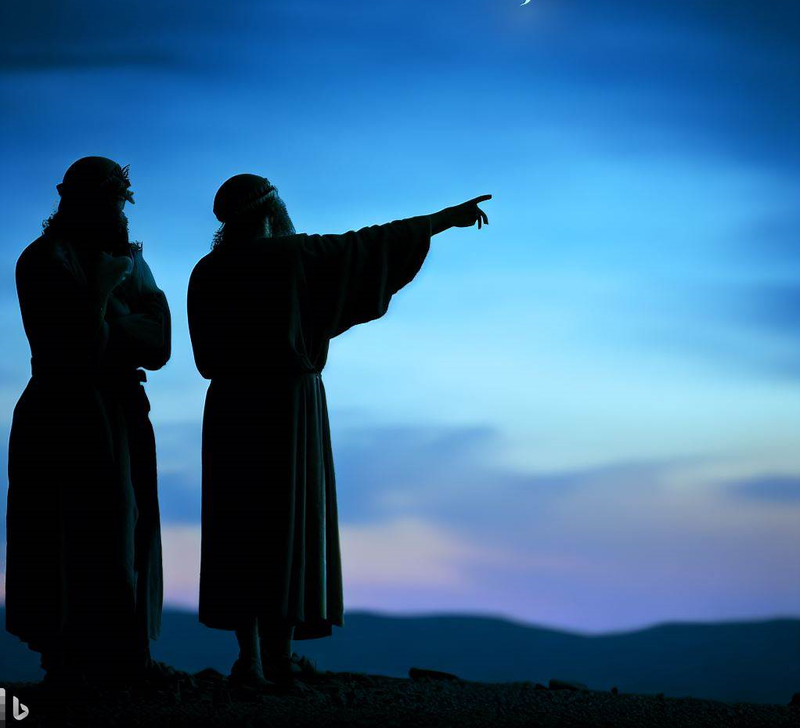
Are the LORD’s appointed seasons fixed from the day of creation, or is it for human beings to determine their dates? This question lay at the heart of the dispute between the Pharisees and various Jewish sects, including the Qumran community.
In Leviticus the Torah describes the LORD’s appointed seasons:
These are the appointed seasons of the LORD, even holy convocations, which ye shall proclaim in their appointed season. (Leviticus 23:4)
אֵלֶּה מוֹעֲדֵי ה' מִקְרָאֵי קֹדֶשׁ אֲשֶׁר תִּקְרְאוּ אֹתָם בְּמוֹעֲדָם. (ויקרא כ"ג, ד)
The Sages interpreted the word otam (“them”), written without a vav, by reading it instead as atem (“you”), and concluded that authority to determine the festivals rests with Israel. That is, the court is authorized to determine the beginning of the month, and its decision remains valid even if it erred, acted deliberately, or was misled (Babylonian Talmud, Rosh Hashanah 25a).
At first sight, this rule directly contradicts the plain meaning of the verse, which requires the LORD’s festivals to be set at their appointed times. Indeed, the Qumran community believed that the LORD’s appointed seasons had always been fixed in heaven, and that human beings had no right to change them on earth.
A similar idea – in which legal significance arises from human judgment rather than from the facts themselves – appears in an entirely different sphere: the impurity of tzaraat.
Tzaraat has a unique feature absent from other forms of impurity. What causes impurity is not the sign itself, but the meaning the priest assigns it: “the priest shall look on him, and pronounce him unclean” (Leviticus 13:3).
This is what enables the priest to order a house emptied before he comes to inspect it (Leviticus 14:36). With another impurity, such as that caused by a corpse, emptying the house would accomplish nothing: everything in it would have become impure retroactively. See the fuller discussion in “If a Tree Falls in a Forest.”
The Sages expanded the priest’s authority to choose what to see and when to see it:
“Wheresoever the priest looketh” – excluding concealed parts of the body… A bridegroom is granted the seven days of the wedding celebration, for himself, his house, and his clothing; likewise, at a festival he is granted all the days of the festival. (Sifra)
"לְכָל מַרְאֵה עֵינֵי הַכֹּהֵן" – פְּרָט לְבֵית הַסְּתָרִים… בֶּחָתָן נוֹתְנִין לוֹ שִׁבְעָה יְמֵי הַמִּשְׁתֶּה, לוֹ וּלְבֵיתוֹ וְלִכְסוּתוֹ, וְכֵן בָּרֶגֶל נוֹתְנִין לוֹ כָּל יְמֵי הָרֶגֶל. (ספרא)
This model, in which legal significance comes into being only through a human decision, may also have guided the Sages in determining the festivals. With tzaraat, however, the plain wording already gives authority to the priest; with the festivals, it was the Sages who transferred authority to human beings, although the plain wording presents the LORD’s appointed seasons as fixed.
Unlike the Qumran community’s solar calendar, which they understood as fixed and unchanging from creation, the Sages’ calendar rested on the appearance of the new moon, a phenomenon that is not always predictable or clear.
As with tzaraat, sanctifying the new month involves both the phenomenon itself and the need to identify it and give it meaning: with tzaraat, the priest sees the lesion and declares the person impure; in determining the festivals, the court hears the witnesses and sanctifies the month.
The requirement for human recognition – first identifying, then assigning meaning – means that neither tzaraat impurity nor the determination of festivals is automatic: both depend on a human determination. This suggests a conception in which holiness is not merely a heavenly reality imposed on the world, but a reality created through partnership between the divine and the human.
The Sages’ great innovation, going beyond the example of tzaraat, is to expand human authority: not merely to identify phenomena and respond to them, but even to shape legal reality, including in cases of error or deliberate action. A principle stated in the Torah concerning tzaraat is thus transferred to the heart of religious life. The sanctity of time becomes something whose validity derives from the meaning human beings assign it, instead of an immanent phenomenon existing by itself.

 Podcast (Hebrew)