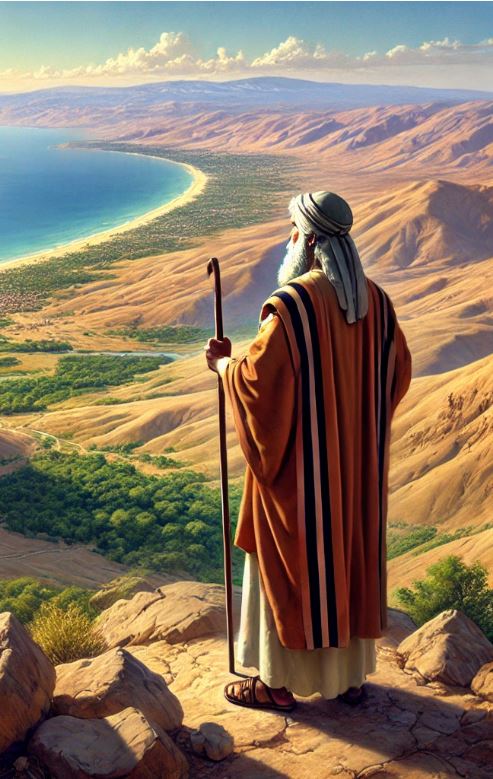
The LORD’s promise to the patriarchs that Israel would return to their land is a key motif throughout the Torah, driving its history. Surprisingly, however, it ends with Moses’ death on the eve of entry, without describing entry itself. Would Joshua’s concluding account not be a more fitting ending?
So the LORD gave unto Israel all the land which He swore to give unto their fathers; and they possessed it, and dwelt therein. And the LORD gave them rest round about, according to all that He swore unto their fathers; and there stood not a man of all their enemies against them; the LORD delivered all their enemies into their hand. There failed not aught of any good thing which the LORD had spoken unto the house of Israel; all came to pass. (Joshua 21:43–45)
וַיִּתֵּן ה' לְיִשְׂרָאֵל אֶת כָּל הָאָרֶץ אֲשֶׁר נִשְׁבַּע לָתֵת לַאֲבוֹתָם – וַיִּרָשׁוּהָ, וַיֵּשְׁבוּ בָהּ. וַיָּנַח ה' לָהֶם מִסָּבִיב, כְּכֹל אֲשֶׁר נִשְׁבַּע לַאֲבוֹתָם. וְלֹא עָמַד אִישׁ בִּפְנֵיהֶם מִכָּל אֹיְבֵיהֶם. אֵת כָּל אֹיְבֵיהֶם נָתַן ה' בְּיָדָם. לֹא נָפַל דָּבָר מִכֹּל הַדָּבָר הַטּוֹב אֲשֶׁר דִּבֶּר ה' אֶל בֵּית יִשְׂרָאֵל – הַכֹּל בָּא. (יהושע כ״א, מג–מה)
The Torah can be divided into three main parts:
Genesis presents history from creation to Jacob’s family’s descent to Egypt, an introduction and background to the story the Torah seeks to tell.
The next three books, Exodus, Leviticus, and Numbers, are its core. They describe a relatively short period of two generations, those leaving Egypt and those to enter the land, under Moses’ leadership. Central are the exodus, Sinai, the covenant, the Tabernacle, and laws given through Moses.
Deuteronomy is Moses’ concluding speech, reviewing the preceding books’ principal events from his perspective and preparing entry.
This structure reveals the Torah’s principal purpose. It seeks to focus on divine revelation, the covenant, and Moses’ unique standing as unparalleled mediator and prophet, rather than complete the historical account of conquest and settlement. It emphasizes how he shaped spiritual identity through wilderness revelation, covenant, and laws, preparing Israel to enter with a clear, coherent constitution.
In this sense it is “the law of Moses” (Malachi 3:22), telling Moses’ story. It can therefore end only with his death, completing his mission as transmitter of the LORD’s word. The period of giving Torah, divine law directly given by the LORD through Moses, also ends.
And there hath not arisen a prophet since in Israel like unto Moses, whom the LORD knew face to face; in all the signs and the wonders, which the LORD sent him to do in the land of Egypt, to Pharaoh, and to all his servants, and to all his land; and in all the mighty hand, and in all the great terror, which Moses wrought in the sight of all Israel. (Deuteronomy 34:10–12)
וְלֹא קָם נָבִיא עוֹד בְּיִשְׂרָאֵל כְּמֹשֶׁה אֲשֶׁר יְדָעוֹ ה' פָּנִים אֶל פָּנִים. לְכָל הָאֹתוֹת וְהַמּוֹפְתִים אֲשֶׁר שְׁלָחוֹ ה' לַעֲשׂוֹת בְּאֶרֶץ מִצְרָיִם: לְפַרְעֹה וּלְכָל עֲבָדָיו וּלְכָל אַרְצוֹ, וּלְכֹל הַיָּד הַחֲזָקָה, וּלְכֹל הַמּוֹרָא הַגָּדוֹל אֲשֶׁר עָשָׂה מֹשֶׁה לְעֵינֵי כָּל יִשְׂרָאֵל. (דברים ל"ד, י-יב)
