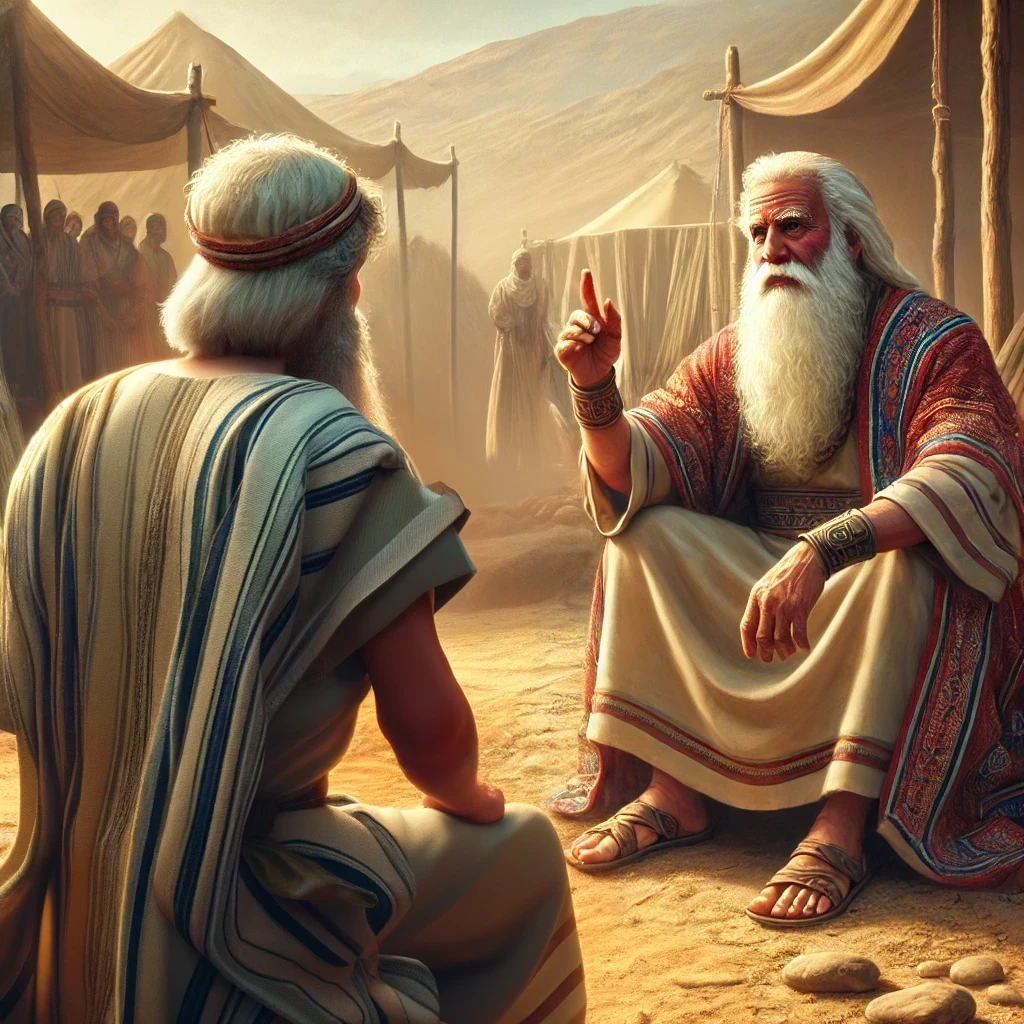
And it came to pass on the morrow, that Moses sat to judge the people … And when Moses’ father-in-law saw … he said … why sittest thou thyself alone, and all the people stand about thee from morning unto even? And Moses said unto his father-in-law: ‘Because the people come unto me to inquire of God’ … And Moses’ father-in-law said unto him: ‘The thing that thou doest is not good’ … for the thing is too heavy for thee; thou art not able to perform it thyself alone. Now hearken unto my voice, I will give thee counsel, and God be with thee: be thou for the people before God, and bring thou the causes unto God … Moreover thou shalt provide out of all the people able men, such as fear God, men of truth, hating unjust gain … And let them judge the people … so shall they make it easier for thee and bear the burden with thee. If thou shalt do this thing, and God command thee so, then thou shalt be able to endure, and all this people also shall go to their place in peace. (Exodus 18:13–23)
וַיְהִי מִמָּחֳרָת, וַיֵּשֶׁב מֹשֶׁה לִשְׁפֹּט אֶת הָעָם ... וַיַּרְא חֹתֵן מֹשֶׁה ... וַיֹּאמֶר ... מַדּוּעַ אַתָּה יוֹשֵׁב לְבַדֶּךָ וְכָל הָעָם נִצָּב עָלֶיךָ מִן בֹּקֶר עַד עָרֶב? וַיֹּאמֶר מֹשֶׁה לְחֹתְנוֹ כִּי יָבֹא אֵלַי הָעָם לִדְרֹשׁ אֱלֹהִים ... וַיֹּאמֶר חֹתֵן מֹשֶׁה אֵלָיו לֹא טוֹב הַדָּבָר אֲשֶׁר אַתָּה עֹשֶׂה ... כָבֵד מִמְּךָ הַדָּבָר לֹא תוּכַל עֲשֹׂהוּ לְבַדֶּךָ.
עַתָּה שְׁמַע בְּקֹלִי – אִיעָצְךָ וִיהִי אֱלֹהִים עִמָּךְ. הֱיֵה אַתָּה לָעָם מוּל הָאֱלֹהִים וְהֵבֵאתָ אַתָּה אֶת הַדְּבָרִים אֶל הָאֱלֹהִים ... וְאַתָּה תֶחֱזֶה מִכָּל הָעָם אַנְשֵׁי חַיִל יִרְאֵי אֱלֹהִים אַנְשֵׁי אֱמֶת שֹׂנְאֵי בָצַע ... וְשָׁפְטוּ אֶת הָעָם ... וְהָקֵל מֵעָלֶיךָ וְנָשְׂאוּ אִתָּךְ.
אִם אֶת הַדָּבָר הַזֶּה תַּעֲשֶׂה, וְצִוְּךָ אֱלֹהִים וְיָכָלְתָּ עֲמֹד, וְגַם כָּל הָעָם הַזֶּה עַל מְקֹמוֹ יָבֹא בְשָׁלוֹם. (שמות י"ח, יג-כג)
The day after arriving at Israel’s camp in the wilderness, Jethro saw Moses judging the people from morning until evening. He wondered why Moses carried this burden alone. He proposed a hierarchy of judges to lighten it, concluding with an intriguing sentence:
If thou shalt do this thing, and God command thee so, then thou shalt be able to endure, and all this people also shall go to their place in peace.’ (Exodus 18:23)
אִם אֶת הַדָּבָר הַזֶּה תַּעֲשֶׂה, וְצִוְּךָ אֱלֹהִים וְיָכָלְתָּ עֲמֹד – וְגַם כָּל הָעָם הַזֶּה עַל מְקֹמוֹ יָבֹא בְשָׁלוֹם. (שמות י"ח, כג)
What does “ve-tzivvekha Elohim” – “and God command thee so” – mean? Did Jethro mean that Moses could implement the advice only if he obtained divine approval?
Rashi, Ibn Ezra, and others indeed explain that Jethro made success conditional on the LORD commanding it. But this interpretation has several difficulties:
- Word order – If the LORD’s command is a prerequisite, we would expect the reverse wording: “If God command thee so, and thou shalt do this thing…” That would more clearly express a condition.
- The absence of divine approval – Ultimately, the Torah does not report that the LORD commanded Moses to do this. Instead, it says: “So Moses hearkened to the voice of his father-in-law, and did all that he had said” (verse 24). Moses adopted Jethro’s advice without seeking the LORD’s approval.
The Septuagint suggests a different understanding. In its rendering, “ve-tzivvekha Elohim” means that God will strengthen you. This is a consequence rather than a condition: if Moses follows Jethro’s proposal, the LORD will strengthen him and enable him to accomplish the task.
Apparently the Septuagint interpreted Jethro’s conclusion in light of his opening. Jethro began:
Now hearken unto my voice, I will give thee counsel, and God be with thee. (Exodus 18:19)
עַתָּה שְׁמַע בְּקֹלִי – אִיעָצְךָ, וִיהִי אֱלֹהִים עִמָּךְ. (פסוק יט).
And concluded:
If thou shalt do this thing, and God command thee so. (Exodus 18:23)
אִם אֶת הַדָּבָר הַזֶּה תַּעֲשֶׂה – וְצִוְּךָ אֱלֹהִים (פסוק כג).
“If thou shalt do this thing” parallels “Now hearken unto my voice, I will give thee counsel”; “and God command thee so” parallels “and God be with thee.” Their meaning is identical: if you do this, the LORD will help you.
This interpretation, however, does not fit the straightforward meaning of “ve-tzivvekha Elohim,” which apparently concerns commanding rather than strengthening. Perhaps the Septuagint understood “command” as also meaning to confer power or authorization, but, as noted, this sense is not straightforward.
Rashbam and Abarbanel propose retaining the words’ plain meaning but reading them differently: if Moses follows Jethro’s advice, then when the LORD commands him concerning statutes and ordinances (“and God command thee so”), he will be able to cope (“then thou shalt be able to endure”). With the judges’ help Moses can implement the LORD’s word, allowing “all this people also [to] go to their place in peace.” This idea already appears in Josephus’s writings, which may indicate an ancient understanding of the verse.
On this explanation, we can understand the parallel between Jethro’s opening and conclusion without departing from the words’ plain meaning. As Rashbam and Abarbanel explain, they mean that the LORD will continue commanding Moses concerning His statutes and ordinances. Likewise, the parallel opening words “and God be with thee” express the same meaning: Moses will continue standing in the LORD’s presence and bringing His word to the people.
Thus Jethro did not seek divine approval for his proposal. He assured Moses that the new method would allow him to continue his unique role as the bearer of the LORD’s word to the people.
