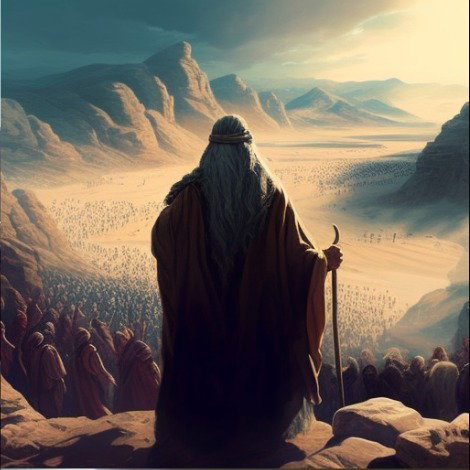
And Moses said unto God: ‘Who am I, that I should go unto Pharaoh, and that I should bring forth the children of Israel out of Egypt?’ And He said: ‘Certainly I will be with thee; and this shall be the token unto thee, that I have sent thee: when thou hast brought forth the people out of Egypt, ye shall serve God upon this mountain.’ (Exodus 3:11–12)
וַיֹּאמֶר מֹשֶׁה אֶל הָאֱלֹהִים: מִי אָנֹכִי כִּי אֵלֵךְ אֶל פַּרְעֹה וְכִי אוֹצִיא אֶת בְּנֵי יִשְׂרָאֵל מִמִּצְרָיִם. וַיֹּאמֶר: כִּי אֶהְיֶה עִמָּךְ. וְזֶה לְּךָ הָאוֹת כִּי אָנֹכִי שְׁלַחְתִּיךָ – בְּהוֹצִיאֲךָ אֶת הָעָם מִמִּצְרַיִם תַּעַבְדוּן אֶת הָאֱלֹהִים עַל הָהָר הַזֶּה. (שמות ג', יא-יב)
At the burning bush, commissioned to redeem Israel, Moses doubts his ability to approach Pharaoh and bring Israel out. The verse’s second half, “and this shall be the token unto thee,” puzzles: it apparently gives Moses proof “that I have sent thee,” though he knows the LORD is speaking and commissioning him. Why proof?
Perhaps it is proof for the people. Yet it will happen only “when thou hast brought forth the people out of Egypt.” How can a future occurrence provide a present sign?
The key seems the meaning of ot, “sign.” Usually it is understood like Exodus 4’s signs persuading the people. There Moses expressly fears, “But, behold, they will not believe me … for they will say: The LORD hath not appeared unto thee” (Exodus 4:1). The LORD gives three demonstrations: staff becoming serpent, leprous hand, water becoming blood.
But biblical ot also means fulfillment itself, rather than a preceding sign. Thus the disaster prophesied for Eli’s house:
And this shall be the sign unto thee, that shall come upon thy two sons … in one day they shall die both of them. (I Samuel 2:34)
וְזֶה לְּךָ הָאוֹת, אֲשֶׁר יָבֹא אֶל שְׁנֵי בָנֶיךָ ... בְּיוֹם אֶחָד יָמוּתוּ שְׁנֵיהֶם. (שמואל א' ב', לד)
The sign is the event itself, rather than proof beforehand.
Similarly Isaiah tells Hezekiah:
And this shall be the sign unto thee: ye shall eat this year that which groweth of itself … and in the third year sow ye, and reap (Isaiah 37:30)
וְזֶה לְּךָ הָאוֹת – אָכוֹל הַשָּׁנָה סָפִיחַ ... וּבַשָּׁנָה הַשְּׁלִישִׁית זִרְעוּ וְקִצְרוּ. (ישעיהו ל"ז, ל)
Again the sign fulfills the process instead of proving it in advance.
The LORD’s answer thus means: “Certainly I will be with thee” responds to fear of Pharaoh. “And this shall be the token unto thee” responds to fear of failing to bring Israel out. Not only will he succeed on the LORD’s mission; afterward they will reach Sinai, where He now appears, and “ye shall serve God.”
