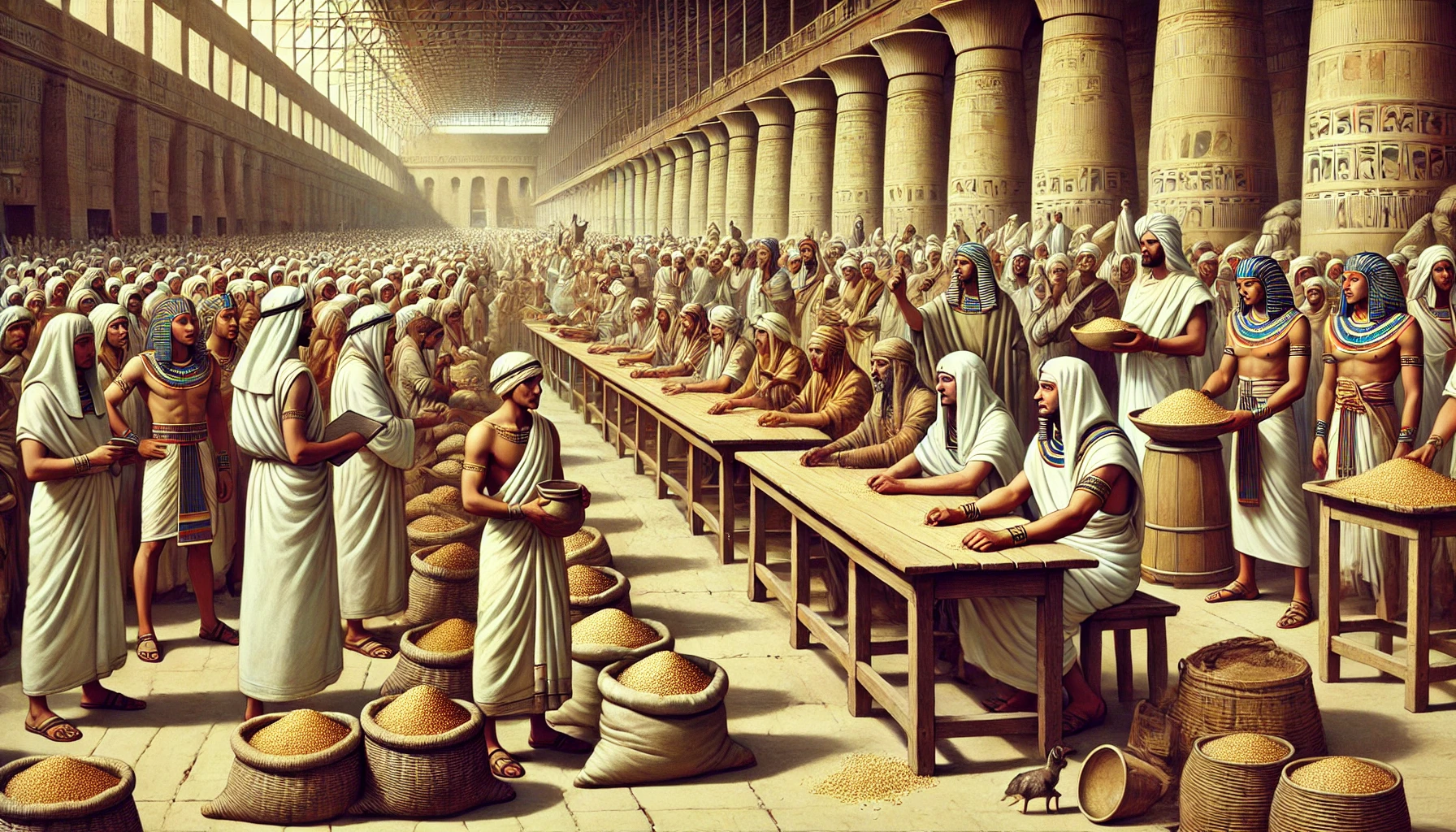
And Joseph gathered up all the money that was found in the land of Egypt, and in the land of Canaan, for the corn which they bought; and Joseph brought the money into Pharaoh’s house. And when the money was all spent in the land of Egypt, and in the land of Canaan, all the Egyptians came unto Joseph, and said: ‘Give us bread; for why should we die in thy presence? for our money faileth.’ And Joseph said: ‘Give your cattle, and I will give you [bread] for your cattle, if money fail.’ … And when that year was ended, they came unto him the second year, and said unto him: ‘We will not hide from my lord, how that our money is all spent; and the herds of cattle are my lord’s; there is nought left in the sight of my lord, but our bodies, and our lands. … So Joseph bought all the land of Egypt for Pharaoh; for the Egyptians sold every man his field, because the famine was sore upon them; and the land became Pharaoh’s. And as for the people, he removed them city by city, from one end of the border of Egypt even to the other end thereof. … Then Joseph said unto the people: ‘Behold, I have bought you this day and your land for Pharaoh. Lo, here is seed for you, and ye shall sow the land. And it shall come to pass at the ingatherings, that ye shall give a fifth unto Pharaoh, and four parts shall be your own, for seed of the field, and for your food, and for them of your households, and for food for your little ones.’ … And Joseph made it a statute concerning the land of Egypt unto this day, that Pharaoh should have the fifth. (Genesis 47:14–16, 18, 20–21, 23–24, 26)
וַיְלַקֵּט יוֹסֵף אֶת כָּל הַכֶּסֶף הַנִּמְצָא בְאֶרֶץ מִצְרַיִם וּבְאֶרֶץ כְּנַעַן, בַּשֶּׁבֶר אֲשֶׁר הֵם שֹׁבְרִים. וַיָּבֵא יוֹסֵף אֶת הַכֶּסֶף בֵּיתָה פַרְעֹה. וַיִּתֹּם הַכֶּסֶף מֵאֶרֶץ מִצְרַיִם וּמֵאֶרֶץ כְּנַעַן, וַיָּבֹאוּ כָל מִצְרַיִם אֶל יוֹסֵף לֵאמֹר: הָבָה לָּנוּ לֶחֶם, וְלָמָּה נָמוּת נֶגְדֶּךָ כִּי אָפֵס כָּסֶף. וַיֹּאמֶר יוֹסֵף: הָבוּ מִקְנֵיכֶם וְאֶתְּנָה לָכֶם בְּמִקְנֵיכֶם, אִם אָפֵס כָּסֶף ... וַיָּבֹאוּ אֵלָיו בַּשָּׁנָה הַשֵּׁנִית וַיֹּאמְרוּ לוֹ: לֹא נְכַחֵד מֵאֲדֹנִי, כִּי אִם תַּם הַכֶּסֶף וּמִקְנֵה הַבְּהֵמָה אֶל אֲדֹנִי, לֹא נִשְׁאַר לִפְנֵי אֲדֹנִי בִּלְתִּי אִם גְּוִיָּתֵנוּ וְאַדְמָתֵנוּ ... וַיִּקֶן יוֹסֵף אֶת כָּל אַדְמַת מִצְרַיִם לְפַרְעֹה, כִּי מָכְרוּ מִצְרַיִם אִישׁ שָׂדֵהוּ, כִּי חָזַק עֲלֵהֶם הָרָעָב. וַתְּהִי הָאָרֶץ לְפַרְעֹה. וְאֶת הָעָם – הֶעֱבִיר אֹתוֹ לֶעָרִים מִקְצֵה גְבוּל מִצְרַיִם וְעַד קָצֵהוּ ... וַיֹּאמֶר יוֹסֵף אֶל הָעָם: הֵן קָנִיתִי אֶתְכֶם הַיּוֹם וְאֶת אַדְמַתְכֶם לְפַרְעֹה, הֵא לָכֶם זֶרַע וּזְרַעְתֶּם אֶת הָאֲדָמָה. וְהָיָה בַּתְּבוּאֹת, וּנְתַתֶּם חֲמִישִׁית לְפַרְעֹה ... וַיָּשֶׂם אֹתָהּ יוֹסֵף לְחֹק עַד הַיּוֹם הַזֶּה, עַל אַדְמַת מִצְרַיִם – לְפַרְעֹה לַחֹמֶשׁ. (בראשית מ"ז, יד-כו)
At the parasha’s end, the Torah describes Joseph’s dealings with Egyptians during famine. Initially he sold grain for money, then livestock when money ran out. When livestock was exhausted, he acquired their lands and enslaved them. He transferred those losing fields into cities and imposed a fifth of produce for Pharaoh’s treasury, still customary when the account was written (Genesis 47:13–26).
Why describe these actions in detail? The main story concerns Joseph’s successful rule and provision for his family, and Jacob’s household settling in Egypt. What does his subsequent treatment of Egyptians add?
In “Egypt Arms Itself” I showed Joseph’s quasi-military regime efficiently preparing for famine. God-fearing Joseph meant well, believing his conduct proper. God revealed the future to Pharaoh, and Joseph’s wise plan answered appropriately.
Ultimately, however, absolute power produced absolute injustice. Instead of freely providing the grain collected during seven abundant years, Joseph exploited distress and sold it at full price. Egypt changed from free people owning fields, money, livestock, and property to Pharaoh’s slaves without land, inheritance, money, livestock, or property: the Torah’s “house of bondage” (Exodus 20:2).
Why, when Pharaoh gave him free rein to act as he saw fit?
His conduct must be understood within the Egyptian worldview in which he operated, placing order and efficiency above moral considerations.
The Torah repeatedly contrasts Egypt and Israel and their cultures. Egyptians serve Pharaoh; Israelites serve the LORD and “shall not be sold as bondmen” (Leviticus 25:42). Egyptians lack land while priests own it (Genesis 47:22); in Israel inhabitants inherit land while priests do not (Deuteronomy 18:2).
Divine providence likewise distinguishes the lands. Egypt receives regular Nile irrigation; Israel receives rain from heaven: “drinketh water as the rain of heaven cometh down” (Deuteronomy 11:11). Unlike Egypt, Israel is “a land which the LORD thy God careth for; the eyes of the LORD thy God are always upon it, from the beginning of the year even unto the end of the year” (Deuteronomy 11:12).
Joseph’s approach was rational and Egyptian. Evil was merely an inevitable fact revealed by God. Abundance and famine alternate, requiring preparation in good years for bad. Egypt regarded both as natural facts without moral meaning or relation to reward and punishment. Like the ant working in summer to secure winter sustenance (Proverbs 6:6–11), the kingdom planned coldly, without a moral foundation. The Torah instead regards famine and withheld rain as punishment for conduct requiring correction (Deuteronomy 11:16–17).
Absolute power combined with severing conduct from reward and punishment, and refusing to see adversity as an opportunity for self-examination, yields an efficient society lacking compassion and checks, ultimately tyranny and bondage.
The famine account thus supplies the profound background to Egyptian enslavement, the exodus, and the Torah’s alternative vision in Israel, beyond historical narrative.
It also explains reservations about centralized monarchy: Egypt’s king has unlimited power; Israel’s kingship is limited, subject to law and morality (Deuteronomy 17:14–20; see “Like All the Nations?”).
Our present culture is substantially a product of the exodus: government is publicly elected to serve rather than dominate. This was not the biblical period’s understanding, and even God-fearing Joseph could not see otherwise. Only divine intervention through the exodus broke the pattern, founding a culture centering human freedom and social justice.
