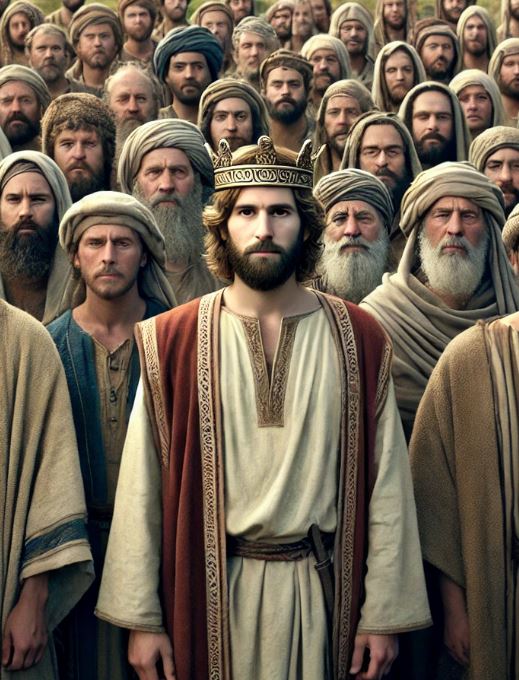
When thou art come unto the land which the LORD thy God giveth thee, and shalt possess it, and shalt dwell therein; and shalt say: ‘I will set a king over me, like all the nations that are round about me’; thou shalt in any wise set him king over thee, whom the LORD thy God shall choose; one from among thy brethren shalt thou set king over thee; thou mayest not put a foreigner over thee, who is not thy brother. Only he shall not multiply horses to himself, nor cause the people to return to Egypt … Neither shall he multiply wives to himself, that his heart turn not away; neither shall he greatly multiply to himself silver and gold.
And it shall be, when he sitteth upon the throne of his kingdom, that he shall write him a copy of this law in a book, out of that which is before the priests the Levites. And it shall be with him, and he shall read therein all the days of his life; that he may learn to fear the LORD his God, to keep all the words of this law and these statutes, to do them; that his heart be not lifted up above his brethren, and that he turn not aside from the commandment, to the right hand, or to the left; to the end that he may prolong his days in his kingdom, he and his children, in the midst of Israel. (Deuteronomy 17:14–20)כִּי תָבֹא אֶל הָאָרֶץ, אֲשֶׁר ה' אֱלֹהֶיךָ נֹתֵן לָךְ, וִירִשְׁתָּהּ וְיָשַׁבְתָּה בָּהּ. וְאָמַרְתָּ: אָשִׂימָה עָלַי מֶלֶךְ כְּכָל הַגּוֹיִם אֲשֶׁר סְבִיבֹתָי.
שׂוֹם תָּשִׂים עָלֶיךָ מֶלֶךְ, אֲשֶׁר יִבְחַר ה' אֱלֹהֶיךָ בּוֹ, מִקֶּרֶב אַחֶיךָ תָּשִׂים עָלֶיךָ מֶלֶךְ, לֹא תוּכַל לָתֵת עָלֶיךָ אִישׁ נָכְרִי אֲשֶׁר לֹא אָחִיךָ הוּא. רַק לֹא יַרְבֶּה לּוֹ סוּסִים, וְלֹא יָשִׁיב אֶת הָעָם מִצְרַיְמָה, ... וְלֹא יַרְבֶּה לּוֹ נָשִׁים, וְלֹא יָסוּר לְבָבוֹ, וְכֶסֶף וְזָהָב לֹא יַרְבֶּה לּוֹ – מְאֹד.
וְהָיָה כְשִׁבְתּוֹ עַל כִּסֵּא מַמְלַכְתּוֹ, וְכָתַב לוֹ אֶת מִשְׁנֵה הַתּוֹרָה הַזֹּאת עַל סֵפֶר, מִלִּפְנֵי הַכֹּהֲנִים הַלְוִיִּם. וְהָיְתָה עִמּוֹ, וְקָרָא בוֹ כָּל יְמֵי חַיָּיו. לְמַעַן יִלְמַד לְיִרְאָה אֶת ה' אֱלֹהָיו, לִשְׁמֹר אֶת כָּל דִּבְרֵי הַתּוֹרָה הַזֹּאת וְאֶת הַחֻקִּים הָאֵלֶּה לַעֲשֹׂתָם. לְבִלְתִּי רוּם לְבָבוֹ מֵאֶחָיו, וּלְבִלְתִּי סוּר מִן הַמִּצְוָה יָמִין וּשְׂמֹאול, לְמַעַן יַאֲרִיךְ יָמִים עַל מַמְלַכְתּוֹ – הוּא וּבָנָיו בְּקֶרֶב יִשְׂרָאֵל. (דברים י"ז, יד-כ)
The Torah presents the king passage as answering the people’s request for a king. Its wording is weak and lacks substantive justification: “I will set a king over me, like all the nations that are round about me” (verse 14). It gives no real reason to need one, only a desire to adopt neighboring customs, presenting the request problematically from the outset.
Samuel also contains a demand for a king “like all the nations,” but adds a reason: a leader to judge them and lead their wars (I Samuel 8:5–20). In the Torah these reasons are wholly absent, strengthening the impression that monarchy is presented as a wish to resemble other nations rather than a real need.
Though unspoken by the people, the Torah indirectly answers these reasons.
The preceding passage concerns Levitical priests and judges at the chosen place, the highest authority resolving legal disputes. These institutions already perform the task, making a king to judge the people unnecessary.
Likewise with warfare. The request comes after the LORD, rather than a king, has given the land and the people have possessed and settled it. Conquest itself proves war can be conducted without a king. Later the Torah details warfare through the priest, officers, and army commanders, without mentioning a king (Deuteronomy 20:1–9).
Nevertheless, it permits monarchy in response to the request, establishing rules to restrain its power.
The description especially recalls Solomon, whose prominent features match the three restrictions. Against him the Torah sets another model, limiting power and standing and preventing unrestrained accumulation. Multiplying wives, as Solomon did (I Kings 11:1–4), is prohibited, limiting political alliances through marriage. Multiplying horses, as he did (I Kings 10:26), is prohibited, reducing military strength. Multiplying silver and gold is also prohibited, unlike his great wealth (I Kings 10:14–27).
These restrictions concern authority as well as property and power. Ancient kings often appeared as establishing and guaranteeing law, as in Hammurabi’s laws. Here the king neither stands above law nor determines it. He receives the Torah scroll from the Levitical priests and must obey all its laws without deviation. The limitation culminates in “that his heart be not lifted up above his brethren” (Deuteronomy 17:20). He must continue seeing himself as one of his brethren, sharply contrasting with the conventional ancient king.
This is limited monarchy, reducing the dangers of concentrating great power in one person’s hands. In contemporary terms, the permitted king resembles a state’s president more than a ruler with broad executive authority: a representative figure of limited standing, subject to law originating elsewhere.
The passage thus appears to address the danger in one-person rule: a ruler accumulating wealth, military power, and great personal status may leave the LORD’s path of righteousness and justice and harness rule to his own needs. Concern over unrestrained governmental power remains valid today.
