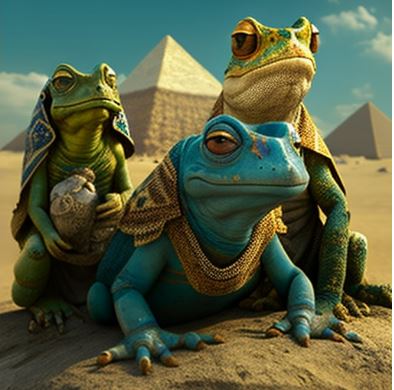
Then Pharaoh called for Moses and Aaron, and said: ‘Entreat the LORD, that He take away the frogs from me, and from my people; and I will let the people go, that they may sacrifice unto the LORD.’ And Moses said unto Pharaoh: ‘Have thou this glory over me; against what time shall I entreat for thee, and for thy servants, and for thy people, that the frogs be destroyed from thee and thy houses, and remain in the river only?’ And he said: ‘Against to-morrow.’ And he said: ‘Be it according to thy word; that thou mayest know that there is none like unto the LORD our God. And the frogs shall depart from thee, and from thy houses, and from thy servants, and from thy people; they shall remain in the river only.’ And Moses and Aaron went out from Pharaoh; and Moses cried unto the LORD concerning the frogs, which He had brought upon Pharaoh. And the LORD did according to the word of Moses; and the frogs died out of the houses, out of the courts, and out of the fields. And they gathered them together in heaps; and the land stank. (Exodus 8:4–10)
וַיִּקְרָא פַרְעֹה לְמֹשֶׁה וּלְאַהֲרֹן וַיֹּאמֶר: הַעְתִּירוּ אֶל ה' וְיָסֵר הַצְפַרְדְּעִים מִמֶּנִּי וּמֵעַמִּי וַאֲשַׁלְּחָה אֶת הָעָם וְיִזְבְּחוּ לַה'. וַיֹּאמֶר מֹשֶׁה לְפַרְעֹה: הִתְפָּאֵר עָלַי, לְמָתַי אַעְתִּיר לְךָ וְלַעֲבָדֶיךָ וּלְעַמְּךָ לְהַכְרִית הַצֲפַרְדְּעִים מִמְּךָ וּמִבָּתֶּיךָ רַק בַּיְאֹר תִּשָּׁאַרְנָה? וַיֹּאמֶר: לְמָחָר. וַיֹּאמֶר: כִּדְבָרְךָ, לְמַעַן תֵּדַע כִּי אֵין כַּה' אֱלֹהֵינוּ, וְסָרוּ הַצְפַרְדְּעִים מִמְּךָ וּמִבָּתֶּיךָ וּמֵעֲבָדֶיךָ וּמֵעַמֶּךָ רַק בַּיְאֹר תִּשָּׁאַרְנָה. וַיֵּצֵא מֹשֶׁה וְאַהֲרֹן מֵעִם פַּרְעֹה, וַיִּצְעַק מֹשֶׁה אֶל ה' עַל דְּבַר הַצְפַרְדְּעִים אֲשֶׁר שָׂם לְפַרְעֹה. וַיַּעַשׂ ה' כִּדְבַר מֹשֶׁה, וַיָּמֻתוּ הַצְפַרְדְּעִים מִן הַבָּתִּים מִן הַחֲצֵרֹת וּמִן הַשָּׂדֹת. וַיִּצְבְּרוּ אֹתָם חֳמָרִם חֳמָרִם, וַתִּבְאַשׁ הָאָרֶץ. (שמות ח', ד-י)
After frogs covered Egypt, Pharaoh asked Moses and Aaron to request their removal, promising release (Exodus 8:1–4). Moses let Pharaoh choose when he should entreat their destruction (verse 5), the only such offer in ten plagues. For swarms, hail, and locusts, he accepted requests to end affliction without allowing Pharaoh to choose timing.
Elsewhere requests for removal are “entreaty”: “Entreat the LORD” (Exodus 8:4; 9:28), “entreat the LORD your God” (Exodus 10:17), and Moses “went out from Pharaoh, and entreated the LORD” (Exodus 10:18). Frogs instead require “Moses cried unto the LORD.”
As Ibn Ezra explained, Moses’ offer lacked coordination with the LORD, requiring a cry for removal at Pharaoh’s chosen time.
It placed the LORD under pressure to uphold His agent’s words lest his standing before Pharaoh suffer. Its language also carried self-importance: though asking when Moses would entreat the LORD, “Have thou this glory over me” could imply Moses determined and could destroy frogs at will, as though the LORD worked for him, even in the sense of a righteous person’s decree being fulfilled by God.
The swarms and locusts leave none behind: “there remained not one” (Exodus 8:27), “there remained not one locust in all the border of Egypt” (Exodus 10:19). Frogs conversely remain, heaped and stinking.
Even dead, their presence contradicts his twice-repeated promise of remaining only in the river (verses 5, 7). The execution describes them on land without mentioning the river (verse 9).
Perhaps leaving them on land was the LORD’s response to excessive independence. He fulfilled His agent’s words by destroying them, yet left them to show displeasure at Moses’ unauthorized offer. Their mass death instead of return to their natural river habitat was supernatural, rightly perceived by Pharaoh as His answer, while signaling Moses’ overstepping.
The death also had symbolic significance. Frogs represented fertility, abundance, and life in ancient Egypt. Their death and the ensuing stench hinted that resisting the LORD’s request would bring Egypt’s destruction.
