After seven days of consecration came the eighth, a festive day when the LORD’s glory was to appear before the people. Everything was ready, yet instead of joy and a smooth divine manifestation, the day ended in grave disaster.
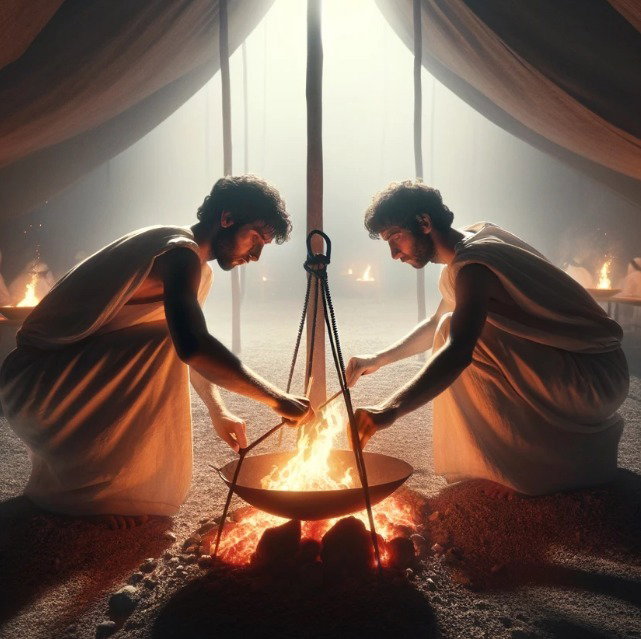
Nadab and Abihu apparently saw that the glory delayed appearing and sought to bring revelation through incense. They took strange fire and burned incense without a command. The glory did indeed appear in fire issuing from the LORD, but it consumed them too:
And there came forth fire from before the LORD, and devoured them, and they died before the LORD. Then Moses said unto Aaron: ‘This is it that the LORD spoke, saying: Through them that are nigh unto Me I will be sanctified, and before all the people I will be glorified.’ And Aaron held his peace. (Leviticus 10:2–3)
וַתֵּצֵא אֵשׁ מִלִּפְנֵי ה', וַתֹּאכַל אוֹתָם – וַיָּמֻתוּ לִפְנֵי ה'. וַיֹּאמֶר מֹשֶׁה אֶל אַהֲרֹן: הוּא אֲשֶׁר דִּבֶּר ה' לֵאמֹר: בִּקְרֹבַי אֶקָּדֵשׁ וְעַל פְּנֵי כָל הָעָם אֶכָּבֵד. וַיִּדֹּם אַהֲרֹן. (ויקרא י', ב-ג)
The rest of the event also departed from the plan. Moses was surprised that Aaron and his sons burned rather than ate the sin-offering goat, contrary to his command:
And Moses diligently inquired for the goat of the sin-offering, and, behold, it was burnt; and he was angry with Eleazar and with Ithamar, the sons of Aaron that were left, saying: ’Wherefore have ye not eaten the sin-offering in the place of the sanctuary, seeing it is most holy, and He hath given it you to bear the iniquity of the congregation, to make atonement for them before the LORD? Behold, the blood of it was not brought into the sanctuary within; ye should certainly have eaten it in the sanctuary, as I commanded.’ (Leviticus 10:16–18)
וְאֵת שְׂעִיר הַחַטָּאת דָּרֹשׁ דָּרַשׁ מֹשֶׁה וְהִנֵּה שֹׂרָף. וַיִּקְצֹף עַל אֶלְעָזָר וְעַל אִיתָמָר בְּנֵי אַהֲרֹן הַנּוֹתָרִם לֵאמֹר: מַדּוּעַ לֹא אֲכַלְתֶּם אֶת הַחַטָּאת בִּמְקוֹם הַקֹּדֶשׁ? כִּי קֹדֶשׁ קָדָשִׁים הִוא, וְאֹתָהּ נָתַן לָכֶם לָשֵׂאת אֶת עֲוֹן הָעֵדָה לְכַפֵּר עֲלֵיהֶם לִפְנֵי ה'. הֵן לֹא הוּבָא אֶת דָּמָהּ אֶל הַקֹּדֶשׁ פְּנִימָה, אָכוֹל תֹּאכְלוּ אֹתָהּ בַּקֹּדֶשׁ – כַּאֲשֶׁר צִוֵּיתִי. (ויקרא י', טז-יח)
What went wrong on this intended culmination of holiness, and why?
To understand it, notice a surprising fact: Exodus 29 gives detailed commands for the seven days of consecration, but none explicitly for the eighth.
Professor Yoni Grossman explains that an explicit eighth-day command would have been inappropriate. It would have made the divine presence almost an inevitable consequence of a magical process during the seven days. But it depends on the LORD’s free will: only if He finds His people worthy will He dwell among them.
Without a prepared “instruction manual” for that day, Moses had to act according to his understanding. Several central actions consequently differed from what Aharei Mot later establishes as correct.
Following Nadab and Abihu’s deaths, Aharei Mot instructs Aaron how to enter the inner sanctuary. The cases differ: the eighth day focuses on glory appearing before the people, while Aharei Mot concerns atonement for the sanctuary – “And he shall make atonement for the holy place, because of the uncleannesses of the children of Israel” (Leviticus 16:16). Yet both concern the mortal danger of approaching holiness, and Aharei Mot explicitly recalls Aaron’s sons’ deaths. In this sense it corrects the eighth day with precise ritual rules preventing recurrence, addressing exactly the points that went wrong.
The first mistake concerns priestly garments.
Aaron wore the high priest’s splendid garments to honor the festive public revelation. Aharei Mot, however, establishes that entering the inner sanctuary requires simple linen rather than golden garments:
He shall put on the holy linen tunic, and he shall have the linen breeches upon his flesh, and he shall be girded with the linen girdle, and with the linen mitre shall he be attired. (Leviticus 16:4)
כְּתֹנֶת בַּד קֹדֶשׁ יִלְבָּשׁ, וּמִכְנְסֵי בַד יִהְיוּ עַל בְּשָׂרוֹ, וּבְאַבְנֵט בַּד יַחְגֹּר, וּבְמִצְנֶפֶת בַּד יִצְנֹף. (ויקרא ט"ז, ד)
In this light, notice a surprising detail about the deaths:
and carried them in their tunics out of the camp (Leviticus 10:5)
וַיִּשָּׂאֻם בְּכֻתֳּנֹתָם אֶל מִחוּץ לַמַּחֲנֶה (ויקרא י', ה)
The Torah specifies that Mishael and Elzaphan carried them out “in their tunics.” This apparently unnecessary detail may hint that precisely the simple priestly tunic is appropriate for approaching the sanctuary. In this respect Aaron, entering in splendid high-priestly garments instead of simple linen, rather than Nadab and Abihu, departed from the proper practice.
The second mistake concerns incense. Their act is apparently sharply condemned: “and offered strange fire before the LORD, which He had not commanded them” (Leviticus 10:1). Perhaps, however, the condemnation concerns the strange fire rather than incense itself. Aharei Mot makes incense a necessary condition for entry: “that the cloud of the incense may cover the ark-cover … that he die not” (Leviticus 16:13).
Nadab and Abihu thus correctly understood incense as enabling revelation, but erred in the vital detail of the fire’s source. Aharei Mot requires “coals of fire from off the altar before the LORD” (Leviticus 16:12); they brought “strange fire” (Leviticus 10:1).
The third mistake concerns the sin-offering. Moses was angry that the remaining sons burned rather than ate the goat, believing that since its blood had not been brought inside, it should be eaten. Aharei Mot retrospectively reveals his mistake here too: the sin-offering accompanying revelation should not be eaten as he commanded. Its blood should be brought inside, requiring its burning like all inner sin-offerings. Although the blood was not brought inside on the eighth day, after the deaths Aaron and his sons treated the goat as this kind of offering should be treated, burning rather than eating it.
These three failures – garments, incense, and the sin-offering – reveal the caution required in approaching holiness and the tension between longing for divine closeness and its danger. Aharei Mot emerges from that tension, establishing a framework for safe, controlled, proper approach.
