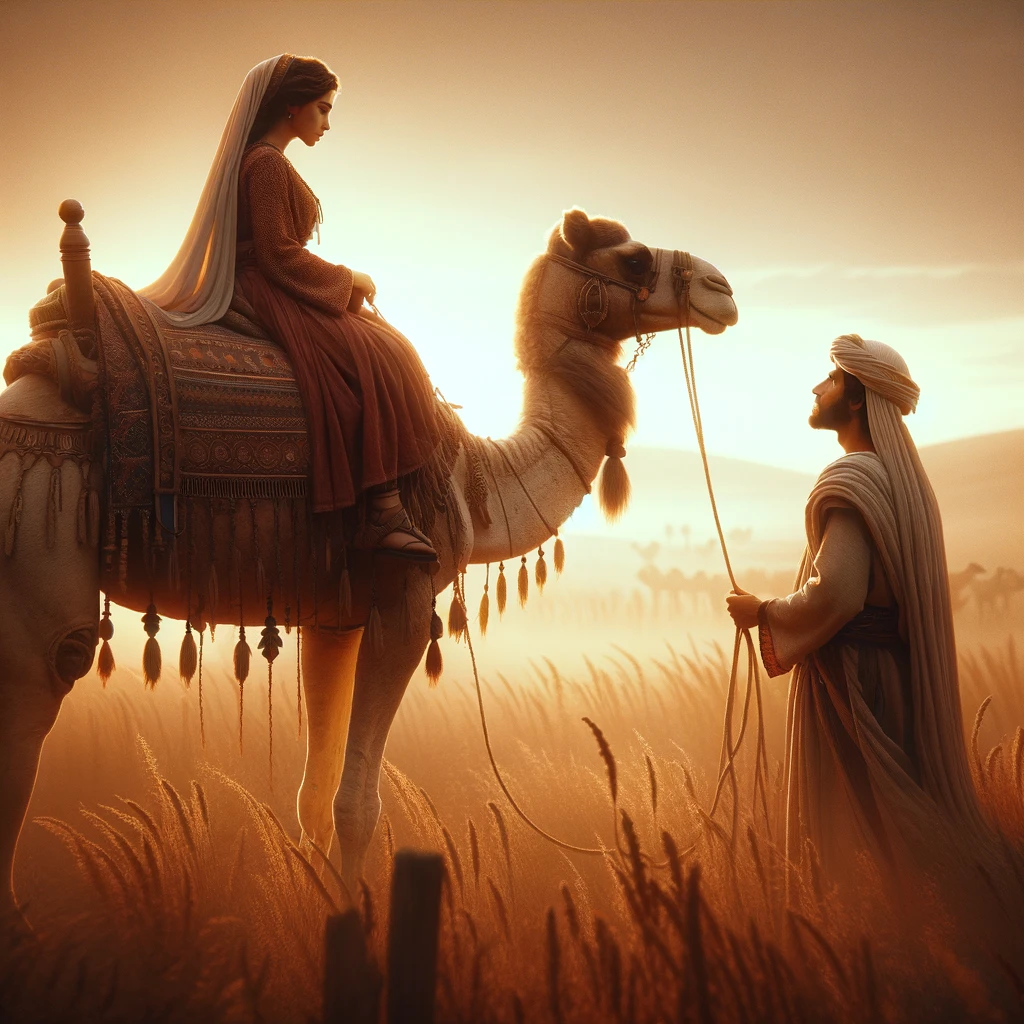
And Rebekah lifted up her eyes, and when she saw Isaac, she alighted from the camel. And she said unto the servant: ‘What man is this that walketh in the field to meet us?’ And the servant said: ‘It is my master.’ And she took her veil, and covered herself. (Genesis 24:64–65)
וַתִּשָּׂא רִבְקָה אֶת עֵינֶיהָ וַתֵּרֶא אֶת יִצְחָק – וַתִּפֹּל מֵעַל הַגָּמָל.
וַתֹּאמֶר אֶל הָעֶבֶד: מִי הָאִישׁ הַלָּזֶה הַהֹלֵךְ בַּשָּׂדֶה לִקְרָאתֵנוּ?
וַיֹּאמֶר הָעֶבֶד: הוּא אֲדֹנִי.
וַתִּקַּח הַצָּעִיף וַתִּתְכָּס. (בראשית כ"ד, סד-סה)
Why did the servant go to Isaac rather than first returning to Abraham, who sent him? Why call Isaac “my master” rather than “my master’s son,” as throughout the narrative? Why did Rebekah fall from the camel on seeing Isaac, and why veil herself?
The story aims to describe Rebekah’s selection as Isaac’s wife. It therefore begins with the servant’s assignment from Abraham and ends with Isaac bringing her into his mother’s tent. The Torah does not pause to tell whether the servant stopped at Abraham on the way to report success or continued directly to Isaac to complete his mission. Either way, he probably told Rebekah they were going to meet Isaac.
Why change “my master’s son” to “my master”? In biblical marital relationships, the man is sometimes described as the woman’s owner or master. Sarah, for example, calls Abraham “my lord”:
And Sarah laughed within herself, saying: ‘After I am waxed old shall I have pleasure, my lord being old also?’ (Genesis 18:12)
וַתִּצְחַק שָׂרָה בְּקִרְבָּהּ לֵאמֹר: אַחֲרֵי בְלֹתִי הָיְתָה לִּי עֶדְנָה – וַאדֹנִי זָקֵן. (בראשית י"ח, יב)
The servant may thus have intended to tell Rebekah, “It is your master” – Isaac, your husband and master – but changed the wording respectfully to “It is my master.”
A similar example appears in Moses and Aaron’s words to Pharaoh:
And they said: ‘The God of the Hebrews hath met with us. Let us go, we pray thee, three days’journey into the wilderness, and sacrifice unto the LORD our God; lest He fall upon us with pestilence, or with the sword.’ (Exodus 5:3)
וַיֹּאמְרוּ: אֱלֹהֵי הָעִבְרִים נִקְרָא עָלֵינוּ. נֵלֲכָה נָּא דֶּרֶךְ שְׁלֹשֶׁת יָמִים בַּמִּדְבָּר וְנִזְבְּחָה לַה' אֱלֹהֵינוּ – פֶּן יִפְגָּעֵנוּ בַּדֶּבֶר אוֹ בֶחָרֶב. (שמות ה', ג).
The threat “lest He fall upon us with pestilence, or with the sword” is directed at Pharaoh, although literally Moses and Aaron say it of themselves.
As for falling, Rebekah did not fall through stumbling or losing balance. Biblical “falling” can mean prostration, as frequently stated, for example:
Then Abraham fell upon his face (Genesis 17:17)
וַיִּפֹּל אַבְרָהָם עַל פָּנָיו. (בראשית י"ז, יז)
Rebekah may therefore have dismounted to fall on her face and bow to Isaac. Ibn Ezra explains that this happened after the servant identified Isaac; alternatively, she may immediately have recognized an important person and bowed (Rabbi David Zvi Hoffmann).
Why cover her face? In the ancient Near East, veiling the head and face marked status. Only high-status women could do so. On learning that the man before her was her future husband and master, Rebekah veiled herself to symbolize her elevated status.
