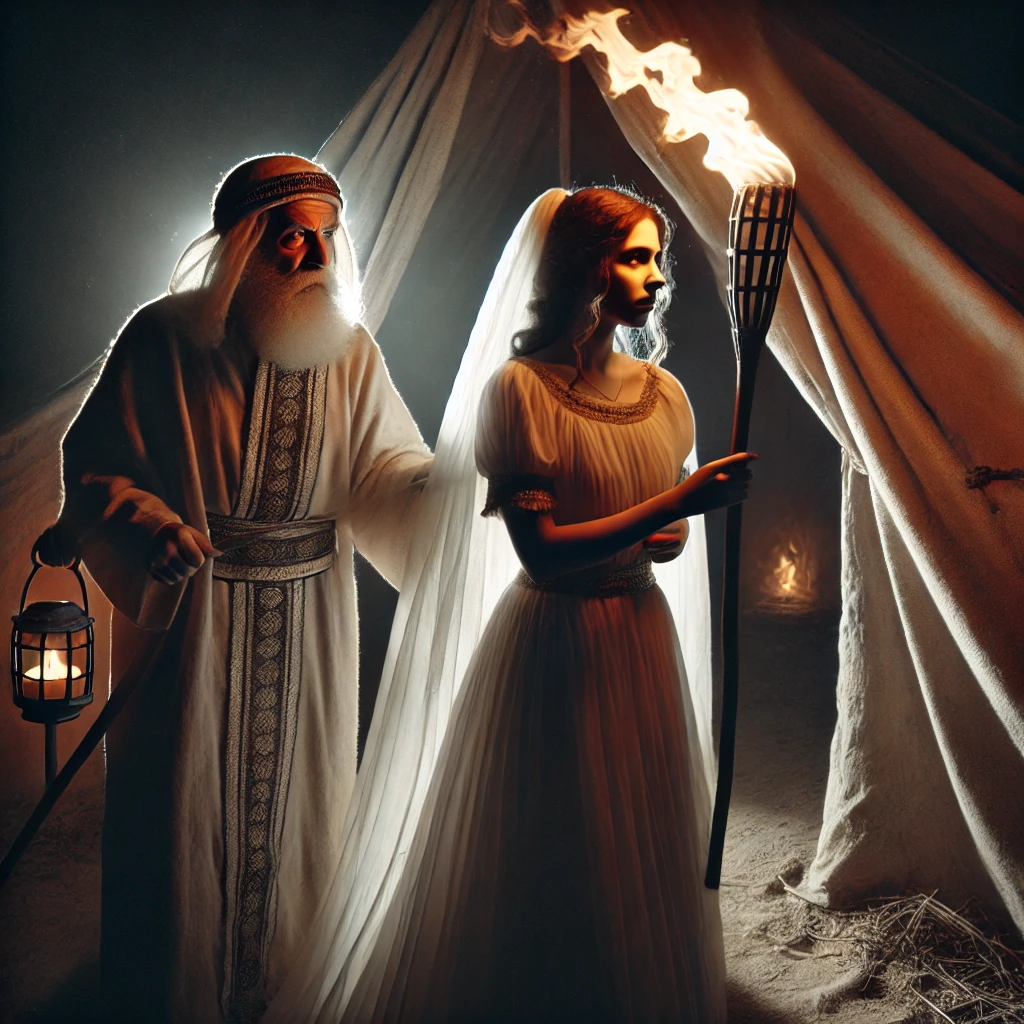
And Jacob loved Rachel; and he said: ‘I will serve thee seven years for Rachel thy younger daughter.’ And Laban said: ‘It is better that I give her to thee, than that I should give her to another man; abide with me.’ And Jacob served seven years for Rachel; and they seemed unto him but a few days, for the love he had to her. And Jacob said unto Laban: ‘Give me my wife, for my days are filled, that I may go in unto her.’ And Laban gathered together all the men of the place, and made a feast. And it came to pass in the evening, that he took Leah his daughter, and brought her to him; and he went in unto her. … And it came to pass in the morning that, behold, it was Leah; and he said to Laban: ‘What is this thou hast done unto me? did not I serve with thee for Rachel? wherefore then hast thou beguiled me?’ And Laban said: ‘It is not so done in our place, to give the younger before the first-born. (Genesis 29:18–23, 25–26)
וַיֶּאֱהַב יַעֲקֹב אֶת רָחֵל, וַיֹּאמֶר: אֶעֱבָדְךָ שֶׁבַע שָׁנִים בְּרָחֵל – בִּתְּךָ הַקְּטַנָּה. וַיֹּאמֶר לָבָן: טוֹב תִּתִּי אֹתָהּ לָךְ מִתִּתִּי אֹתָהּ לְאִישׁ אַחֵר, שְׁבָה עִמָּדִי. וַיַּעֲבֹד יַעֲקֹב בְּרָחֵל שֶׁבַע שָׁנִים, וַיִּהְיוּ בְעֵינָיו כְּיָמִים אֲחָדִים בְּאַהֲבָתוֹ אֹתָהּ. וַיֹּאמֶר יַעֲקֹב אֶל לָבָן: הָבָה אֶת אִשְׁתִּי כִּי מָלְאוּ יָמָי וְאָבוֹאָה אֵלֶיהָ. וַיֶּאֱסֹף לָבָן אֶת כָּל אַנְשֵׁי הַמָּקוֹם, וַיַּעַשׂ מִשְׁתֶּה. וַיְהִי בָעֶרֶב, וַיִּקַּח אֶת לֵאָה בִתּוֹ, וַיָּבֵא אֹתָהּ אֵלָיו – וַיָּבֹא אֵלֶיהָ ... וַיְהִי בַבֹּקֶר וְהִנֵּה הִוא לֵאָה. וַיֹּאמֶר אֶל לָבָן: מַה זֹּאת עָשִׂיתָ לִּי, הֲלֹא בְרָחֵל עָבַדְתִּי עִמָּךְ וְלָמָּה רִמִּיתָנִי? וַיֹּאמֶר לָבָן: לֹא יֵעָשֶׂה כֵן בִּמְקוֹמֵנוּ לָתֵת הַצְּעִירָה לִפְנֵי הַבְּכִירָה. (בראשית כ"ט, יח-כו)
How could Jacob fail to discover that the woman with him was not his beloved Rachel? Why did Leah cooperate in Laban’s deception? Both answers lie in the same event: Laban’s feast. The Hebrew title lailah lavan (לילה לבן), literally “a white night,” commonly means a sleepless night and also echoes Laban’s name.
Jacob offered seven years’ work for Rachel, carefully specifying “Rachel thy younger daughter,” an expression that became a model of unambiguous wording. Laban’s reply was vague: “It is better that I give her to thee, than that I should give her to another man; abide with me.” He did not explicitly accept the proposal, merely stating no principled objection to giving his daughter to Jacob, leaving agreement open to interpretation. Nor did he address working conditions, only saying, “abide with me.”
Laban certainly deceived Jacob, but within a narrative comprehensible to those around him. The Torah recounts his gathering everyone locally for a wedding feast. Discovering Leah the next morning, Jacob challenged him: “What is this thou hast done unto me? did not I serve with thee for Rachel? wherefore then hast thou beguiled me?” Laban answered: “It is not so done in our place, to give the younger before the first-born” (Genesis 29:25–26).
This hints at young Jacob’s deception in seeking his elder brother’s blessing. “In our place” ironically implies that such a thing does happen where Jacob comes from.
Yet its overt purpose also explains Laban’s conduct. “In our place” reflects a norm understood by the local people attending the feast. To them his conduct made sense: Leah, the elder, should marry first; only afterward could Rachel. Presumably Laban presented this account to invited neighbors and his daughters. Thus when he brought Leah to Jacob that evening, she believed she was to marry him.
But how could Jacob not recognize Leah rather than Rachel? Did he not know Rachel’s voice after seven years in Laban’s household? Did he not address her by name, speak to her, or ask how she was?
One of the earliest biblical interpreters, Josephus Flavius (37–100 CE), offers an answer in Antiquities of the Jews: “Because of the wine and the night’s darkness, he did not know it was Leah” (Book I, chapter 19). Josephus bases this on that day’s feast: darkness and drunkenness prevented recognition. Further support is possible.
The Torah’s “younger” and “first-born,” in a sexual situation with an incompletely conscious man, may echo Lot’s daughters, called elder and younger: “And the first-born said unto the younger: ‘Our father is old, and there is not a man in the earth to come in unto us after the manner of all the earth. Come, let us make our father drink wine, and we will lie with him’” (Genesis 19:31–32). In both stories wine creates impaired awareness, enabling intercourse intended to achieve a desired result.
Another notable point concerns Jacob’s and Leah’s wedding-night meeting. Usually the man dominates marriage. Although a young woman’s father gives her to a man, the groom brings her into the tent. When the servant brought Rebekah, Isaac brought her into the tent: “And Isaac brought her into his mother Sarah’s tent, and took Rebekah, and she became his wife” (Genesis 24:67). With Leah, Laban, rather than Jacob, brought her to Jacob’s tent: “And it came to pass in the evening, that he took Leah his daughter, and brought her to him” (Genesis 29:23).
Jacob’s extraordinary passivity fits Josephus’ suggestion that he returned tired or drunk, and Leah was brought while his awareness was impaired. Only in the morning did he discover the deception. Similar passivity appears later with the mandrakes, when Rachel and Leah decide with whom he will spend the night, and Leah goes out saying, “Thou must come in unto me” (Genesis 30:14–16).
Young Jacob, who tried to exploit his father’s blindness to receive his elder brother’s blessings, found himself blind through the wine feast, receiving the elder sister instead of the younger he sought.
