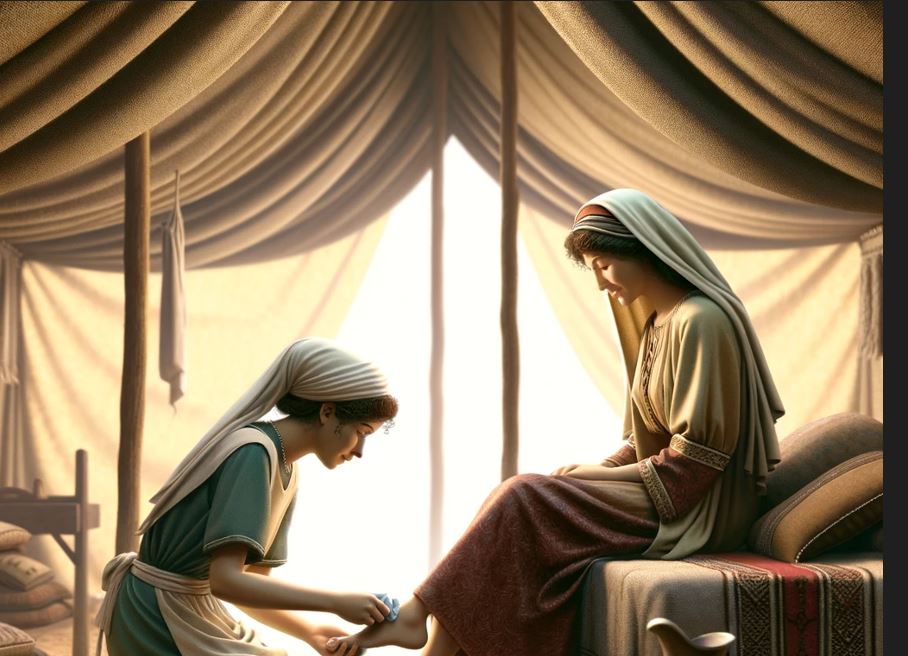
Three of our four matriarchs gave their handmaids to their husbands as wives: Sarah gave Hagar to Abraham; Rachel gave Bilhah and Leah gave Zilpah to Jacob. Each did so when unable to give birth: Sarah and Rachel were barren, while Leah had stopped bearing.
The straightforward aim was for the handmaid to give birth upon her mistress’s knees, making the child wholly the mistress’s son. The mistress would name him, expressing her ownership. Rachel’s request to be built up through giving her handmaid to Jacob suggests this:
And when Rachel saw that she bore Jacob no children … and she said unto Jacob: ‘Give me children, or else I die.’ … And she said: ‘Behold my maid Bilhah, go in unto her; that she may bear upon my knees, and I also may be builded up through her.’ And she gave him Bilhah her handmaid to wife; and Jacob went in unto her. And Bilhah conceived, and bore Jacob a son. (Genesis 30:1, 3–5)
וַתֵּרֶא רָחֵל כִּי לֹא יָלְדָה לְיַעֲקֹב ... וַתֹּאמֶר אֶל יַעֲקֹב: הָבָה לִּי בָנִים וְאִם אַיִן מֵתָה אָנֹכִי ... וַתֹּאמֶר, הִנֵּה אֲמָתִי בִלְהָה בֹּא אֵלֶיהָ וְתֵלֵד עַל בִּרְכַּי וְאִבָּנֶה גַם אָנֹכִי מִמֶּנָּה. וַתִּתֶּן לוֹ אֶת בִּלְהָה שִׁפְחָתָהּ לְאִשָּׁה, וַיָּבֹא אֵלֶיהָ יַעֲקֹב. וַתַּהַר בִּלְהָה וַתֵּלֶד לְיַעֲקֹב בֵּן. (בראשית ל', ב-ה)
After Bilhah bore the child, Rachel named him, showing he belonged to her. She also declared that God gave her a son:
And Rachel said: ‘God hath judged me, and hath also heard my voice, and hath given me a son.’ Therefore called she his name Dan. (Genesis 30:6)
וַתֹּאמֶר רָחֵל: דָּנַנִּי אֱלֹהִים וְגַם שָׁמַע בְּקֹלִי וַיִּתֶּן לִי בֵּן, עַל כֵּן קָרְאָה שְׁמוֹ דָּן. (פסוק ו')
If unable to bear a child herself, Rachel could thus bear one through her handmaid.
Sarah had previously tried this method:
And Sarai said unto Abram: ‘Behold now, the LORD hath restrained me from bearing; go in, I pray thee, unto my handmaid; it may be that I shall be builded up through her.’ … And Sarai Abram’s wife took Hagar the Egyptian, her handmaid … and gave her to Abram her husband to be his wife. (Genesis 16:2–3)
וַתֹּאמֶר שָׂרַי אֶל אַבְרָם הִנֵּה נָא עֲצָרַנִי ה' מִלֶּדֶת, בֹּא נָא אֶל שִׁפְחָתִי אוּלַי אִבָּנֶה מִמֶּנָּה … וַתִּקַּח שָׂרַי אֵשֶׁת אַבְרָם אֶת הָגָר הַמִּצְרִית שִׁפְחָתָהּ … וַתִּתֵּן אֹתָהּ לְאַבְרָם אִישָׁהּ לוֹ לְאִשָּׁה. (בראשית ט"ז, ב-ג)
Matters became complicated. Instead of Hagar bearing a child for Sarah, who would name and regard him as hers, Hagar immediately upon conceiving began disrespecting her mistress and challenging her servant status as though their positions were equal.
and she conceived; and when she saw that she had conceived, her mistress was despised in her eyes. And Sarai said unto Abram: ‘My wrong be upon thee: I gave my handmaid into thy bosom; and when she saw that she had conceived, I was despised in her eyes: the LORD judge between me and thee.’ (Genesis 16:4–5)
וַתַּהַר וַתֵּרֶא כִּי הָרָתָה, וַתֵּקַל גְּבִרְתָּהּ בְּעֵינֶיהָ. וַתֹּאמֶר שָׂרַי אֶל אַבְרָם: חֲמָסִי עָלֶיךָ. אָנֹכִי נָתַתִּי שִׁפְחָתִי בְּחֵיקֶךָ, וַתֵּרֶא כִּי הָרָתָה – וָאֵקַל בְּעֵינֶיהָ. יִשְׁפֹּט ה' בֵּינִי וּבֵינֶיךָ. (בראשית ט"ז, ד-ה)
Ultimately Sarah neither named Hagar’s son nor adopted him. Abraham named Ishmael (Genesis 16:15), and Sarah later asked that he be expelled from the household and inheritance (Genesis 21:10). Her plan to be built up through Hagar clearly failed.
A similar potential tension between barren mistress and fertile servant appears in Hammurabi’s laws, section 146:
If a man married, and his wife gave him her handmaid, and the handmaid bore children and raised her head as though equal in status to the wife because she had borne children, the wife may not sell her for money, but may reduce her to a handmaid’s rank among all the handmaids. (Code of Hammurabi, section 146)
אם איש התחתן, ואשתו נתנה לו את אמתה, והאמה הביאה ילדים, והאמה הרימה ראש כאילו שהיא במעמד האישה, בגלל שהיא ילדה ילדים – האישה לא יכולה למכור אותה בכסף, אבל יכולה להוריד אותה לדרגת אמה, עם כל האמות.
Fifteenth-century BCE Nuzi tablets contain family contracts in which barren wives undertake to give their husbands handmaids, explicitly specifying that the resulting children are their legal children. This shows the practice’s prevalence in the ancient Near East.
Leah differs from Sarah and Rachel. Sarah explicitly says, “it may be that I shall be builded up through her,” and Rachel, “I also may be builded up through her”: the servant’s child counts as her mistress’s. Leah never uses this expression, presumably because unlike Sarah and Rachel she already has children and is not barren.
When Leah saw that she had left off bearing, she took Zilpah her handmaid, and gave her to Jacob to wife. And Zilpah Leah’s handmaid bore Jacob a son. And Leah said: ‘Fortune is come! ’ And she called his name Gad. (Genesis 30:9–11)
וַתֵּרֶא לֵאָה כִּי עָמְדָה מִלֶּדֶת, וַתִּקַּח אֶת זִלְפָּה שִׁפְחָתָהּ וַתִּתֵּן אֹתָהּ לְיַעֲקֹב לְאִשָּׁה. וַתֵּלֶד זִלְפָּה שִׁפְחַת לֵאָה לְיַעֲקֹב בֵּן. וַתֹּאמֶר לֵאָה: בָּא גָד – וַתִּקְרָא אֶת שְׁמוֹ גָּד. (בראשית ל', ט-יא)
Leah names the child, showing she regards him as hers, but does not state this explicitly as Rachel does. The servant’s son’s birth itself apparently matters less than the result Leah hopes for, realized immediately afterward in her fifth son’s birth:
And Leah said: ‘God hath given me my hire, because I gave my handmaid to my husband. And she called his name Issachar. (Genesis 30:18)
וַתֹּאמֶר לֵאָה: נָתַן אֱלֹהִים שְׂכָרִי אֲשֶׁר נָתַתִּי שִׁפְחָתִי לְאִישִׁי, וַתִּקְרָא שְׁמוֹ יִשָּׂשכָר. (פסוק י"ח)
Leah connects her renewed childbearing with giving her handmaid to Jacob, but her words admit two readings. One makes Issachar’s birth the LORD’s reward for the proper act of giving her servant to her husband. The other sees a result arising from the act itself, beyond reward: Leah may have believed in a deep connection with her handmaid, whose childbearing could reawaken her own fertility. On bearing again, she saw confirmation that giving the handmaid achieved her hoped-for result, and thanked the LORD for prospering her way.
