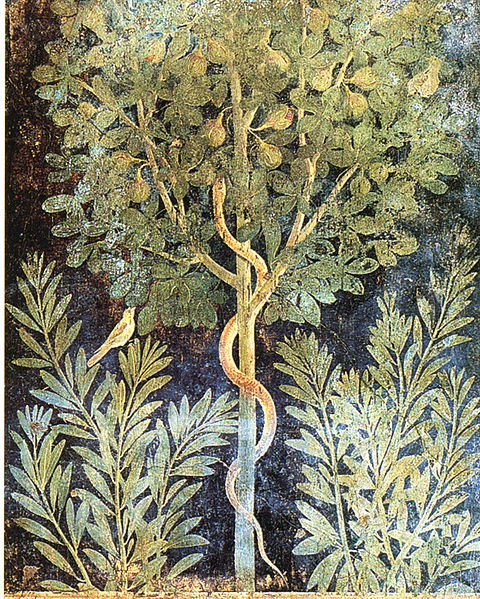
The garden of Eden story is enigmatic. It tells of life without death and naked human beings unaware of their nakedness. It depicts a serpent speaking naturally, without explaining when it lost this ability; its geography, too – four rivers issuing from one place – is unfamiliar to us.
The garden of Eden story in chapter 2 does not fit chapter 1’s account of creation. There humanity is created male and female and commanded to be fruitful, multiply, and subdue the earth, rather than confine itself to one place. In chapter 2, however, the man lives only in Eden, and the woman is created only after no companion for him is found among the animals.
As Cassuto explained, it appears that Eden’s story describes no historical event, but is a symbolic narrative intended to portray human existence’s deepest foundations. It describes the elements that make a human being an independent, conscious creature who understands reality and stands before God, as we know humanity today.
According to the story, humanity was destined for greatness from its creation’s outset, but initially there was no essential difference between the man and the other animals. He named the animals of the field, thereby expressing his superiority over them, yet still tried to find a partner and companion among them. Even Eve’s interlocutor – the serpent that incited her to eat the forbidden fruit – was one of them.
In this symbolic story, the man brought into Eden was unaware of evil’s existence in the world. He was like a child living in a protected environment that supplied all his needs without toil or anxiety about the future.
Eden contained no concept of death, so no woman was needed to bear children and ensure humanity’s continuation. The man was therefore created alone at first, and the woman was created later only to relieve his solitude and be his partner: “It is not good that the man should be alone; I will make him a help meet for him” (Genesis 2:18). Only after the sin were the eyes of the man and his wife opened, and both became aware of nakedness’s meaning and of sexuality.
As Cassuto explained, biblical knowledge of good and evil means neither distinguishing, judging, nor choosing between good and evil, but a complete understanding of reality from one end to the other. This emerges from the woman of Tekoa’s words to David, in which she parallels discerning good and evil with the ability to know everything on earth:
for as an angel of God, so is my lord the king to discern good and bad … and my lord is wise, according to the wisdom of an angel of God, to know all things that are in the earth. (II Samuel 14:17, 20)
כִּי כְּמַלְאַךְ הָאֱלֹהִים כֵּן אֲדֹנִי הַמֶּלֶךְ, לִשְׁמֹעַ הַטּוֹב וְהָרָע … וַאדֹנִי חָכָם כְּחָכְמַת מַלְאַךְ הָאֱלֹהִים, לָדַעַת אֶת כָּל אֲשֶׁר בָּאָרֶץ. (שמו"ב י"ד, יז-כ)
Knowledge of good and evil is no bad thing. Quite the reverse: it is one of the angels’ qualities (Genesis 3:22), the divine image to which one should aspire. We should therefore understand the prohibition against eating the tree of knowledge’s fruit as temporary. It was intended to protect humanity and allow it to grow and develop without having to expend its strength confronting the world’s evil prematurely. At the same time, however, the prohibition delayed human independence and maturity.
The LORD supplied all the conditions enabling the man to sin. He caused the tree of life and the tree of knowledge to grow in the garden, created the serpent that incited the woman, and gave the man a partner who brought him the forbidden fruit.
It therefore appears that the LORD’s intention was not to prevent the man from eating from the tree of knowledge, but to place before him a challenge that would enable him to mature, rebel, and establish his independence as a creature standing before God.
Eating the tree of knowledge’s fruit – intelligence – separated humanity from animals and drew it closer to God. Doing so against the LORD’s command symbolizes the process of human separation and the formation of an independent identity.
Without this necessary stage, humanity could not have fulfilled its vocation – standing as an independent, conscious creature before God – and would have remained one of the earth’s animals.
