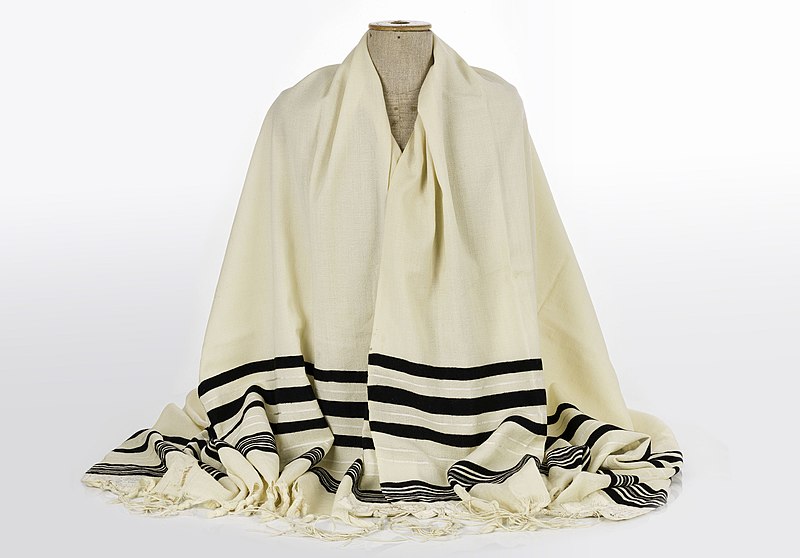
… that they make them throughout their generations fringes in the corners of their garments, and that they put with the fringe of each corner a thread of blue. And it shall be unto you for a fringe, that ye may look upon it, and remember all the commandments of the LORD, and do them. (Numbers 15:38–39)
... וְעָשׂוּ לָהֶם צִיצִת עַל כַּנְפֵי בִגְדֵיהֶם, לְדֹרֹתָם. וְנָתְנוּ עַל צִיצִת הַכָּנָף פְּתִיל תְּכֵלֶת – וְהָיָה לָכֶם לְצִיצִת. וּרְאִיתֶם אֹתוֹ, וּזְכַרְתֶּם אֶת כָּל מִצְוֺת ה' – וַעֲשִׂיתֶם אֹתָם. (במדבר ט"ו, לח-לט)
The commandment has two stages. First, one makes a fringe at the garment’s corner, then places a blue thread on that fringe. Tzitzah means a group of hairs, or fibers in a garment. The command therefore means unraveling the garment’s corner by removing the stitching along its edges and placing a blue thread upon it.
Seeing the fringe with its blue thread is intended to remind us of all the LORD’s commandments, so that we remember and observe them. Blue, the fringe’s prominent component, also appears in the veil, Tabernacle curtains, priestly garments, and vessel coverings during travel. It thus creates an association with holiness and commitment to the commandments. But how does unraveling the garment’s ends contribute?
Leaving the ends disheveled recalls the prohibitions on destroying the corners of the head and beard, the command not to harvest the field’s corner, the Nazirite’s command to grow his hair freely, and the command to loosen the suspected wife’s hair. All are symbolic acts performed at an edge – of head, beard, or field – expressing departure from ordinary human order and devotion to the LORD, as explained in “The Secret of Loosening the Suspected Wife’s Hair.”
Perhaps the requirement that the garment’s edge be disheveled and untidy likewise symbolizes commitment to God overcoming human conventions expressed in demands for outward order. If so, the perfect fringe is not one emerging from the shirt in impeccable order, but a disheveled one, symbolizing acceptance of the yoke of heaven’s sovereignty.
