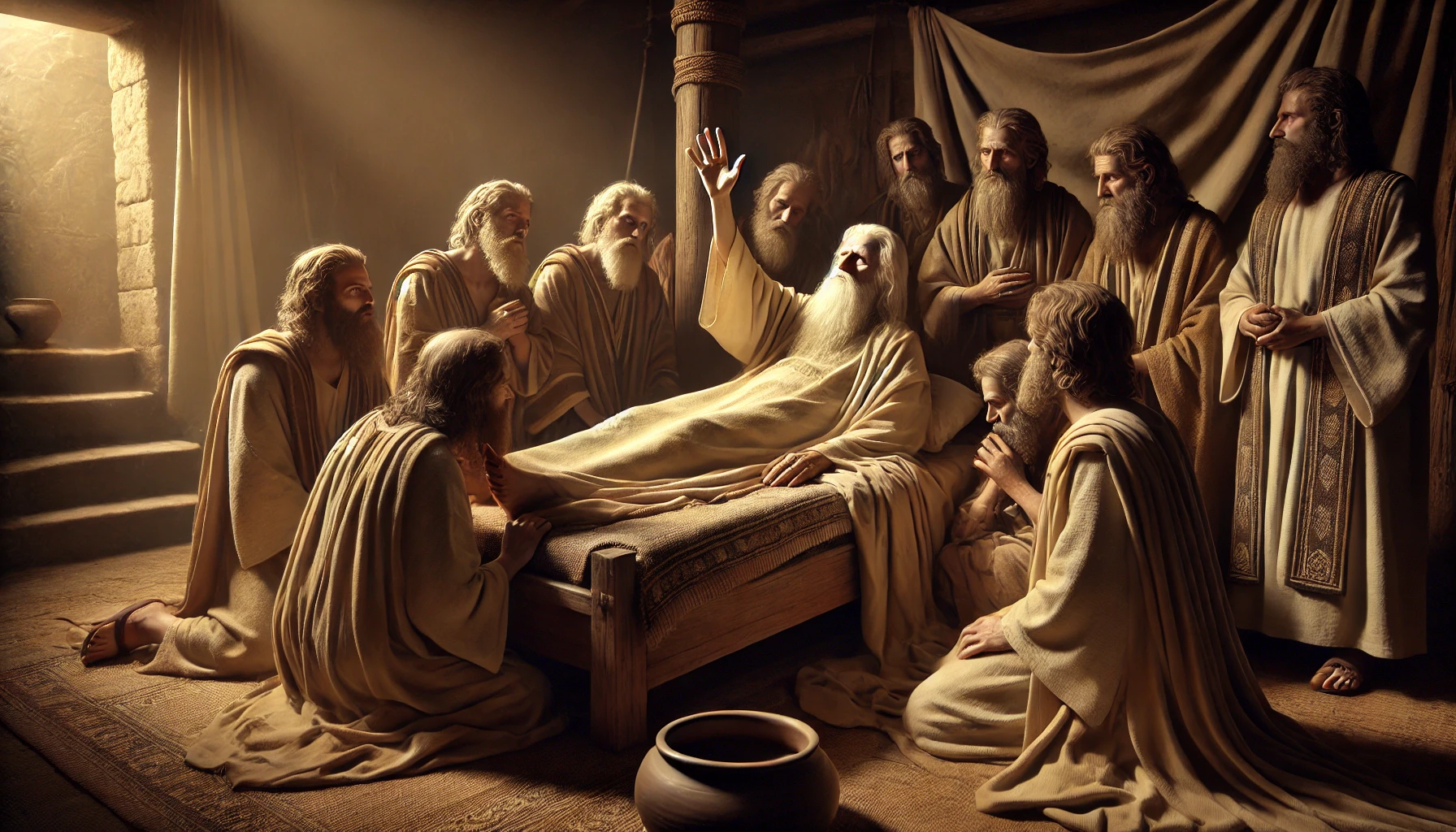
Before death, Jacob conveyed two messages through blessings to the twelve tribes and Joseph’s sons Manasseh and Ephraim. The first, discussed in “Jacob’s Serpent and Israel’s Lion,” concerns the tension between traits represented by his two names. The second concerns sinners and the less worthy within Israel’s family.
Beyond distinct tribal traits, Jacob addresses sons who failed expectations. On his deathbed he reckons with Reuben, Simeon, and Levi’s sins. Yet unlike earlier events in Abraham’s family, they are not excluded. Even failure leaves belonging intact, echoing “Even though he has sinned, he is Israel” (Babylonian Talmud, Sanhedrin 44a).
Leadership nevertheless passed to worthier Judah and Joseph, whose initiative, leadership ability, and recovery from crises made them natural leaders: Judah took responsibility for Benjamin, Joseph passed the test and reunited the family.
Manasseh and Ephraim illustrate this inheritance. Contrary to Joseph’s wish, Jacob preferred younger Ephraim. Remembering conflict from his own preference over his brothers, Joseph feared division and tried to dissuade him. Jacob insisted that the worthier lead, even if younger (Genesis 48:13–20).
Unlike earlier rejections of firstborns producing generations of hatred and struggle, this did not divide Manasseh and Ephraim. Unlike rejected Ishmael (Genesis 21:10–13) and Esau’s voluntary separation (Genesis 36:6–8), Manasseh showed maturity and restraint, accepting Ephraim’s greater destiny while remaining in Israel. Their tribes cooperated in unity, without recorded disputes.
Jacob’s double message, retaining Jacob’s and Israel’s traits while including those who fail, became foundational to Israelite identity.
