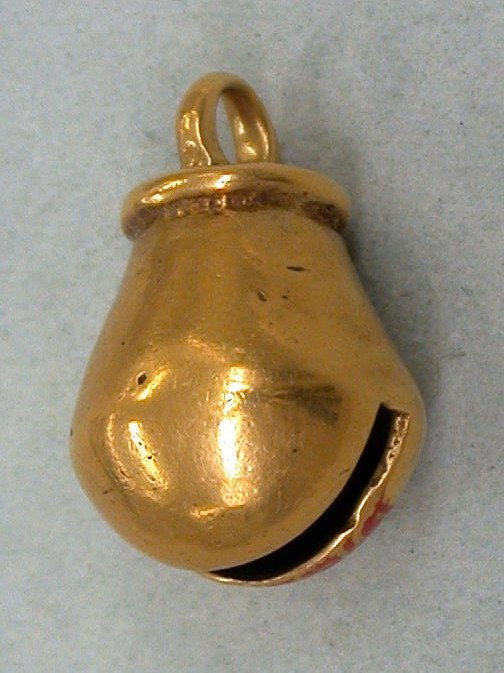
And upon the skirts of it thou shalt make pomegranates of blue, and of purple, and of scarlet, round about the skirts thereof; and bells of gold between them round about: … And it shall be upon Aaron to minister; and the sound thereof shall be heard when he goeth in unto the holy place before the LORD, and when he cometh out, that he die not. (Exodus 28:33–35)
וְעָשִׂיתָ עַל שׁוּלָיו רִמֹּנֵי תְּכֵלֶת וְאַרְגָּמָן וְתוֹלַעַת שָׁנִי, עַל שׁוּלָיו סָבִיב, וּפַעֲמֹנֵי זָהָב בְּתוֹכָם סָבִיב … וְהָיָה עַל אַהֲרֹן לְשָׁרֵת. וְנִשְׁמַע קוֹלוֹ בְּבֹאוֹ אֶל הַקֹּדֶשׁ לִפְנֵי ה' וּבְצֵאתוֹ – וְלֹא יָמוּת. (שמות כ"ח, לג-לה)
Why must Aaron’s sound be heard specifically when entering and leaving, and how did this protect him from death?
Rashbam explains that the bells fulfilled the command “And there shall be no man in the tent of meeting when he goeth in to make atonement in the holy place, until he come out” (Leviticus 16:17). Their sound as the priest approached caused people to leave the Tent of Meeting, leaving Aaron alone. This raises several difficulties:
- Whom does “that he die not” concern? Exodus explicitly says “And it shall be upon Aaron to minister … that he die not.” The warning apparently addresses Aaron himself. In Rashbam’s explanation, however, the danger concerns an outsider present during the atonement, rather than Aaron.
- The essential difference between “minister” and “make atonement”: Exodus’s priestly garments passage describes Aaron entering to minister. Leviticus 16 specifically concerns entry to make atonement, the Day of Atonement service alone. These are different activities; we need not assume that excluding everyone during atonement also applies to daily ministry.
- The linguistic difference between crossing the threshold and remaining inside: Leviticus says “when he goeth in … until he come out,” a continuous prohibition throughout atonement. The garments passage says the sound is heard “when he goeth in … and when he cometh out,” focusing on the moments of entry and exit. “When he cometh out” cannot plausibly mean “until he come out”; had that been intended, the Torah could have said so explicitly, as in Leviticus.
Rabbi Joseph Bekhor Shor offers another explanation: proper etiquette forbids entering the LORD’s house unannounced. The bells resemble a doorbell announcing the priest’s arrival. This explains their necessity on entering, but not on leaving.
Perhaps the bells did announce both entry and exit, for an additional purpose beyond showing the LORD proper respect.
The Tabernacle displayed many cherub images: on the ark-cover in the Holy of Holies (Exodus 25:18), on the dividing veil (Exodus 26:31), and on its inner curtains (Exodus 26:1).
Cherubim first appear in the Torah after humanity’s expulsion from Eden, guarding “the way to the tree of life” with the flaming, turning sword (Genesis 3:24). Their primary role is therefore guarding.
We may suppose that the Tabernacle’s images alluded to actual, invisible cherubim like those guarding the tree of life. They stood at the Tent of Meeting’s entrance and might harm anyone passing them, entering or leaving. Similarly, Mesopotamian temples had giant stone statues of winged cherubim (karābu), combining a lion’s body, an ox’s legs, and a human face, to protect their entrances.
The bells therefore prevented harm from these guardians. Their sound warned of the high priest approaching the entrance, whether entering or leaving. It prevented the cherubim from being surprised by an unexpected presence and reacting with injury, even when that presence was the high priest fulfilling his duties.
For further discussion, see “What Was the Ark For, and What Was the Role of the Cherubim?”
