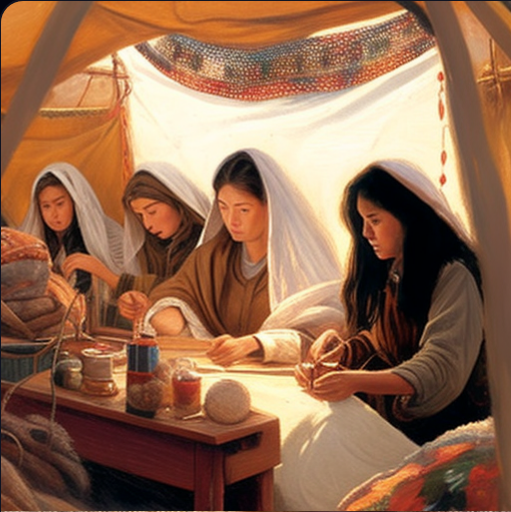
And they came, both men and women, as many as were willing-hearted, and brought nose-rings, and ear-rings, and signet-rings, and girdles, all jewels of gold; even every man that brought an offering of gold unto the LORD. And every man, with whom was found blue, and purple, and scarlet, and fine linen, and goats’hair, and rams’skins dyed red, and sealskins, brought them. Every one that did set apart an offering of silver and brass brought the LORD’S offering; and every man, with whom was found acacia-wood for any work of the service, brought it. And all the women that were wise-hearted did spin with their hands, and brought that which they had spun, the blue, and the purple, the scarlet, and the fine linen. And all the women whose heart stirred them up in wisdom spun the goats’hair. And the rulers brought the onyx stones, and the stones to be set, for the ephod, and for the breastplate; and the spice, and the oil, for the light, and for the anointing oil, and for the sweet incense. The children of Israel brought a freewill-offering unto the LORD; every man and woman, whose heart made them willing to bring for all the work, which the LORD had commanded by the hand of Moses to be made. (Exodus 35:22–29)
וַיָּבֹאוּ הָאֲנָשִׁים עַל הַנָּשִׁים, כֹּל נְדִיב לֵב הֵבִיאוּ: חָח וָנֶזֶם וְטַבַּעַת וְכוּמָז כָּל כְּלִי זָהָב, וְכָל אִישׁ אֲשֶׁר הֵנִיף תְּנוּפַת זָהָב לַה'. וְכָל אִישׁ אֲשֶׁר נִמְצָא אִתּוֹ: תְּכֵלֶת וְאַרְגָּמָן וְתוֹלַעַת שָׁנִי וְשֵׁשׁ וְעִזִּים וְעֹרֹת אֵילִם מְאָדָּמִים וְעֹרֹת תְּחָשִׁים – הֵבִיאוּ. כָּל מֵרִים, תְּרוּמַת כֶּסֶף וּנְחֹשֶׁת, הֵבִיאוּ אֵת תְּרוּמַת ה', וְכֹל אֲשֶׁר נִמְצָא אִתּוֹ עֲצֵי שִׁטִּים לְכָל מְלֶאכֶת הָעֲבֹדָה – הֵבִיאוּ. וְכָל אִשָּׁה חַכְמַת לֵב – בְּיָדֶיהָ טָווּ, וַיָּבִיאוּ מַטְוֶה: אֶת הַתְּכֵלֶת וְאֶת הָאַרְגָּמָן אֶת תּוֹלַעַת הַשָּׁנִי וְאֶת הַשֵּׁשׁ. וְכָל הַנָּשִׁים אֲשֶׁר נָשָׂא לִבָּן אֹתָנָה בְּחָכְמָה – טָווּ אֶת הָעִזִּים. וְהַנְּשִׂאִם הֵבִיאוּ: אֵת אַבְנֵי הַשֹּׁהַם, וְאֵת אַבְנֵי הַמִּלֻּאִים – לָאֵפוֹד וְלַחֹשֶׁן. וְאֶת הַבֹּשֶׂם וְאֶת הַשָּׁמֶן – לְמָאוֹר, וּלְשֶׁמֶן הַמִּשְׁחָה, וְלִקְטֹרֶת הַסַּמִּים. כָּל אִישׁ וְאִשָּׁה אֲשֶׁר נָדַב לִבָּם אֹתָם לְהָבִיא לְכָל הַמְּלָאכָה, אֲשֶׁר צִוָּה ה' לַעֲשׂוֹת בְּיַד מֹשֶׁה הֵבִיאוּ בְנֵי יִשְׂרָאֵל נְדָבָה לַה' (שמות ל"ה, כב-כט)
The Torah especially emphasizes women’s participation in building the Tabernacle and its high regard for their contribution, wisdom, and generosity. The laver was made from bronze mirrors donated by women serving at the Tent of Meeting’s entrance (Exodus 38:8). Women first offered their jewelry, and men joined them afterward (Exodus 35:22). Wise women spun blue, purple, scarlet, and fine linen; other skilled women spun goats’ hair (Exodus 35:25–26). The account concludes by again stressing that men and women alike freely contributed (Exodus 35:29).
Yet the Torah seems to limit women to preparation – collecting and initially processing raw materials – excluding them from actually making the Tabernacle and its furnishings. Why?
The command divides the work into two stages: first, all willing men and women bring materials such as gold, silver, and bronze (Exodus 35:5–9); then the skilled come to make the Tabernacle and furnishings (Exodus 35:10–19). Its execution follows the same division: men and women bring contributions (Exodus 35:22–29), then Bezalel, Oholiab, and the craftsmen perform the work. Women’s participation is no longer mentioned in the second stage.
Women are described extensively in preparation but are entirely absent from production, although some tasks traditionally belonged to women. Even their skillful spinning is artificially classified as collecting raw materials rather than making the objects, despite being integral to manufacturing.
Moving their spinning from its natural place in production to material collection teaches that, despite the high regard for their gifts, generosity, and wisdom, women did not participate in making the objects themselves. Their work ended with initial material processing, spinning thread, which too was included in material collection. Why?
The surrounding pagan cultures had sexual gods: male and female deities with sons and daughters. El, head of the Canaanite pantheon, had a consort Asherah and seventy divine sons. Accordingly, pagan temples had priestesses and high priestesses alongside priests. Priests served gods; priestesses served goddesses.
At times Israelite idolaters also worshipped Asherah as the LORD’s consort. This apparently underlies “Thou shalt not plant thee an Asherah of any kind of tree beside the altar of the LORD thy God” (Deuteronomy 16:21). The Bible particularly mentions women associated with her cult. Maacah, Asa’s mother, made an abominable image for Asherah (I Kings 15:13). II Kings describes “the houses of the sodomites, that were in the house of the LORD, where the women wove coverings for the Asherah” (II Kings 23:7), meaning women weaving garments for her statue.
The Torah thus seems to seek to sever every possible connection between Tabernacle worship and contemporary sexual pagan cults, preventing women’s direct association with its service, whether as priestesses or as makers of its structure and furnishings. It transferred weaving, sewing, and embroidery, traditionally women’s work, to the skilled craftsmen led by Bezalel and Oholiab, restricting women’s contribution to preparation up to spinning thread.
Thus, alongside high appreciation for women’s wisdom and contribution, the clear wish to distinguish worship from sexual pagan cults led the Torah to restrict women’s participation in sacred work: men alone would make the furnishings and priestly garments and conduct Tabernacle worship.
