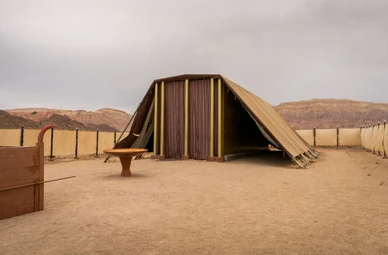
At first sight, the basin is an ordinary vessel, no different from the Tabernacle’s other furnishings. Closer examination of the verses reveals that it differed from them and embodied several distinct perspectives. In this chapter I will survey its various descriptions to identify its distinctive character and the perspectives contained within it.
The first description states its purpose simply and briefly: “Thou shalt also make a laver of brass, and the base thereof of brass, whereat to wash” (לְרָחְצָה; Exodus 30:18). Immediately afterward an expansion explains what “whereat to wash” means:
And Aaron and his sons shall wash their hands and their feet thereat; when they go into the tent of meeting, they shall wash with water, that they die not; or when they come near to the altar to minister, to cause an offering made by fire to smoke unto the LORD; so they shall wash their hands and their feet, that they die not; and it shall be a statute for ever to them, even to him and to his seed throughout their generations.’ (Exodus 30:19–21)
וְרָחֲצוּ אַהֲרֹן וּבָנָיו מִמֶּנּוּ אֶת יְדֵיהֶם וְאֶת רַגְלֵיהֶם. בְּבֹאָם אֶל אֹהֶל מוֹעֵד יִרְחֲצוּ מַיִם וְלֹא יָמֻתוּ אוֹ בְגִשְׁתָּם אֶל הַמִּזְבֵּחַ לְשָׁרֵת לְהַקְטִיר אִשֶּׁה לַה'. וְרָחֲצוּ יְדֵיהֶם וְרַגְלֵיהֶם וְלֹא יָמֻתוּ וְהָיְתָה לָהֶם חָק עוֹלָם לוֹ וּלְזַרְעוֹ לְדֹרֹתָם. (שמות ל' יט-כא).
Similarly, the final description of the furnishings, recounting Moses’ erection of the Tabernacle, first gives a concise statement of the basin’s purpose, then explains it. Initially it says only that he put water in it for washing: “And he set the laver between the tent of meeting and the altar, and put water therein, wherewith to wash” (לְרָחְצָה; Exodus 40:30). This is immediately followed by a passage resembling a parenthesis that explains the phrase:
that Moses and Aaron and his sons might wash their hands and their feet thereat; when they went into the tent of meeting, and when they came near unto the altar, they should wash; as the LORD commanded Moses. (Exodus 40:31–32)
וְרָחֲצוּ מִמֶּנּוּ מֹשֶׁה וְאַהֲרֹן וּבָנָיו אֶת יְדֵיהֶם וְאֶת רַגְלֵיהֶם. בְּבֹאָם אֶל אֹהֶל מוֹעֵד וּבְקָרְבָתָם אֶל הַמִּזְבֵּחַ יִרְחָצוּ כַּאֲשֶׁר צִוָּה ה' אֶת מֹשֶׁה. (שמות מ' לא-לב)
Unlike the descriptions of the other furnishings, these expansions do not describe an action performed on the day the Tabernacle was erected. They describe a regular practice after its erection. Their distinctive character points to a separate perspective in which the basin’s purpose was to enable the priests to wash their hands and feet.
Was the Basin One of the Tabernacle’s Furnishings?
If the basin served the priests, it differed essentially from the other furnishings. It was not a ritual vessel serving God, like the table and lampstand, but a washing facility for the priests. In this respect it resembles the priestly garments, which were likewise intended for those serving in the Tabernacle. Why, then, was it included among the furnishings?
Indeed, two descriptions imply that it was not part of them. In the first, God’s command to Moses to build the Tabernacle (Exodus 25:1–27:9), the basin is entirely absent. This implies that it did not belong to the ensemble. Admittedly, five chapters later a supplementary passage describes it (Exodus 30:17–21), but we should not disregard its absence from the first description. Nor is that its only omission. The inventory of donated materials (Exodus 38:24–39:1) lists the bronze and the objects made from it (38:29–31), but omits the bronze basin. This inventory too suggests that the basin was not one of the furnishings.
“Of the Mirrors of the Serving Women”
The account of its manufacture identifies the basin as the women’s distinctive contribution to the Tabernacle:
And he made the laver of brass, and the base thereof of brass, of the mirrors of the serving women that did service at the door of the tent of meeting. (Exodus 38:8)
וַיַּעַשׂ אֵת הַכִּיּוֹר נְחֹשֶׁת וְאֵת כַּנּוֹ נְחֹשֶׁת בְּמַרְאֹת הַצֹּבְאֹת אֲשֶׁר צָבְאוּ פֶּתַח אֹהֶל מוֹעֵד. (שמות ל"ח ח)
The basin is the only object whose account of manufacture identifies the specific donation from which it was made. The stones for the breastplate and the setting stones for the ephod and breastplate are also said to have been supplied by the leaders, but this is stated in the list of raw materials, not the account of their manufacture.
The serving women are mentioned at the sanctuary in Shiloh as well (1 Samuel 2:22). Their appearance at both the wilderness Tabernacle and Shiloh testifies to women’s significant involvement in sanctuary affairs. Many verses show that women were active in constructing the Tabernacle. For example:
And they came, both men and women, as many as were willing-hearted, and brought nose-rings, and ear-rings, and signet-rings, and girdles, all jewels of gold; even every man that brought an offering of gold unto the LORD. (Exodus 35:22)
וַיָּבֹאוּ הָאֲנָשִׁים עַל הַנָּשִׁים כֹּל נְדִיב לֵב הֵבִיאוּ חָח וָנֶזֶם וְטַבַּעַת וְכוּמָז כָּל כְּלִי זָהָב וְכָל אִישׁ אֲשֶׁר הֵנִיף תְּנוּפַת זָהָב לַה'. (שמות ל"ה כב)And all the women that were wise-hearted did spin with their hands, and brought that which they had spun, the blue, and the purple, the scarlet, and the fine linen. And all the women whose heart stirred them up in wisdom spun the goats’hair. (Exodus 35:25–26)
וְכָל אִשָּׁה חַכְמַת לֵב בְּיָדֶיהָ טָווּ וַיָּבִיאוּ מַטְוֶה אֶת הַתְּכֵלֶת וְאֶת הָאַרְגָּמָן אֶת תּוֹלַעַת הַשָּׁנִי וְאֶת הַשֵּׁשׁ. וְכָל הַנָּשִׁים אֲשֶׁר נָשָׂא לִבָּן אֹתָנָה בְּחָכְמָה טָווּ אֶת הָעִזִּים. (שמות ל"ה כה-כו)The children of Israel brought a freewill-offering unto the LORD; every man and woman, whose heart made them willing to bring for all the work, which the LORD had commanded by the hand of Moses to be made. (Exodus 35:29)
כָּל אִישׁ וְאִשָּׁה אֲשֶׁר נָדַב לִבָּם אֹתָם לְהָבִיא לְכָל הַמְּלָאכָה אֲשֶׁר צִוָּה ה' לַעֲשׂוֹת בְּיַד מֹשֶׁה הֵבִיאוּ בְנֵי יִשְׂרָאֵל נְדָבָה לַה'. (שמות ל"ה כט)
The basin’s manufacture from these women’s contribution recalls other uniquely donated objects. Examples include the hammered sheets made from the bronze firepans of Korah’s followers as an altar covering (Numbers 17:1–5), and the covered wagons donated by the leaders for the Levites to transport the furnishings during journeys (Numbers 7:2–6). In these latter cases, the objects apparently had no place in the original plan; a use was found for them afterward. If we accept the comparison between the basin made from the women’s mirrors and the wagons and hammered sheets, the basin too was not planned from the outset but added later at the women’s initiative.
The Basin’s Position and Purpose
Descriptions of the furnishings generally follow their position, from inside outward: first the ark, then the table, lampstand, and other objects. Here too the basin is exceptional. It is always mentioned after the altar of burnt offering, although it stood between the tent of meeting and the altar, farther inward. Why?
The explanation is that each furnishing’s position is described relative to the one previously mentioned. The table stands outside the veil; the lampstand is opposite the table. The basin, however, is located in relation to two objects rather than one: it must stand between the tent of meeting and the altar. It can therefore be mentioned only after both. Although inward of the altar, it must follow it in the textual sequence.
But this location is itself puzzling. If the basin was a washing facility for the priests, it ought to stand at the courtyard entrance or at least beside the altar on the side facing that entrance rather than the Tabernacle. This would let the priests wash before approaching the altar. The benefit of placing it farther inward, between altar and tent entrance, is unclear. Furthermore, why must the Torah specify that it stands between the two? Why not simply say that it stands before the tent entrance, then mention the altar? Its intermediate position would then be obvious.
Examining its purpose in light of this distinctive placement suggests that the basin served the inhabitant of the Tabernacle: God rather than the priests. On this reading it stood between the tent of meeting, God’s dwelling, and the altar, providing washing before and after eating the sacrifices offered there. This need not seem strange: the entire Tabernacle was modeled as a house for God. It contained a throne and footstool represented by the ark and cherubim, a table with bread to eat, a lampstand for illumination and honor, and an altar for consuming sacrifices. In such a model there is room for a washing basin as well.
At the chapter’s beginning I noted that the basin’s purpose is presented first simply, then through an expansion. The simple statement says it is for washing; only the expansion assigns it to the priests’ hands and feet. Understanding it as a vessel serving God therefore fits the verses that simply say “whereat to wash” (לְרָחְצָה). The following paragraph assigns it to Aaron’s sons and explains the phrase, but it is written as a separate paragraph and should be understood as expressing a different perspective.
Three Perspectives
I have shown that several descriptions omit the basin altogether, creating the impression that it did not exist. Another description implies that it was an unplanned, spontaneous contribution by the serving women. Some descriptions can be understood as depicting a basin for God’s washing, while others make it a facility for the priests’ hands and feet. The verses thus contain three descriptions, or perspectives, on the basin.
In the first, no basin existed in the Tabernacle, as implied by the descriptions that omit it. The reason is that its furnishings serve God, and God needs no washing basin.
In the second, there was a basin whose purpose, like that of the other vessels, was to serve God by enabling washing before and after eating sacrifices. This emerges from the verses that simply require water for washing without identifying its user. It stood in a place appropriate to this purpose: between the tent of meeting, God’s dwelling, and the altar outside. In this perspective it was no different from the table and lampstand, all of which served God directly.
The third description mediates between the previous two, which disagree about whether a basin belonged in the Tabernacle. It was not originally planned as one of the other furnishings, but spontaneously dedicated by the women serving at the tent entrance. Once donated, it served the priests’ hands and feet, like the leaders’ wagons that transported the furnishings. This account realizes both perspectives. It serves the priests rather than God directly, expressing the view that no basin served God. Yet a basin did ultimately exist, fulfilling the second perspective, since a vessel enabling priests to serve God may itself count as a sacred vessel serving God indirectly.
These perspectives express a tension between opposing tendencies: one freely portrays a physical house and furnishings, even a washing basin, for the One whose word brought the world into existence; the other struggles with such symbolism when it involves bodily needs like washing. We seem more comfortable accepting a table and lampstand than attributing a need for cleanliness to God.
In the Guide of the Perplexed, Maimonides explains that sacrificial commandments were a compromise suited to a period when worship consisted only of “offering various kinds of animals in those temples in which they placed images, bowing down to them, and burning incense before them.” Such worship could not be abolished outright, as ideally it should have been, “for in those days this was something inconceivable and unacceptable, given human nature, which is always comfortable with what it has become accustomed to.” He adds that this would be like “a prophet coming in our own day, calling for the worship of God, and saying: ‘God has commanded you not to pray to Him, not to fast, and not to cry out to Him in distress. Your worship shall consist only of thought, with no action at all.’” (Maimonides, Guide of the Perplexed III:32, Schwartz edition; translated here from the quoted Hebrew.)
By God’s grace, in our period the Torah’s tendency as Maimonides understood it has won hearts. The Western world has progressed, and sacrifices are no longer the accepted way to worship God. If the command to build a Tabernacle were given today, we may therefore assume that it would take a much more abstract form. Like any synagogue, it would presumably contain an ark, a lampstand, and a basin for priests, but no table or altars. Today’s public no longer considers these appropriate to divine worship; rather, it would struggle to accept such objects in the sanctuary. Even incense, which appeals to a relatively refined sense and thus seems more spiritual, evokes in many people aversion to the anthropomorphic character of rites retaining traces of idolatry, such as Eastern religions or Christianity. This recalls the standing stone: beloved in the patriarchal period, as Jacob’s erection of one shows (Genesis 28:18), but hated by the time the Torah was given: “Neither shalt thou set thee up a pillar, which the LORD thy God hateth” (וְלֹא תָקִים לְךָ מַצֵּבָה אֲשֶׁר שָׂנֵא ה’ אֱלֹהֶיךָ; Deuteronomy 16:22).
It is interesting to find this tension already in the Torah, in the basin’s different perspectives. The first, denying its presence, implicitly points to the problematic character of the other furnishings too, such as the table and altar. It plants the seeds of an aspiration toward abstraction in divine worship and away from physical representations and acts, even symbolic ones.
