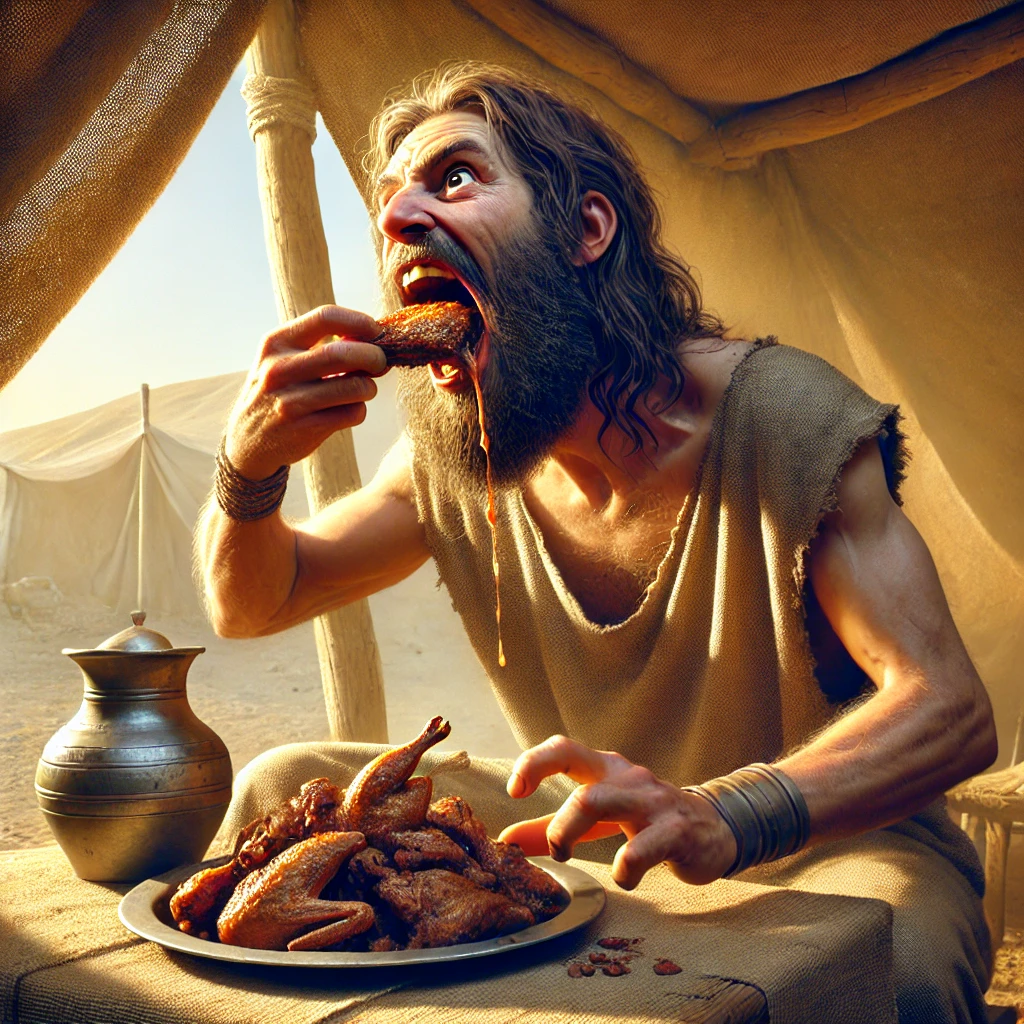
And the mixed multitude that was among them fell a lusting; and the children of Israel also wept on their part, and said: ‘Would that we were given flesh to eat! We remember the fish, which we were wont to eat in Egypt for nought; …
And Moses heard the people weeping, family by family, every man at the door of his tent; and the anger of the LORD was kindled greatly; and Moses was displeased. …
And the LORD said … And say thou unto the people: Sanctify yourselves against to-morrow, and ye shall eat flesh; for ye have wept in the ears of the LORD, saying: Would that we were given flesh to eat! for it was well with us in Egypt; therefore the LORD will give you flesh, and ye shall eat. Ye shall not eat one day, nor two days, nor five days, neither ten days, nor twenty days; but a whole month, until it come out at your nostrils, and it be loathsome unto you; because that ye have rejected the LORD who is among you, and have troubled Him with weeping, saying: Why, now, came we forth out of Egypt?’ …
And there went forth a wind from the LORD, and brought across quails from the sea, and let them fall by the camp, about a day’s journey on this side, and a day’s journey on the other side, round about the camp, and about two cubits above the face of the earth. And the people rose up all that day, and all the night, and all the next day, and gathered the quails; he that gathered least gathered ten heaps; and they spread them all abroad for themselves round about the camp. While the flesh was yet between their teeth, ere it was chewed, the anger of the LORD was kindled against the people, and the LORD smote the people with a very great plague. And the name of that place was called Kibroth-hattaavah, because there they buried the people that lusted. (Numbers 11:1–34)וְהָאסַפְסֻף אֲשֶׁר בְּקִרְבּוֹ הִתְאַוּוּ תַּאֲוָה, וַיָּשֻׁבוּ וַיִּבְכּוּ גַּם בְּנֵי יִשְׂרָאֵל וַיֹּאמְרוּ: מִי יַאֲכִלֵנוּ בָּשָׂר? זָכַרְנוּ אֶת הַדָּגָה אֲשֶׁר נֹאכַל בְּמִצְרַיִם חִנָּם ...
וַיִּשְׁמַע מֹשֶׁה אֶת הָעָם בֹּכֶה לְמִשְׁפְּחֹתָיו אִישׁ לְפֶתַח אָהֳלוֹ וַיִּחַר אַף ה' מְאֹד, וּבְעֵינֵי מֹשֶׁה רָע ...
וַיֹּאמֶר ה' ... וְאֶל הָעָם תֹּאמַר: הִתְקַדְּשׁוּ לְמָחָר וַאֲכַלְתֶּם בָּשָׂר, כִּי בְּכִיתֶם בְּאָזְנֵי ה' לֵאמֹר מִי יַאֲכִלֵנוּ בָּשָׂר, כִּי טוֹב לָנוּ בְּמִצְרָיִם. וְנָתַן ה' לָכֶם בָּשָׂר – וַאֲכַלְתֶּם. לֹא יוֹם אֶחָד תֹּאכְלוּן, וְלֹא יוֹמָיִם, וְלֹא חֲמִשָּׁה יָמִים, וְלֹא עֲשָׂרָה יָמִים, וְלֹא עֶשְׂרִים יוֹם. עַד חֹדֶשׁ יָמִים! עַד אֲשֶׁר יֵצֵא מֵאַפְּכֶם וְהָיָה לָכֶם לְזָרָא. יַעַן כִּי מְאַסְתֶּם אֶת ה' אֲשֶׁר בְּקִרְבְּכֶם, וַתִּבְכּוּ לְפָנָיו לֵאמֹר: לָמָּה זֶּה יָצָאנוּ מִמִּצְרָיִם ...
וְרוּחַ נָסַע מֵאֵת ה' וַיָּגָז שַׂלְוִים מִן הַיָּם וַיִּטֹּשׁ עַל הַמַּחֲנֶה, כְּדֶרֶךְ יוֹם כֹּה וּכְדֶרֶךְ יוֹם כֹּה, סְבִיבוֹת הַמַּחֲנֶה, וּכְאַמָּתַיִם עַל פְּנֵי הָאָרֶץ. וַיָּקָם הָעָם כָּל הַיּוֹם הַהוּא וְכָל הַלַּיְלָה וְכֹל יוֹם הַמָּחֳרָת, וַיַּאַסְפוּ אֶת הַשְּׂלָו: הַמַּמְעִיט אָסַף עֲשָׂרָה חֳמָרִים, וַיִּשְׁטְחוּ לָהֶם שָׁטוֹחַ סְבִיבוֹת הַמַּחֲנֶה. הַבָּשָׂר עוֹדֶנּוּ בֵּין שִׁנֵּיהֶם – טֶרֶם יִכָּרֵת, וְאַף ה' חָרָה בָעָם, וַיַּךְ ה' בָּעָם מַכָּה רַבָּה מְאֹד. וַיִּקְרָא אֶת שֵׁם הַמָּקוֹם הַהוּא קִבְרוֹת הַתַּאֲוָה, כִּי שָׁם קָבְרוּ אֶת הָעָם הַמִּתְאַוִּים. (במדבר י"א, א-לד)
The rabble, followed by the Israelites, craved meat. The LORD told Moses that the people should prepare, because the next day He would give them meat, not for one day or two, but for thirty days, until it came out of their nostrils. The following day He indeed brought enormous quantities of quails from the sea. The people gathered them for two full days, day and night.
The Torah says, “he that gathered least gathered ten heaps” (Numbers 11:32). The Hebrew measure here is homer, generally estimated by scholars at approximately 220 liters. Ten homers would therefore be an unimaginable quantity of more than two tons of meat, sufficient for far more than thirty days.
Yet as soon as they began eating, the LORD struck them with a very great plague. How can we understand His striking them at the beginning of the meal after promising they would eat meat for thirty days? What in their response justified killing them immediately, when they had only begun eating?
Obadiah Sforno explains that the plague struck only the people who craved meat to test the LORD; the others did eat quail for a month. Even if so, the question remains regarding the craving people themselves. Moreover, “the anger of the LORD was kindled against the people, and the LORD smote the people with a very great plague” (verse 33) suggests no division among the people. It describes one group, the people, who craved meat, gathered fantastic amounts, and were struck while it was still between their teeth.
Elijah Benamozegh, an Italian commentator of the nineteenth century (1823–1900), explains in Em LaMikra that the LORD originally intended to give the people meat for thirty days, but they did not believe the promise and gathered excessive amounts, so were punished. Their sin thus resembles the people’s sin in the manna story, where they were commanded to gather only enough for one day without storing any for later.
This interpretation is difficult because, unlike the manna case, the text never says the LORD ordered them to gather only a day’s meat. Nor do His words hint that they should trust Him to bring quail the next day as well. On the contrary, given the vast quantities spread on and around the camp within a day’s journey, gathering meat for an extended period seems more likely to have been intended. Even supposing they had been ordered to gather only a day’s supply, when some people disobeyed in the manna story by keeping it overnight, the LORD merely let it become worm-infested and inedible. Why was this response so severe?
The reason seems to me simple and almost explicit. The story opens with the LORD very angry at the craving people. He answers that He will give them meat for “a whole month,” but not to satisfy their desire: “until it come out at your nostrils, and it be loathsome unto you.” Why? “because that ye have rejected the LORD who is among you, and have troubled Him with weeping, saying: Why, now, came we forth out of Egypt?” Giving the meat itself is thus described as punishment, intended to make the people lose their craving. His response to their unrestrained desire was a kind of addiction treatment through flooding: “until it come out at your nostrils, and it be loathsome unto you.”
The people should have understood from His answer that their unrestrained craving was sinful and that the meat was punishment rather than a gift. They should have responded with remorse, abstaining from the quail or at least consuming it moderately. Instead they gathered huge quantities continuously for two days and nights. This displayed an extreme level of animal appetite and showed that they had not absorbed His words’ meaning at all. That is why His anger burned against them, and why “the LORD smote the people with a very great plague” (verse 33).
