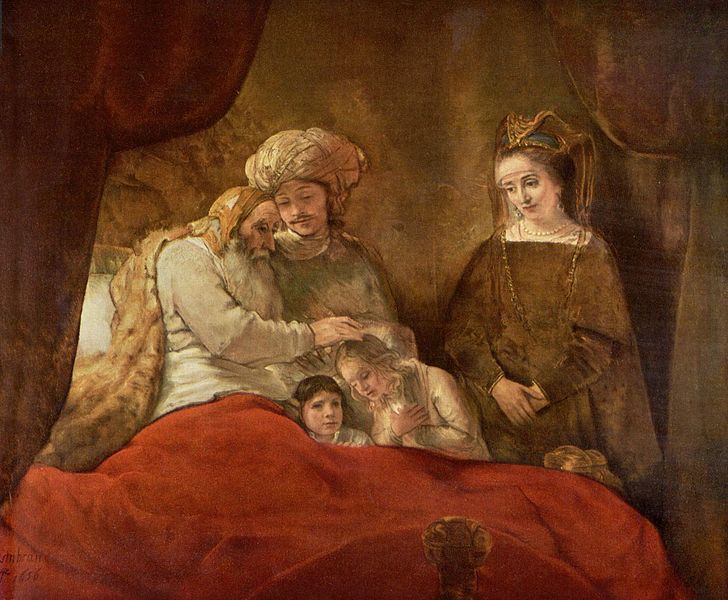
And it came to pass after these things, that one said to Joseph: ‘Behold, thy father is sick.’ And he took with him his two sons, Manasseh and Ephraim. … And Jacob said unto Joseph … And now thy two sons, who were born unto thee in the land of Egypt before I came unto thee into Egypt, are mine; Ephraim and Manasseh, even as Reuben and Simeon, shall be mine. … And Israel beheld Joseph’s sons, and said: ‘Who are these?’ And Joseph said unto his father: ‘They are my sons, whom God hath given me here.’ And he said: ‘Bring them, I pray thee, unto me, and I will bless them.’ Now the eyes of Israel were dim for age, so that he could not see. And he brought them near unto him; and he kissed them, and embraced them. And Israel said unto Joseph: ‘I had not thought to see thy face; and, lo, God hath let me see thy seed also.’ And Joseph brought them out from between his knees; and he fell down on his face to the earth. … And he blessed them that day, saying: ‘By thee shall Israel bless, saying: God make thee as Ephraim and as Manasseh.’ (Genesis 48:1, 3, 5, 8–12, 20)
וַיְהִי אַחֲרֵי הַדְּבָרִים הָאֵלֶּה וַיֹּאמֶר לְיוֹסֵף: הִנֵּה אָבִיךָ חֹלֶה. וַיִּקַּח אֶת שְׁנֵי בָנָיו עִמּוֹ, אֶת מְנַשֶּׁה וְאֶת אֶפְרָיִם ...
וַיֹּאמֶר יַעֲקֹב אֶל יוֹסֵף ... וְעַתָּה שְׁנֵי בָנֶיךָ הַנּוֹלָדִים לְךָ בְּאֶרֶץ מִצְרַיִם עַד בֹּאִי אֵלֶיךָ מִצְרַיְמָה – לִי הֵם; אֶפְרַיִם וּמְנַשֶּׁה כִּרְאוּבֵן וְשִׁמְעוֹן יִהְיוּ לִי ...
וַיַּרְא יִשְׂרָאֵל אֶת בְּנֵי יוֹסֵף, וַיֹּאמֶר: מִי אֵלֶּה?
וַיֹּאמֶר יוֹסֵף אֶל אָבִיו: בָּנַי הֵם אֲשֶׁר נָתַן לִי אֱלֹהִים בָּזֶה.
וַיֹּאמַר: קָחֶם נָא אֵלַי וַאֲבָרֲכֵם.
וְעֵינֵי יִשְׂרָאֵל כָּבְדוּ מִזֹּקֶן לֹא יוּכַל לִרְאוֹת, וַיַּגֵּשׁ אֹתָם אֵלָיו וַיִּשַּׁק לָהֶם וַיְחַבֵּק לָהֶם.
וַיֹּאמֶר יִשְׂרָאֵל אֶל יוֹסֵף: רְאֹה פָנֶיךָ לֹא פִלָּלְתִּי, וְהִנֵּה הֶרְאָה אֹתִי אֱלֹהִים גַּם אֶת זַרְעֶךָ.
וַיּוֹצֵא יוֹסֵף אֹתָם מֵעִם בִּרְכָּיו וַיִּשְׁתַּחוּ לְאַפָּיו אָרְצָה ...
וַיְבָרֲכֵם בַּיּוֹם הַהוּא לֵאמוֹר: בְּךָ יְבָרֵךְ יִשְׂרָאֵל לֵאמֹר, יְשִׂמְךָ אֱלֹהִים כְּאֶפְרַיִם וְכִמְנַשֶּׁה. (בראשית מ"ח, א-כ)
These verses describe Joseph visiting his sick father with his sons. Jacob, with impaired sight, blesses Manasseh and Ephraim, recalling aged, blind Isaac’s blessing of Esau (Genesis 27:1). Another similarity will emerge.
Context, especially the preceding chapter’s close (Genesis 47:28–31), suggests Jacob’s approaching death at 147, after seventeen Egyptian years.
Yet the meeting then becomes difficult: it seems his first encounter with Joseph’s sons – “I had not thought to see thy face; and, lo, God hath let me see thy seed also” – and they seem small enough to fit between his knees.
Chronologically this fits his arrival two years into famine. Born before famine (Genesis 41:50), the boys would be three or four, fitting between his knees. Seventeen years later they would be over twenty, having presumably met him repeatedly.
The Sages already observed the Torah’s lack of strict chronological order, sometimes arranging stories thematically. This seems another example.
Joseph’s visit with his sons probably occurred shortly after Jacob arrived, near but distinct from their initial reunion.
Joseph hurried to the initial reunion in his royal military chariot (Genesis 46:29), designed for speed rather than transporting toddlers. His young children presumably stayed behind.
Already at reunion Jacob felt completion and readiness to die: “Now let me die, since I have seen thy face, that thou art yet alive” (Genesis 46:30). Falling ill afterward, he thought his time had come and summoned Joseph to establish his firstborn status and recognize his young sons as independent tribes. Like Isaac, who expected death yet lived many more years, Jacob recovered and lived another seventeen years in Egypt.
Though actually occurring shortly after arrival while the boys were small, the Torah placed it among other death-related accounts to present all Jacob’s final preparations consecutively.
