And Moses reared up the tabernacle, and laid its sockets, and set up the boards thereof, and put in the bars thereof, and reared up its pillars. And he spread the tent over the tabernacle, and put the covering of the tent above upon it; as the LORD commanded Moses. (Exodus 40:18–19)
וַיָּקֶם מֹשֶׁה אֶת הַמִּשְׁכָּן, וַיִּתֵּן אֶת אֲדָנָיו, וַיָּשֶׂם אֶת קְרָשָׁיו, וַיִּתֵּן אֶת בְּרִיחָיו, וַיָּקֶם אֶת עַמּוּדָיו, וַיִּפְרֹשׂ אֶת הָאֹהֶל עַל הַמִּשְׁכָּן, וַיָּשֶׂם אֶת מִכְסֵה הָאֹהֶל עָלָיו מִלְמָעְלָה – כַּאֲשֶׁר צִוָּה ה' אֶת מֹשֶׁה. (שמות מ', יח-יט)
What does “And Moses reared up the tabernacle” mean?
It could be a general introduction to erecting the whole Tabernacle. But we would then expect a subsequent account of spreading the lower curtains, just as the upper covering is explicitly described: “And he spread the tent over the tabernacle.”
Its absence shows that this is a concrete act rather than a general heading: Moses first erected the inner curtains as an independent tent, before setting up boards and sockets beneath them.
How was this practically possible? What supported the curtains before the boards?
To understand their significance, recall the preceding stage, when the Tent of Meeting served those seeking the LORD:
Now Moses used to take the tent and to pitch it without the camp, afar off from the camp; and he called it The tent of meeting. And it came to pass, that every one that sought the LORD went out unto the tent of meeting, which was without the camp. (Exodus 33:7)
וּמֹשֶׁה יִקַּח אֶת הָאֹהֶל, וְנָטָה לוֹ מִחוּץ לַמַּחֲנֶה הַרְחֵק מִן הַמַּחֲנֶה, וְקָרָא לוֹ אֹהֶל מוֹעֵד. וְהָיָה כָּל מְבַקֵּשׁ ה', יֵצֵא אֶל אֹהֶל מוֹעֵד אֲשֶׁר מִחוּץ לַמַּחֲנֶה. (שמות ל"ג, ז)
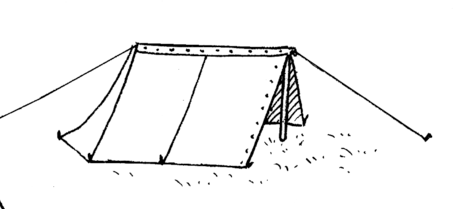
This was an ordinary tent without boards, as “pitched” suggests, a sheet supported by an interior pole. With the Tabernacle’s erection, the Tent of Meeting merged into it and was absorbed within it.
The inner curtains were spread to form an independent tent, as the outer Tent of Meeting had stood, rather than as a roof over a board structure. In every description the curtains precede the boards, implying that they are essentially more important, independent, and do not need boards. The boards placed beneath them therefore lent the enclosed space stability and splendor rather than supporting the tent covering.
As for their support before the boards, during construction the curtains apparently rested temporarily on a central pole and cords (Ibn Ezra, short commentary, Exodus 40:18).
The relationship between curtains and boards thus recalls that between a sukkah’s covering and walls. In both, the covering is primary. The walls are subordinate, and need not support it.
