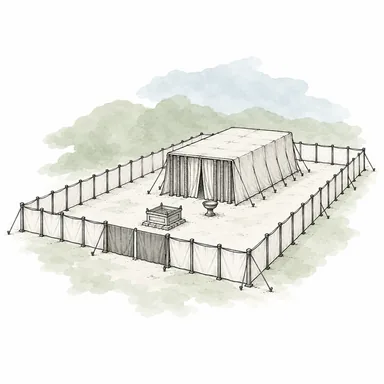
Sanctuary and Worship
The Tabernacle and its vessels, offerings, priesthood and the divine presence.
51 articles- The Sabbath and the TabernacleFrom the book “In Search of Lost Meaning”
- What Comes First in the Tabernacle and Its Furnishings?From the book “In Search of Lost Meaning”
- The Meeting Tent, the Veil, and the Incense AltarFrom the book “In Search of Lost Meaning”
- The BasinFrom the book “In Search of Lost Meaning”
- “And the Rings Which Were in Their Ears”Jacob’s removal of earrings implicitly criticizes Beth-el’s calf worshipFrom the book “Peshat in Brief (working title)”
- “The Kedeshah”The story becomes clear when Tamar is understood as disguised as a cultic prostituteFrom the book “Peshat in Brief (working title)”
- Moses’ SonsWhere did Moses’ sons disappear to in his genealogy?From the book “Peshat in Brief (working title)”
- Leaving the CityEncountering God requires departure from impure space; the Tabernacle newly permits remaining within itFrom the book “Peshat in Brief (working title)”
- A Covenant of BloodAll firstborn belong to the LORD; the firstborn of Israel were therefore also in danger, and only an active intervention exempted themFrom the book “Peshat in Brief (working title)”
- “And If Thou Make Me an Altar of Stone”Encountering God as a departure from the human sphereFrom the book “Peshat in Brief (working title)”
- “To Whom Then Will Ye Liken God? Or What Likeness Will Ye Compare unto Him?”The human dimensions of the Tabernacle and its furnishings express the LORD’s closeness to humanityFrom the book “Peshat in Brief (working title)”
- “The Staves Shall Be in the Rings of the Ark; They Shall Not Be Taken from It”The ark’s staves are integral to it, like wheels to a chariotFrom the book “Peshat in Brief (working title)”
- What Was the Ark For, and What Was the Role of the Cherubim?The ark is the LORD’s chariot and seat; the cherubim shelter it as an honor guardFrom the book “Peshat in Brief (working title)”
- The Connection between Facebook and ShowbreadShowbread: bread of a face-to-face encounter with the LORDFrom the book “Peshat in Brief (working title)”
- “And the Overhanging Part That Remaineth”The arrangement of the tent curtains and the symmetry of the TabernacleFrom the book “Peshat in Brief (working title)”
- A Perpetual Lamp or Lamps for Light?The menorah serves two purposes: illumination, and symbolizing the divine presence continually dwelling in the TabernacleFrom the book “Peshat in Brief (working title)”
- “And the Sound Thereof Shall Be Heard … That He Die Not”The bells announce the high priest’s entry and exit, protecting him from the cherubim guarding the entranceFrom the book “Peshat in Brief (working title)”
- What Was the Role of the Incense Altar?The incense altar created a screening cloud that allowed the LORD’s glory to dwell in the Tent of Meeting and protected humanity from the intensity of revelationFrom the book “Peshat in Brief (working title)”
- How Does the Golden Calf Replace Moses?Aaron saw the calf as a representation of the LORD’s throne, like the ark and its sheltering cherubim; the people saw it as the LORD HimselfFrom the book “Peshat in Brief (working title)”
- The Encounter outside the CampThe outer Tent of Meeting presents a mutual encounter between the LORD and His seeker, independent of a fixed place, institution, or permanenceFrom the book “Peshat in Brief (working title)”
- Moses’ TentThe need to leave the camp to encounter the LORD directly, rather than through MosesFrom the book “Peshat in Brief (working title)”
- Bezalel and OholiabFrom the head of the camp to its rear guardFrom the book “Peshat in Brief (working title)”
- Gender SeparationWomen’s participation in the Tabernacle’s work was limited to sever every link between its worship and sexual pagan cultsFrom the book “Peshat in Brief (working title)”
- “Oil for the Light”Oil and spices, though not used in construction, appear among the contributions because of their valueFrom the book “Peshat in Brief (working title)”
- The Connection between Anointing Oil and IncenseAnointing oil appears with incense because both enable the divine presence to dwell in the TabernacleFrom the book “Peshat in Brief (working title)”
- Separating the Tabernacle’s Furnishings from Priestly GarmentsThe deliberate textual separation prevents wearable instruments from being perceived as intrinsically holy and misused outside the sanctuaryFrom the book “Peshat in Brief (working title)”
- Why Were the Burnt-Offering Altar and Laver Not Brought into the Courtyard?The courtyard hangings are erected around the outer furnishings rather than defining their locationFrom the book “Peshat in Brief (working title)”
- The Relationship between the Tabernacle’s Curtains and BoardsThe curtains form an independent Tent of Meeting; the boards add stability and splendor to the space beneathFrom the book “Peshat in Brief (working title)”
- “When a Ruler Sinneth”Only the anointed priest represents the people – neither the prince, the king, nor even Moses himselfFrom the book “Peshat in Brief (working title)”
- The Value of the Guilt-Offering RamThe ram is purchased from sacred flocks at an inflated price corresponding to the sinner’s monetary valuationFrom the book “Peshat in Brief (working title)”
- The Additional Fifth in a Guilt-OfferingThe fifth is redemption rather than a fine, for property linked to holiness through a false oathFrom the book “Peshat in Brief (working title)”
- “This Is the Law of the Burnt-Offering”The burnt-offering’s essence is maintaining the perpetual fireFrom the book “Peshat in Brief (working title)”
- The Secret of the NorthSlaughtering flock animals in the north symbolizes separation from Egyptian solar idolatry and devotion to the LORD who rules natureFrom the book “Peshat in Brief (working title)”
- The Law of PiggulEating a peace-offering after its permitted time retroactively invalidates it, because Tzav treats eating as integral to sacrificeFrom the book “Peshat in Brief (working title)”
- A Rite of PassageBlood on the body’s right extremities symbolizes the priests’ gradual entry into their new role through the right sideFrom the book “Peshat in Brief (working title)”
- The Eighth Day’s MistakesThe eighth day followed human initiative rather than an explicit command, resulting in three fundamental mistakesFrom the book “Peshat in Brief (working title)”
- Nadab and Abihu’s SacrificeConsumed by the LORD’s fire, Nadab and Abihu themselves became a sacrifice in place of the sin- and burnt-offerings and the people’s sin-offering goatFrom the book “Peshat in Brief (working title)”
- Nadab and Abihu’s RebellionLike Korah’s challenge, Nadab and Abihu’s act attempts to undermine the sacred service transmitted through MosesFrom the book “Peshat in Brief (working title)”
- Preparing for RevelationThe service described in Aharei Mot corrects the eighth day’s three failuresFrom the book “Peshat in Brief (working title)”
- The Difference between Slaughter and HuntingHunting is a permitted secular act; slaughter is perceived as ritual sacrifice and permitted only at the TabernacleFrom the book “Peshat in Brief (working title)”
- Human ValuationsA man's valuation, unlike a woman's, reflects his role as a soldier as well as his capacity for workFrom the book “Peshat in Brief (working title)”
- Matryoshka in the WildernessThe camp, Tabernacle, and service ages form a concentric structure – like matryoshka dollsFrom the book “Peshat in Brief (working title)”
- The Impossible Number of Israel's FirstbornOnly firstborn aged one month to five years were included – their number fits the demographics of a rapidly growing societyFrom the book “Peshat in Brief (working title)”
- Covering the VesselsThe lampstand and its utensils were not separated when covered – supporting the view that they were made from a single talent of goldFrom the book “Peshat in Brief (working title)”
- The Princes' OfferingsThe princes chiefly contributed vessels for the Tabernacle rather than animalsFrom the book “Peshat in Brief (working title)”
- “In Front of the Candlestick”Aaron was commanded to light the lamps before the lampstand – and only then raise them onto itFrom the book “Peshat in Brief (working title)”
- The Alternative TabernacleFrom challenging the forms of worship to establishing a practical alternativeFrom the book “Peshat in Brief (working title)”
- A Clean PlaceThe heifer’s ashes are kept outside the camp because human space cannot guarantee absolute purityFrom the book “Peshat in Brief (working title)”
- “And Israel Joined Himself unto the Baal of Peor”Relations with Moab’s daughters led to worship; the act with the Midianite woman was itself worshipFrom the book “Peshat in Brief (working title)”
- The Place“The place which the LORD shall choose,” rather than “has chosen,” expresses a long historical process requiring spiritual and national maturityFrom the book “Peshat in Brief (working title)”
- Great Stones – Unhewn StonesThe great stones inscribed with Torah law represent human cultural achievement; the altar’s natural stones express closeness and intimacy with GodFrom the book “Peshat in Brief (working title)”